HC | CLASSICS
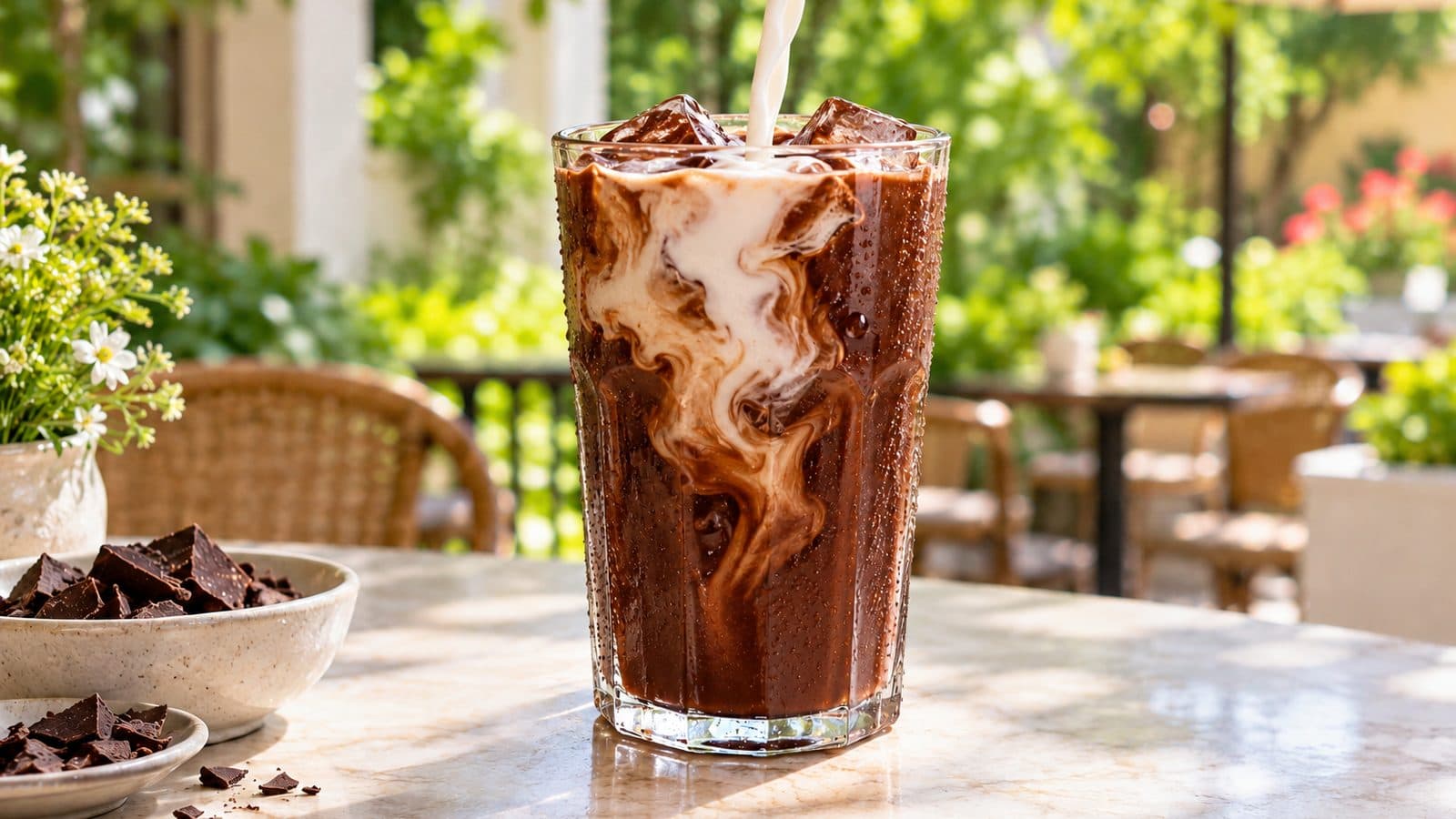
In August 2026, Dessert Therapy in Mumbai listed five chocolates on its menu: classic, cinnamon, mint, caramel and hazelnut. Each one comes hot or cold, at the same price, Rs 250 to 300. The cold chocolate drink is not a summer special there. It is a menu line.
We found few other Indian cafes doing the same. For a cafe owner, that is the opening. This article covers how to make a cold chocolate drink from the same sachet you use for hot chocolate, when to launch it in your region, and what it costs.
Hot chocolate sells best in winter. Google search interest for it in India falls to about half in summer. Cold coffee does the opposite: it averages 59.7 in summer against 36.7 in winter. Our earlier article covers the full data.
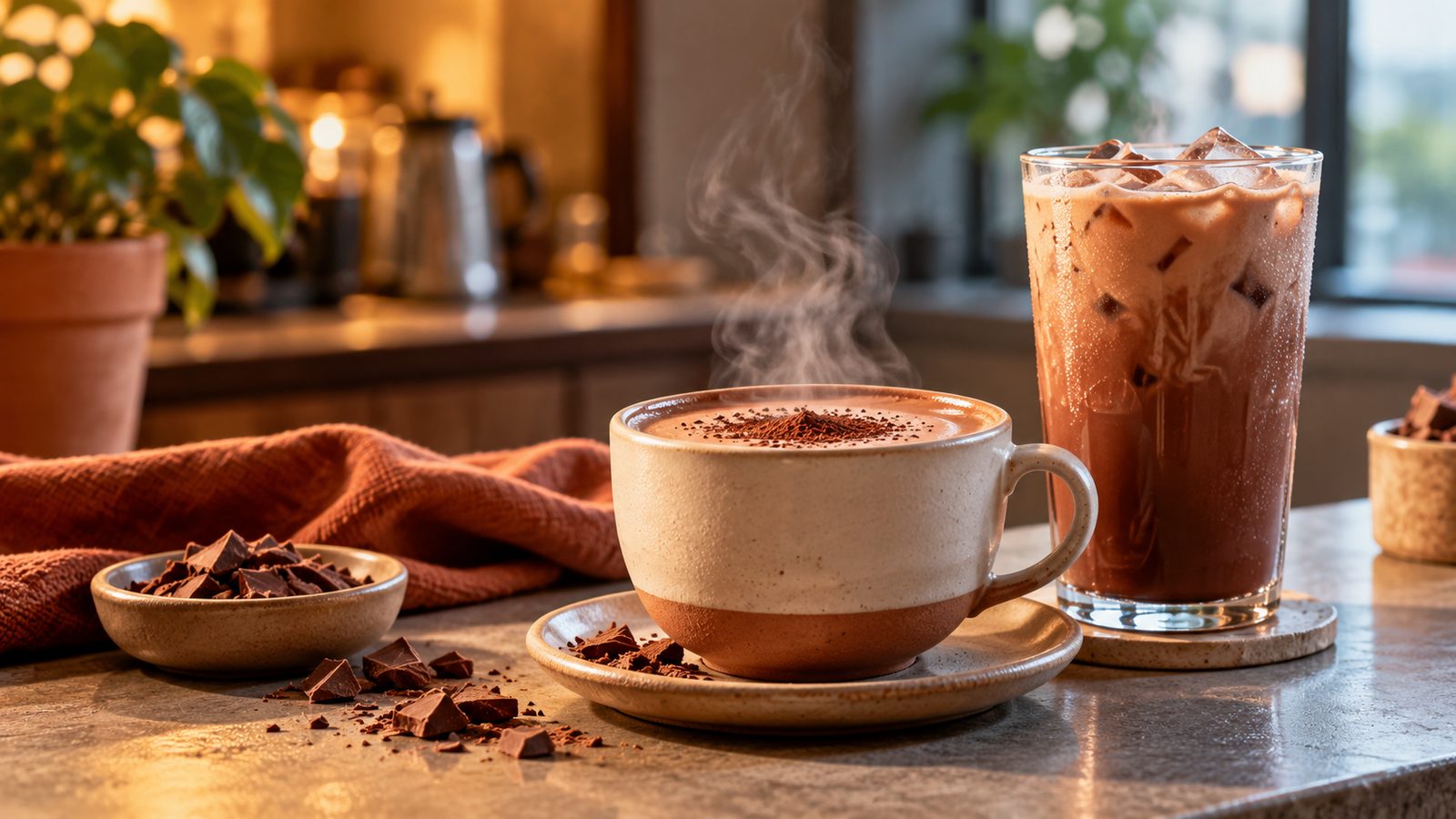 The season dataHot Chocolate Is Not a Winter Problem. It Is a Menu Problem.5 min read →
Abroad, the trade press expects the cold version to grow. FoodNavigator reported in April 2026 that industry experts expect iced chocolate sales to rise this summer. FoodNavigator covers the UK and European trade, so read it as a signal from abroad, not from India.
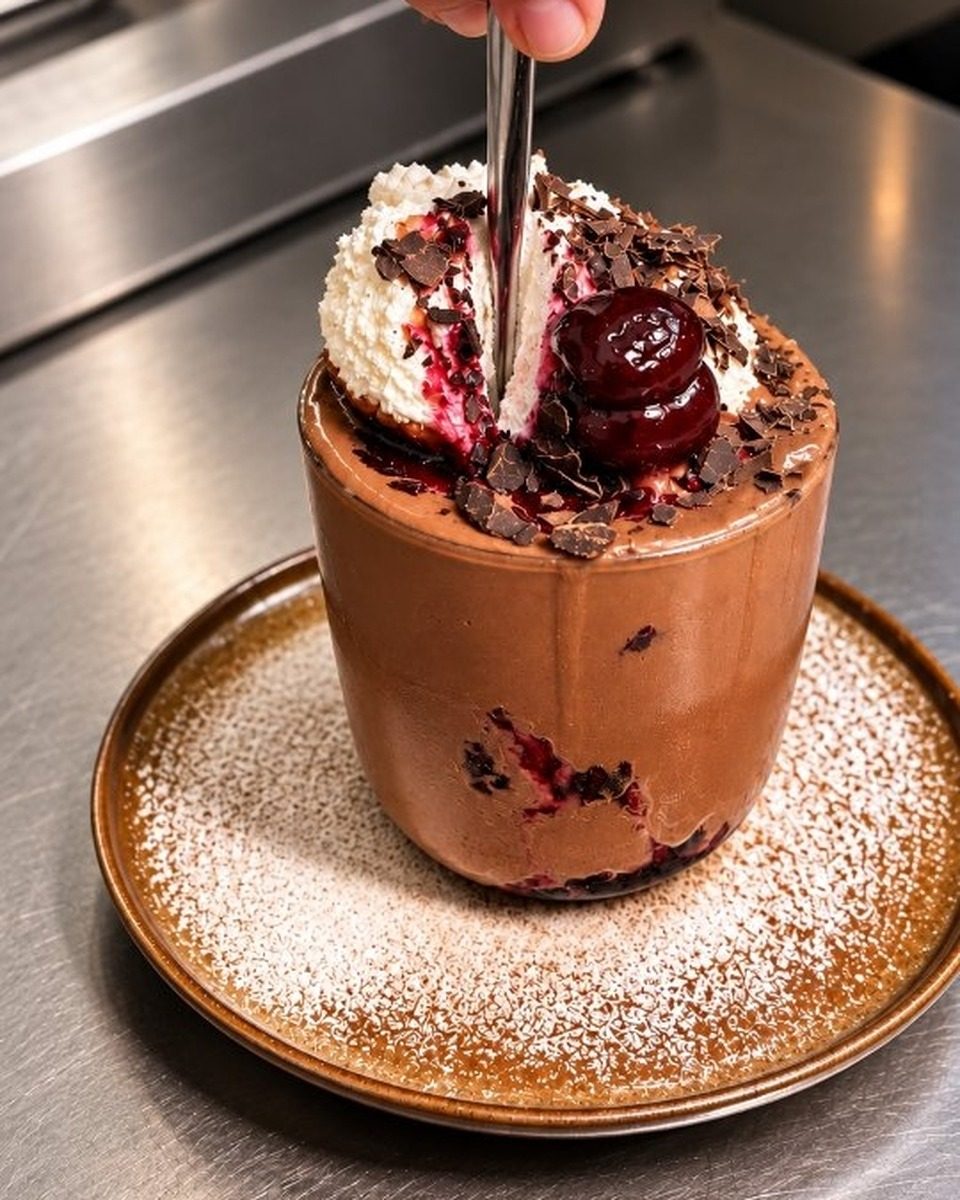
In September 2026, Dessert Therapy also showed a chocolate cherry drink with cream that it calls a drinkable dessert. That is our observation of its public posts. In our view the format suits a cafe that already sells cakes and shakes.
Chocolate milk is cold milk mixed with a chocolate syrup or powder. Nothing gets heated, so nothing melts. That is the usual recipe, not a rule.
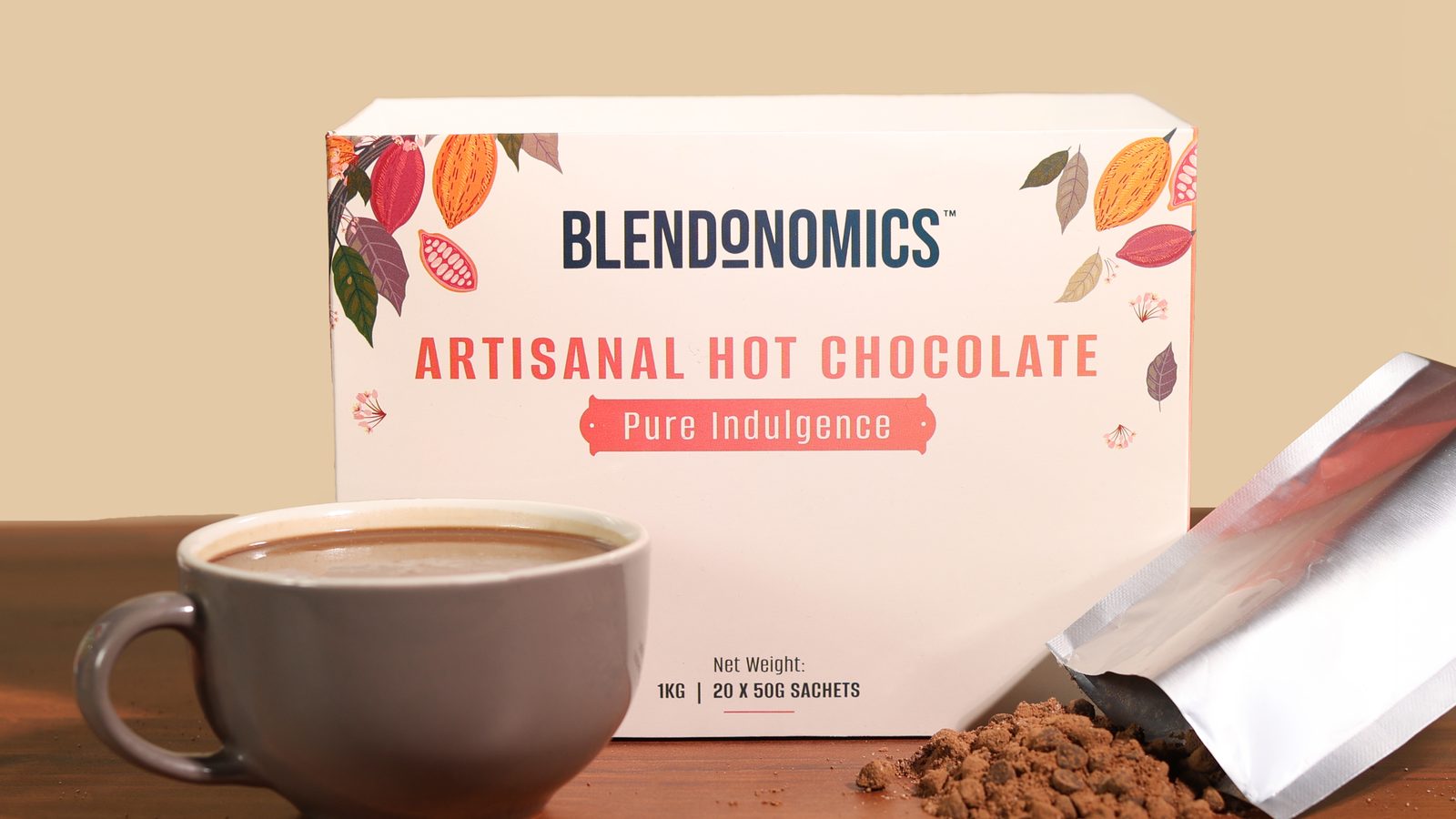
An iced hot chocolate starts hot. The heat melts the chocolate and sets the starch, and the drink is cooled after. That gives a thicker, darker drink than chocolate milk. Our sachet needs this step: half of it is dark chocolate chips, and chips only melt in hot milk.
The hot recipe uses one 50 g sachet in 150 to 200 ml of milk. For the cold version, split the milk in two.
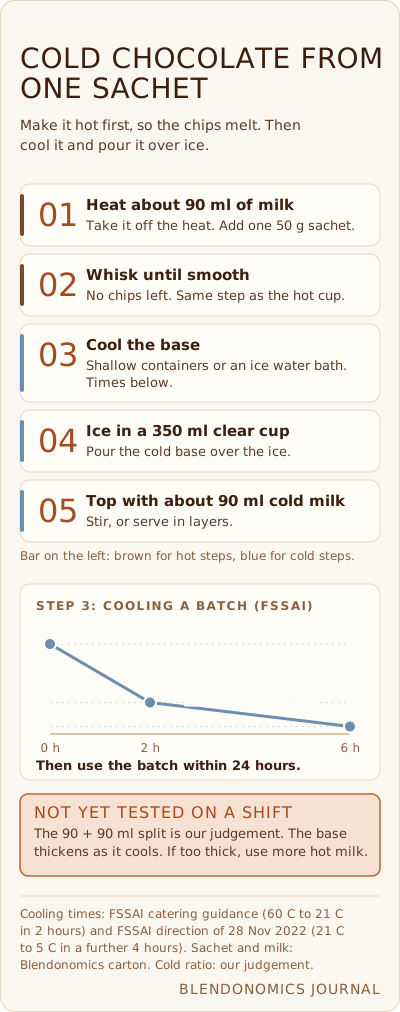
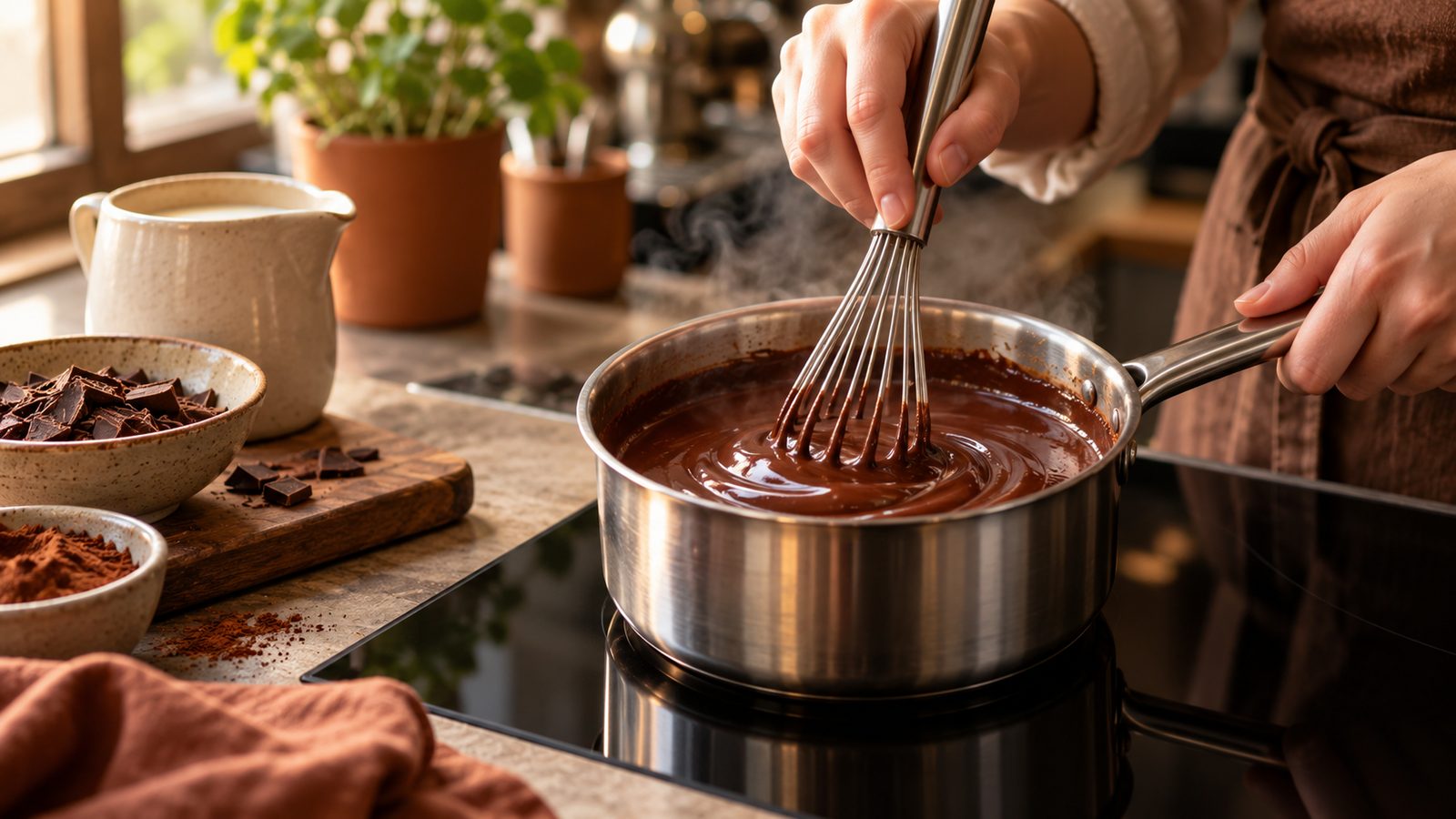
1. Heat about 90 ml of milk in a pan. Take it off the heat. Add one sachet.
2. Whisk until no chips are left. This is the same step as the hot cup.
3. Cool the base. For a batch, cool it from 60 C to 21 C within 2 hours, then from 21 C to 5 C within a further 4 hours. Use shallow containers or an ice water bath. Use the batch within 24 hours. That is the FSSAI catering guidance for cooked food going into the fridge.
4. Fill a 350 ml clear cup with ice. Pour the cold base over the ice.
5. Top with about 90 ml of cold milk. Stir, or serve it in layers and let the customer stir.
We have not tested this ratio on a full shift yet. The base thickens as it cools, because the chocolate and the starch set. Stir it before you pour. If it gets too thick, use a little more hot milk in step 1.
 The hot methodHow Cafes Make Hot Chocolate, and Why Most Cups Taste Thin5 min read →
1. South India: now, and all year. In Chennai, the average daily high is 28.9 C or more in every month. There is no cold season for a cold drink to wait for.
2. North India: from March. In Delhi, the average daily high goes from 24.2 C in February to 29.9 C in March and 36.5 C in April. Launch it as hot chocolate sales start to fall.
3. Everywhere: keep the hot version too. One sachet makes both, so you keep one stock item and change only the cup.
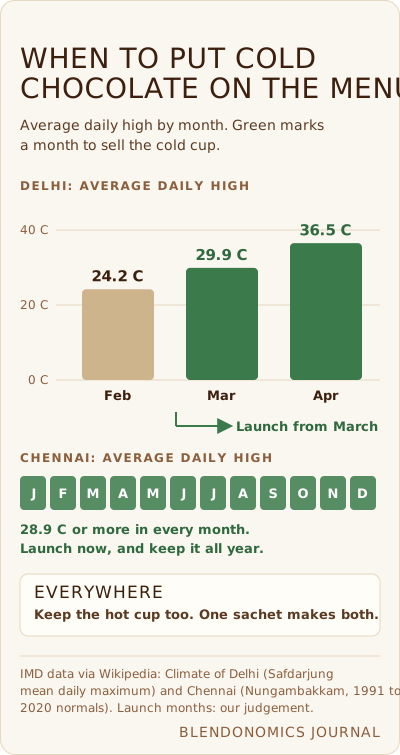
In summer you change the cup, not the stock.
A cup made with one 50 g sachet of our premix costs about Rs 60 to 88 in full, with milk and a cup. The cold version uses the same sachet and the same total milk. Ice and a cold cup with a lid and straw add a few rupees. That last number is our estimate, so check your own cup price.
Dessert Therapy charges the same for hot and cold. We think that is right. The customer pays for the chocolate, not the temperature. Most chain hot chocolates sell between Rs 200 and Rs 280. At Rs 199 to Rs 249, the sachet, milk, cup and ice come to well under half of what the customer pays. That price range is our judgement.
 PricingWhat Indian Cafes Charge for Hot Chocolate, and What You Keep at Each Price5 min read →
We do not know. Few Indian cafes sell cold chocolate today, and one menu is not a trend.
But the drink rests on two patterns in the search data above. Interest in cold coffee rises in summer. Interest in hot chocolate rises in winter. In our judgement a cold chocolate joins the two, and it needs no new stock.
No. Chocolate milk is cold milk mixed with syrup or powder, with no heat. An iced hot chocolate is made hot first, so the chocolate melts and the starch sets. Then it is cooled and poured over ice. The result is thicker and darker. With our sachet the hot step is required, because the chips only melt in hot milk.
Yes, in a batch, if you cool it fast. FSSAI catering guidance says cooked food for the fridge should go from 60 C to 21 C within 2 hours, then from 21 C to 5 C within a further 4 hours, and be used within 24 hours. Stir before each pour, because it thickens in the fridge.
We do not think so. The cold cup uses the same sachet and the same amount of milk. Ice and a cold cup with a lid cost a little more, not less. Dessert Therapy in Mumbai lists hot and cold at the same price, Rs 250 to 300. Charge for the chocolate, not the temperature.
Around March. In Delhi the average daily high is 24.2 C in February and 29.9 C in March, then 36.5 C in April. That is when cold drinks take over from hot ones. Add it then and keep hot chocolate on the menu for evenings. In South India you can add it now.
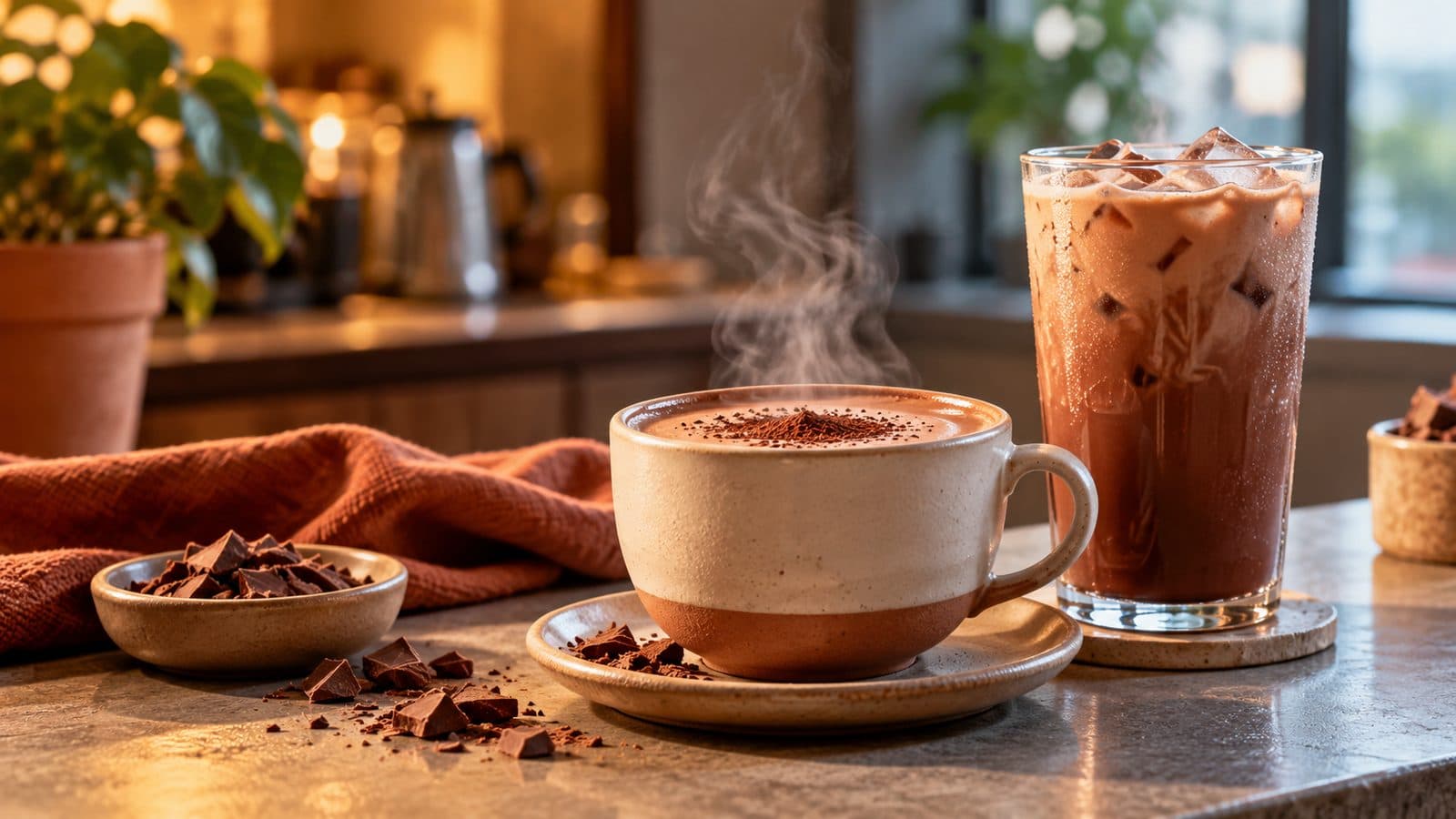
Yes, hot chocolate dips in summer. One drink swings with the weather. A menu built in pairs barely moves.
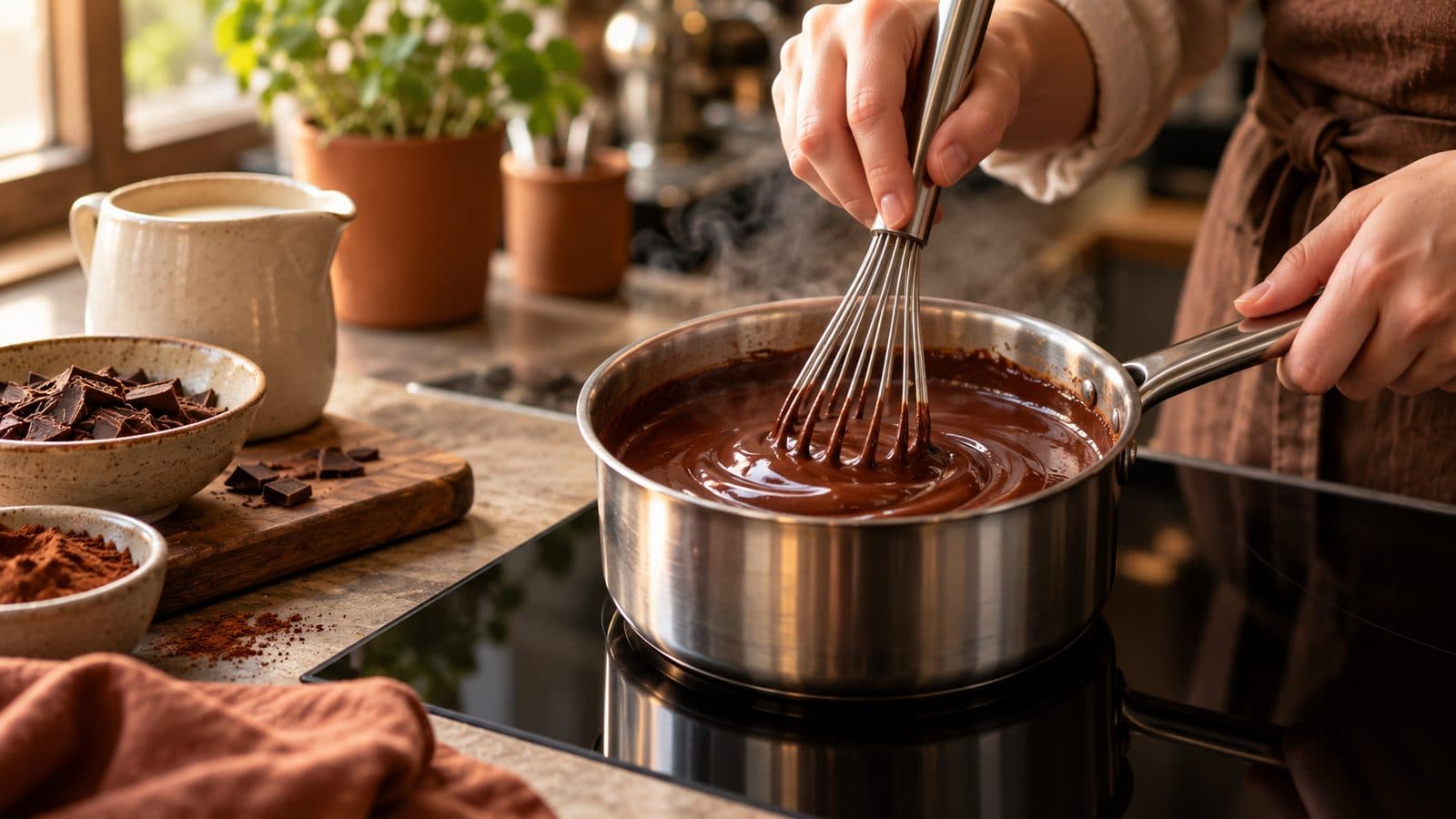
Four ways cafes make hot chocolate, what each one does to the cup, and the method we use for a thick cup in up to 2 minutes.
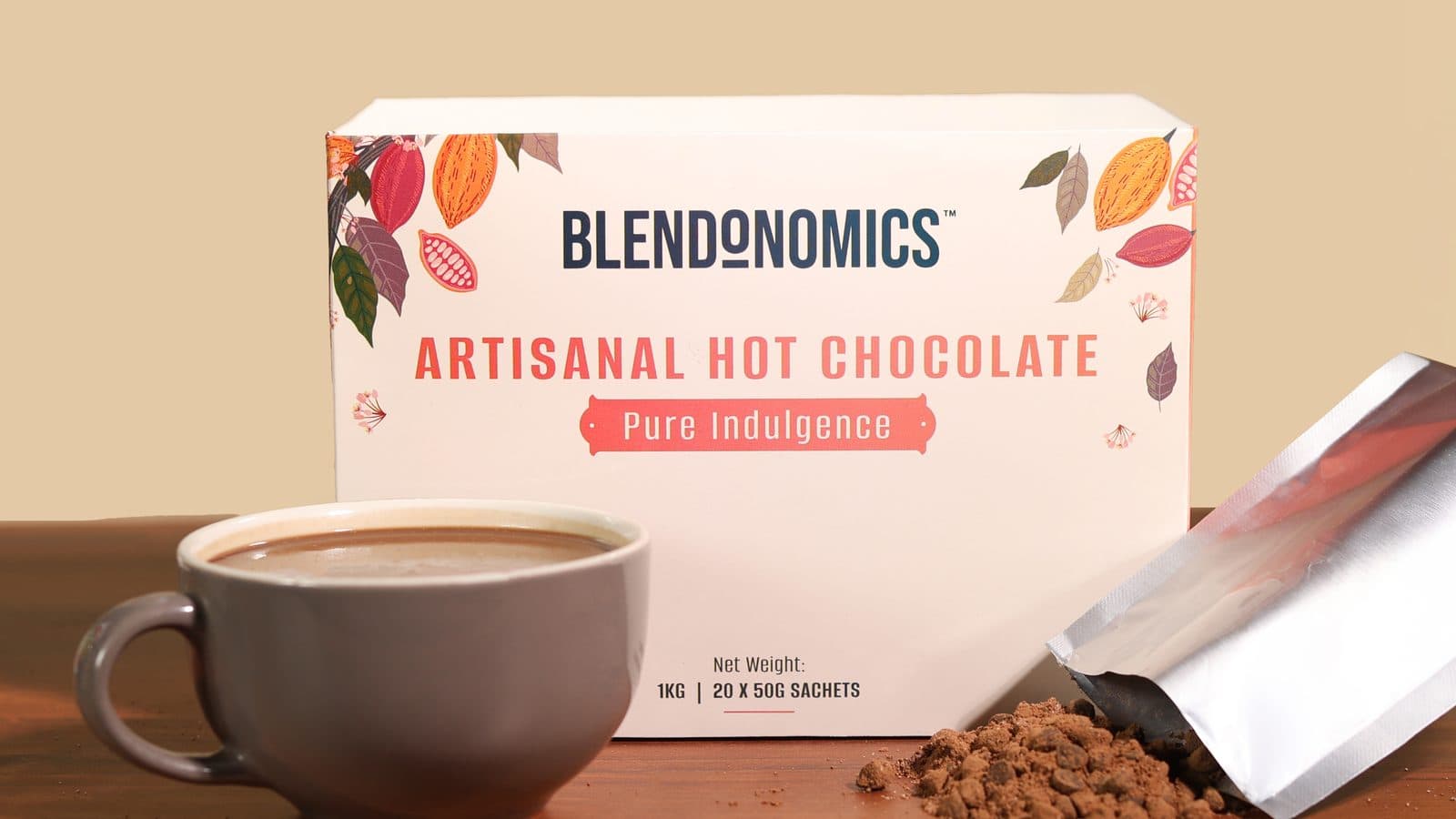
Chains charge Rs 190 to Rs 395 a cup. Here is what a 50 g cup costs you, and what you keep at Rs 99, Rs 149, Rs 199, Rs 249 and Rs 299.