HC | CLASSICS
Most cafe hot chocolate tastes the same. Sweet, brown, and thin.
That is rarely a recipe problem. It is a method problem.
There are four common ways cafes make hot chocolate. Each one gives a different cup.
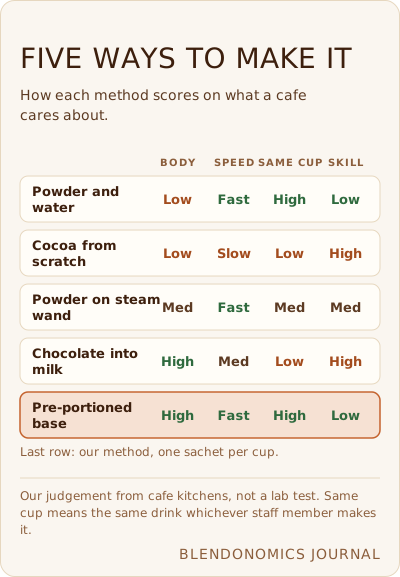
This is the vending machine method. It is fast, cheap and consistent. It is also thin, because water carries no fat and no body.
A customer who orders hot chocolate in a cafe expects more than a vending cup. If your menu price is cafe-level, the method cannot be vending-level.
This is the cheapest cup per serve and gives full control. But cocoa powder has had most of its cocoa butter pressed out. It brings flavour and colour, not richness. On its own it tastes dusty and thin.
It also depends on who is making it. Two staff measuring cocoa and sugar by eye will make two different drinks.
Common in espresso cafes. Powder goes into the milk jug, then the steam wand heats and mixes it. It is quick and uses equipment you already have.
The cup is only as rich as the powder. Most drinking chocolate powders are mostly sugar and cocoa powder, so the result sits between methods 1 and 4.
Chocolate, as chips, callets or a ganache, whisked into hot milk. This is what gives a cup its thickness. The fat in chocolate is what your tongue reads as rich.
It is slower and needs a whisk and steady heat. And if staff weigh chocolate by eye, it drifts between shifts like method 2.
Three things, in this order.
1. Real chocolate, for fat and body.
2. A little starch, which thickens as it heats.
3. Less liquid than you think. Thick hot chocolates in the trade use around 40 g of product to 100 ml of milk.
Thickness is not a flavour. It is a ratio.
Our sachet combines a cocoa blend with dark chocolate chips, pre-portioned for one cup. That covers points 1 and 2. The method covers point 3.
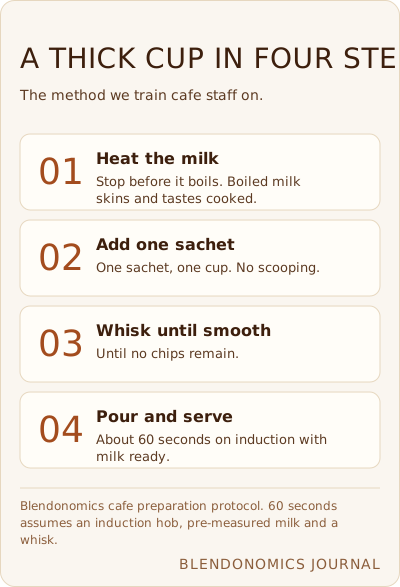
1. Heat the milk on the pack in a pan and bring it to a slight boil, not a hard rolling one. A hard boil scorches the milk and forms a skin.
2. Add one sachet.
3. Whisk until smooth and no chips remain.
4. Pour and serve.
On an induction hob, with the milk measured in advance and a whisk in hand, this takes up to 2 minutes, and about 60 seconds at best. On a gas stove or from a cold pan, it takes longer.
Because the sachet is portioned, the cup is the same whoever makes it. That matters more than any recipe on a busy shift.
1. Boiling the milk hard. A rolling boil scorches it and forms a skin.
2. Scooping instead of weighing. A scoop is not a measure. Two staff scoop differently.
3. Cutting milk with water to save cost. You save a few rupees and lose the reason people ordered it.
4. Hiding a thin cup under cream and sauce. Customers notice by the second sip.
Make the base hot with half the milk. Whisk until smooth. Let it cool for a minute, pour it over ice and top up with cold milk. Same stock, summer drink.
Fix the method first. Then decide the price.
 Next step: pricingWhy Your New Menu Item Flops Before Anyone Tastes It9 min read →
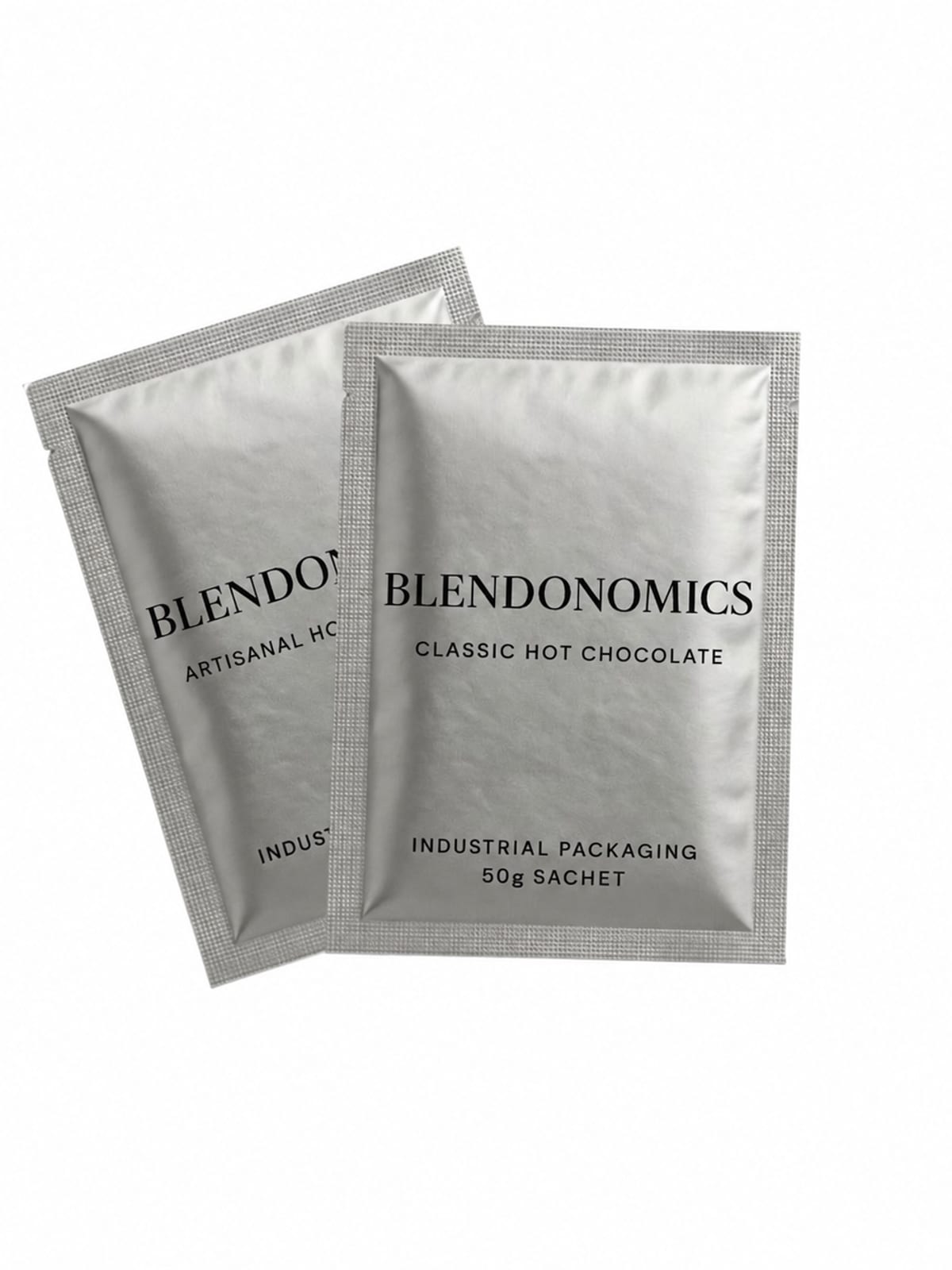 Hot chocolateClassic DarkThe Foundational Gold StandardView product →
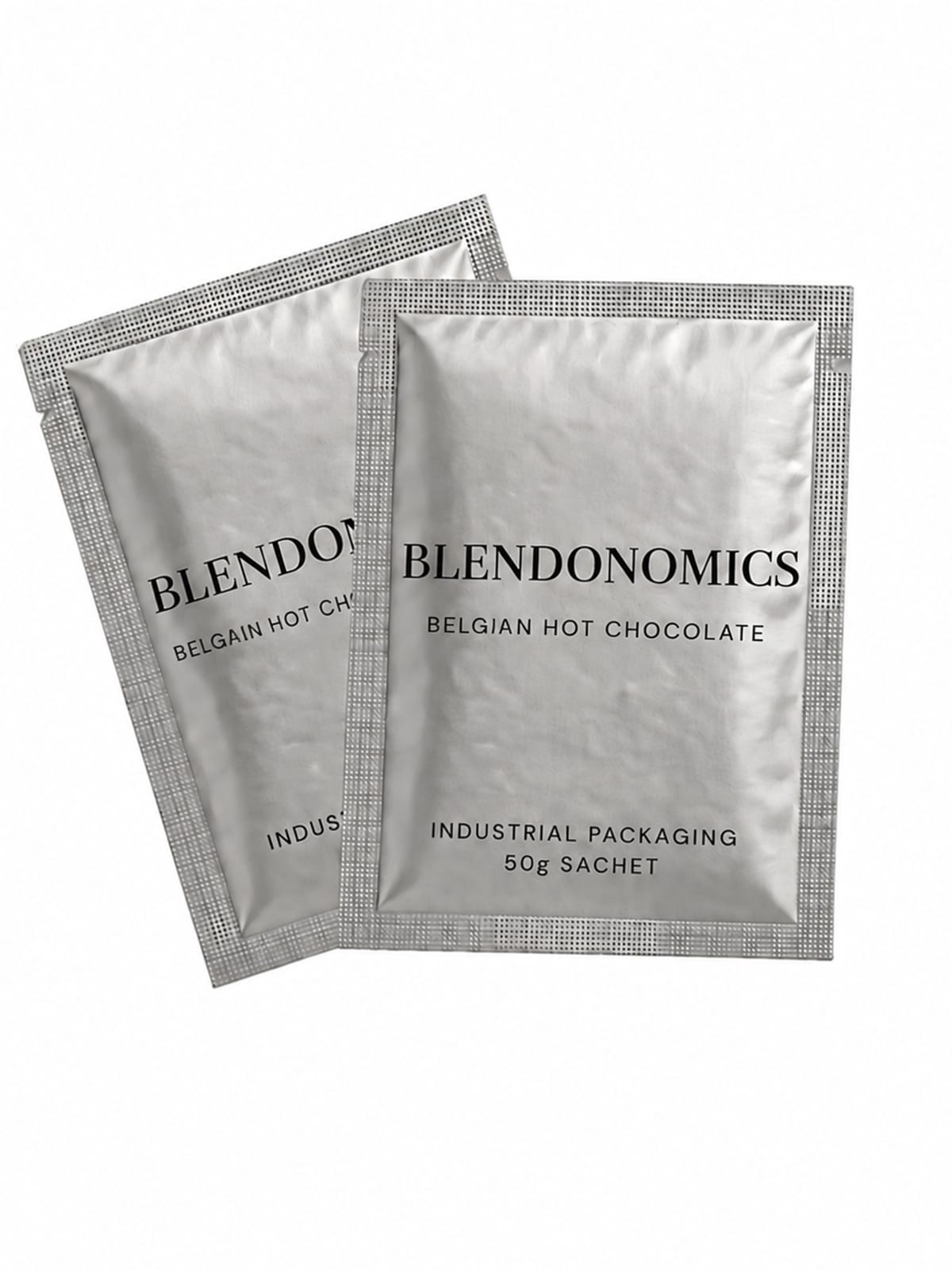 Hot chocolateBelgianRich European Milk ChocolateView product →
Supplying a cafe? Request a sample kit →
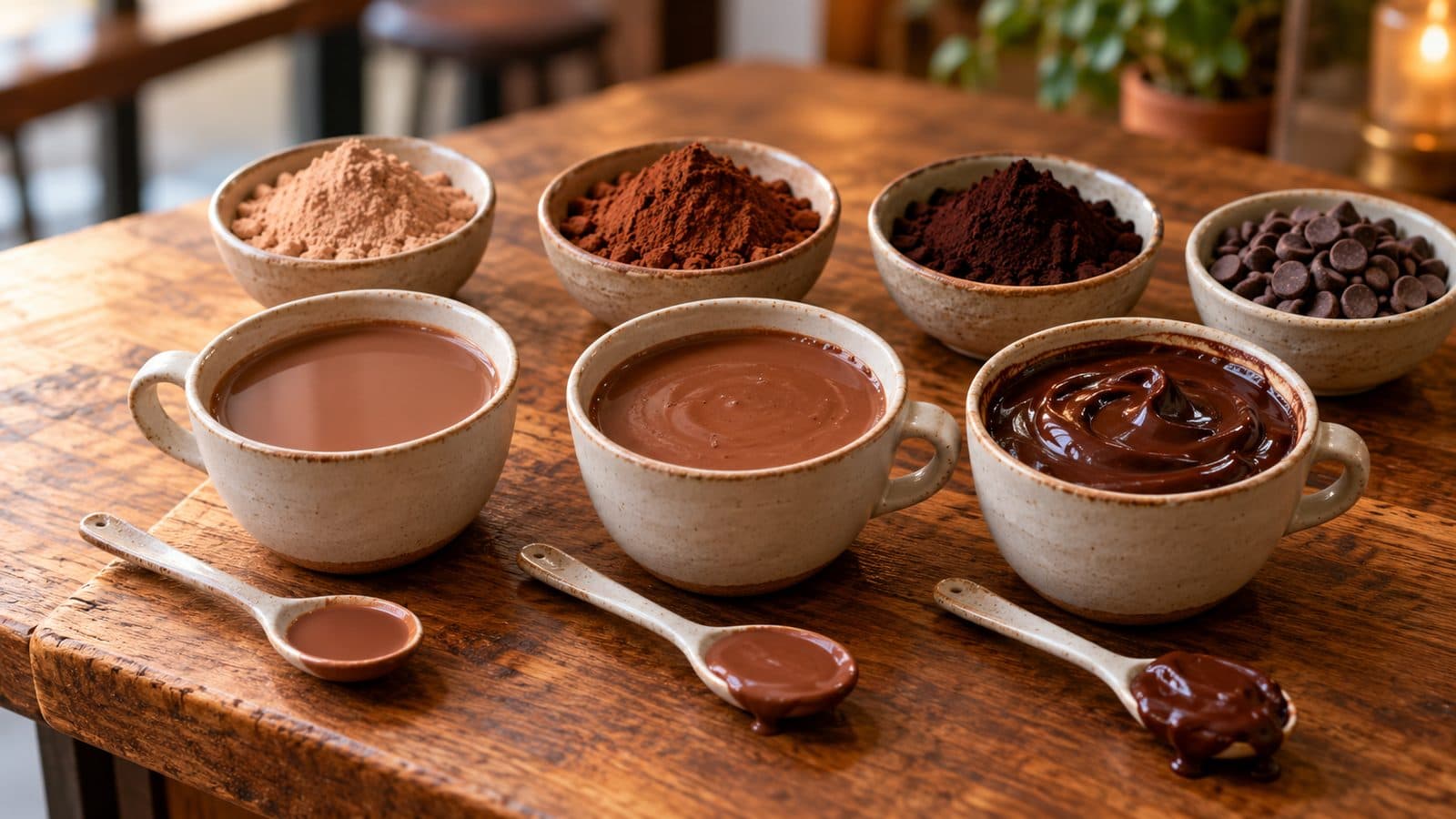
Hot chocolate premix for cafes: eight questions to ask any supplier, and whether you can use premix in a coffee machine. Cost per cup beats price per kilo.
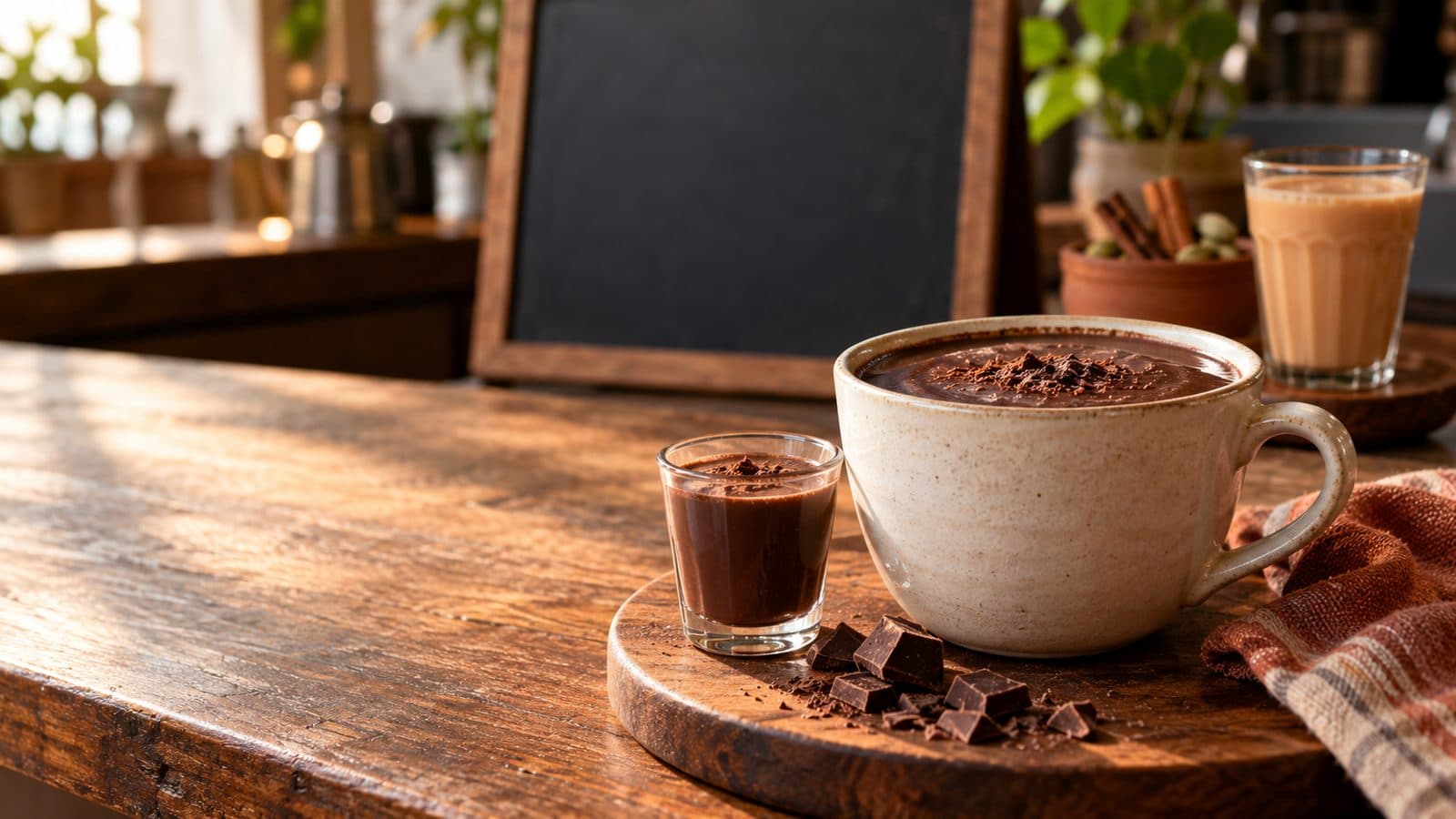
Most new drinks do not fail on taste. They fail on a price nobody was willing to test. A pricing method for any new item, using hot chocolate as the example.
A kiosk costs Rs 3 to 5 lakh. A small cafe costs Rs 8 to 15 lakh. Every guide stops there. Here is the line that keeps costing you after the doors open.