HC | CLASSICS
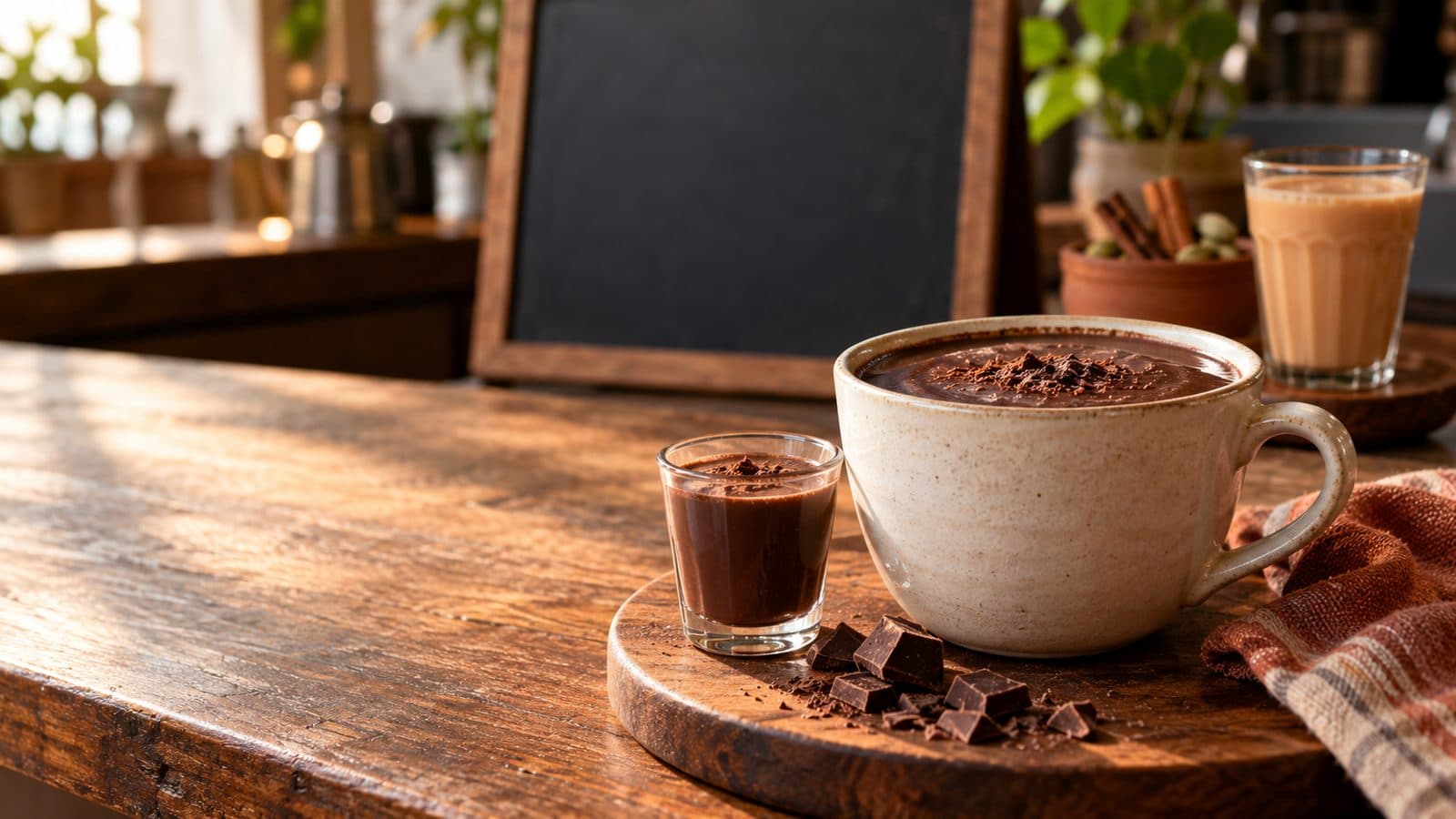
Last winter a cafe in a hill town ordered our hot chocolate.
The owner tasted it, loved it, and put it on the menu at Rs 250 to 300.
On that same menu, masala tea was Rs 60. Pahari chai was Rs 80. A cappuccino was somewhere around Rs 120.
The hot chocolate sat there for weeks. Barely anyone ordered it.
The owner's conclusion was simple: hot chocolate does not work here.
They never ordered again.

The owner's thinking went like this. This is a better product than anything else on my menu. Better product means premium price. Premium price means better margin. The cost sheet agreed.
Every step of that makes sense from behind the counter. None of it makes sense from in front of it.
The customer has never tasted your new drink. The only proof that it is better exists in your head. What the customer can see is the menu. And on that menu, one item costs two to four times everything around it.
That does not read as premium. It reads as overpriced.
Your customer does not compare your price to your cost. They compare it to the item printed next to it.
There is a well-tested idea in pricing research called the reference price. People do not judge a price in isolation. They judge it against a price they already expect. When they have never bought the item, the expectation comes from whatever is closest at hand. In a cafe, that is the rest of your menu.
The chains understand this. At Starbucks in Ahmedabad, a tall hot chocolate was Rs 240 against a Rs 260 cappuccino in 2025. At Third Wave, a hot chocolate sits at about 1.1 times their cappuccino. Across Indian chains, hot chocolate lives at roughly 0.9 to 1.1 times the price of a cappuccino.

Our hill town cafe priced it at about 2 times the cappuccino and 3 to 5 times the teas.
It never stood a chance.
Here is the part owners underestimate. Industry survey data says about 7 in 10 customers will not try a new menu item at all. They order what they already know.
So a new item starts with a trial problem before price even enters the picture. A high price stacks a second wall on top of the first. The customer is now being asked to pay the most money on the menu for the thing they know least about.

When a new item flops, owners usually blame the product. Most of the time the product never got tested. The price stopped the test.
When we first wrote this up internally, our answer was the obvious opposite. Launch cheap. Build volume. Raise the price slowly once people love it.
Then we went through the research properly, and it pushed back hard.
Raising the price of an item people already know is the riskiest move on a menu. In a classic fairness study, 71 percent of people called a price increase unfair. When the same final price came from a discount ending, only 42 percent did. Same rupees, very different reaction.

A large review of promotion studies found something else. Price cuts of 20 percent or more hurt how people value a product afterwards. The damage is worse for new and unfamiliar products. A permanently low launch price teaches customers what the item is worth. You do not get to unteach it easily.
Every six months you realise how stupid you were six months ago, lol.
Protect the price. Discount the trial.
A few weeks ago a filter coffee house in South India started with us. Their menu is honest and cheap. Filter coffee Rs 25 to 40. Tea Rs 30 to 35. Cold coffee Rs 110. Hot chocolate Rs 60.
Rs 60 fits that menu perfectly. Nobody will think it is overpriced.
But this cafe uses a custom 40 g sachet we developed for them, one full sachet per cup. With milk and a cup, that is roughly Rs 45 to 52 of cost. At Rs 60, the cafe keeps Rs 8 to 15 a cup.

That fails too, just more slowly. A drink that earns nothing does not get pushed by staff. It does not get featured. It quietly stops being made, and the reorder never comes.
So there are two ways to kill a new item. Price it so high nobody tries it. Or price it so low nobody wants to make it.

This works for hot chocolate, a matcha latte, a new dessert, a seasonal special. Anything your customers have not tried from you before.
Every item has a neighbour on your menu: the drink or dish a customer would order instead of it. Get this one right and the rest follows.
The neighbour is the item that does the same job, not the cheapest thing in the same section. At the filter coffee house, the neighbour for hot chocolate is not the Rs 25 filter coffee. Filter coffee is a daily habit. Hot chocolate is a treat. The real neighbour is the Rs 110 cold coffee, the other indulgent milk drink on the menu.
Put your new item within about 0.9 to 1.3 times its neighbour. This is our rule of thumb, built on the chain prices above.
Below 1.1 times, you are where the chains sit. Between 1.1 and 1.3 times, you need something on the menu that justifies it: a bigger cup, a richer description, a reason. Above 1.3 times, you are an outlier, and outliers do not get tried.
For the filter coffee house, that put a thick hot chocolate at around Rs 99. That is 0.9 times the cold coffee next to it.

Now check the cost. The price inside the frame still has to pay you. Work out the full cost of one serving: ingredient, milk, cup, garnish, and your share of delivery. If that cost is more than about 40 to 45 percent of the price, the item will not survive staff attention for long. That limit is our rule of thumb.
If the frame and the floor do not meet, do not force it. Change the item instead. A different size, a different serving, a different version. Do not price it into a corner.
This is where most owners do the opposite of what works.
Print the real price from day one, and keep it. Then make the first cup cheaper in ways that do not touch the printed price.
Free tasting shots are the best supported tool we found. In two large field experiments, free samples kept lifting sales for up to 12 months. A 30 ml shot costs you very little, and it removes the risk entirely.
A smaller paid size works the same way. Starbucks sells a 180 ml hot chocolate at Rs 180. The ticket is lower, but the per-cup value is protected.
If you want a launch offer, show it as an offer. Print the real price, cross it out, show the offer price, and print an end date. Keep the cut to about 20 percent. When the offer ends, the price returns to what was printed all along. That reads as an offer ending, not a price going up.
Two things to avoid. A permanent low price with no end date. And giving the new item away free with something else. People read free as worth little, and they will not pay for it on its own later.

If the item works and you want more from it, do not raise the price of the same thing. Add a richer version beside it. A thick version, a flavoured version, a larger cup.
The original stays as the entry point. The new version earns the higher price. And the two together give customers a comparison on the menu, which makes the higher one easier to choose.
Do not judge a new item on week one. Count cups per week for eight to twelve weeks. Count how many people order it a second time. That repeat number tells you more than any tasting comment.
If you know menu engineering, you know the four boxes. Stars sell a lot and earn a lot. Plowhorses sell a lot and earn less. Puzzles earn a lot but do not sell. Dogs do neither.
A new item launched as a price outlier starts as a Puzzle. High margin on paper, nobody ordering it. Left alone, a Puzzle becomes a Dog and gets cut.
A new item priced inside the frame, with the first try made easy, gets the one thing a Puzzle never gets: people tasting it. If it is genuinely good, that is how it becomes a Star.

A margin on zero cups is zero.
We will be honest. Price is not the whole story.

When we went back through our own partner list, the cafes that stopped after one order were not all overpriced. Some were bakeries and boba shops where hot chocolate never had a natural place. Some were outlets of the same chain, on the same menu at the same price, where one outlet kept reordering and another stopped. That points to things price cannot fix: where the drink sits on the menu, whether staff recommend it, who walks in.
So this is not the only reason new items fail. It is the most avoidable one. It is also the one we see owners repeat most often, with the best intentions.
Find the item your new one will be compared to. Price within about 1.3 times of it. Check that the price still pays you. Print that price and keep it. Make the first cup easy with tastings, a small size, or a short, dated offer. Grow the price later by adding a better version, not by raising the old one.

Better products do deserve better prices. They just have to be tasted first.
Yes, hot chocolate dips in summer. One drink swings with the weather. A menu built in pairs barely moves.
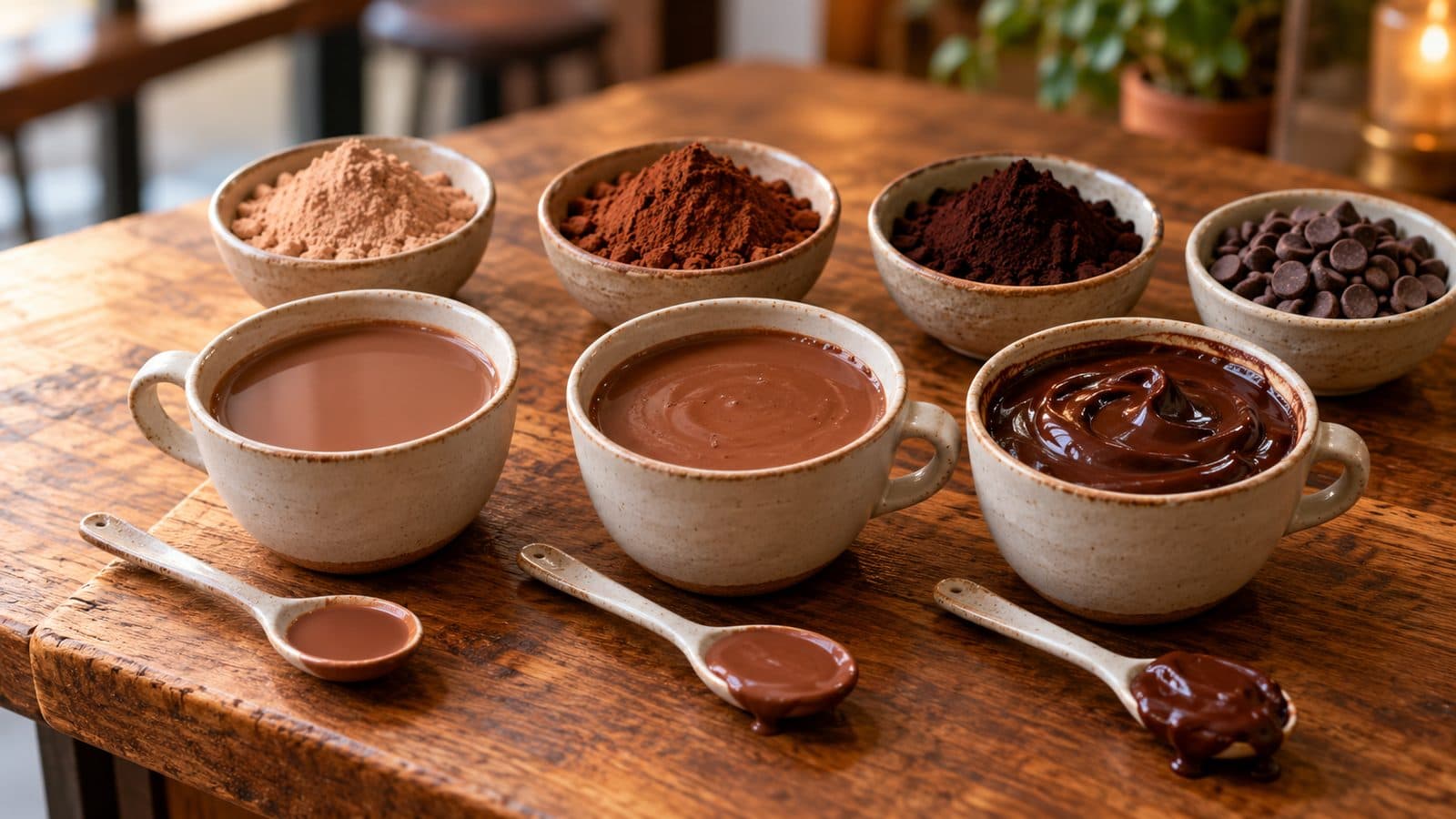
Price per kilo is the wrong first number. Eight questions to ask any supplier, including us, before you buy.
A kiosk costs Rs 3 to 5 lakh. A small cafe costs Rs 8 to 15 lakh. Every guide stops there. Here is the line that keeps costing you after the doors open.