HC | CLASSICS
OPERATIONS
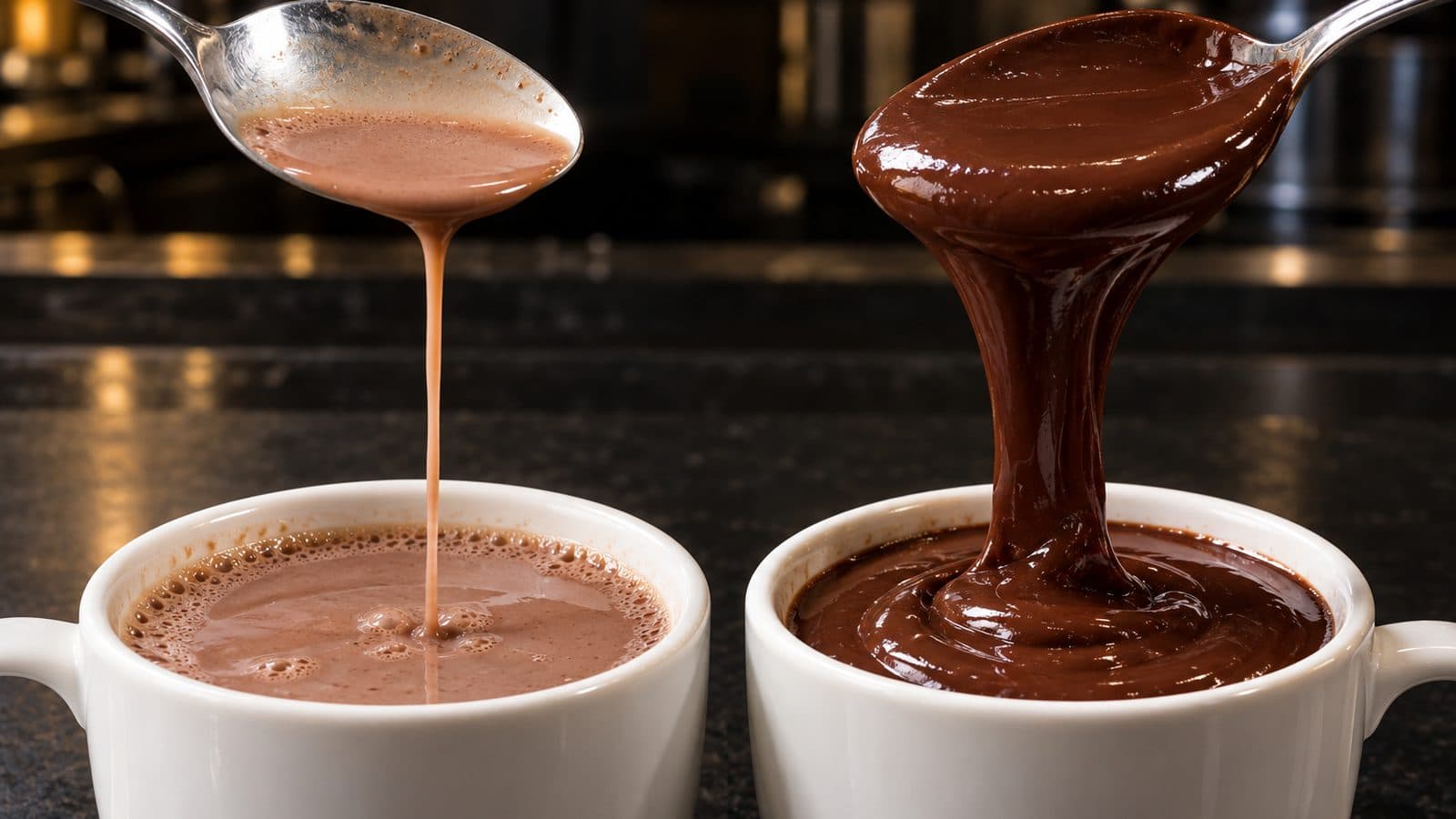
Why is my hot chocolate grainy? Why is it oily, bitter or thin? If you run a cafe, these four faults are why a customer orders hot chocolate once and never again. This article gives the cause of each fault and the fix, for a cafe counter.
Most of the causes come from 3 habits: powder premix frothed on the steam wand, cocoa scooped by eye, and water used in place of milk. Every fix below costs nothing.
If you want the full method for a thick cup, it is in our article on how cafes make hot chocolate. This one is the troubleshooting page.
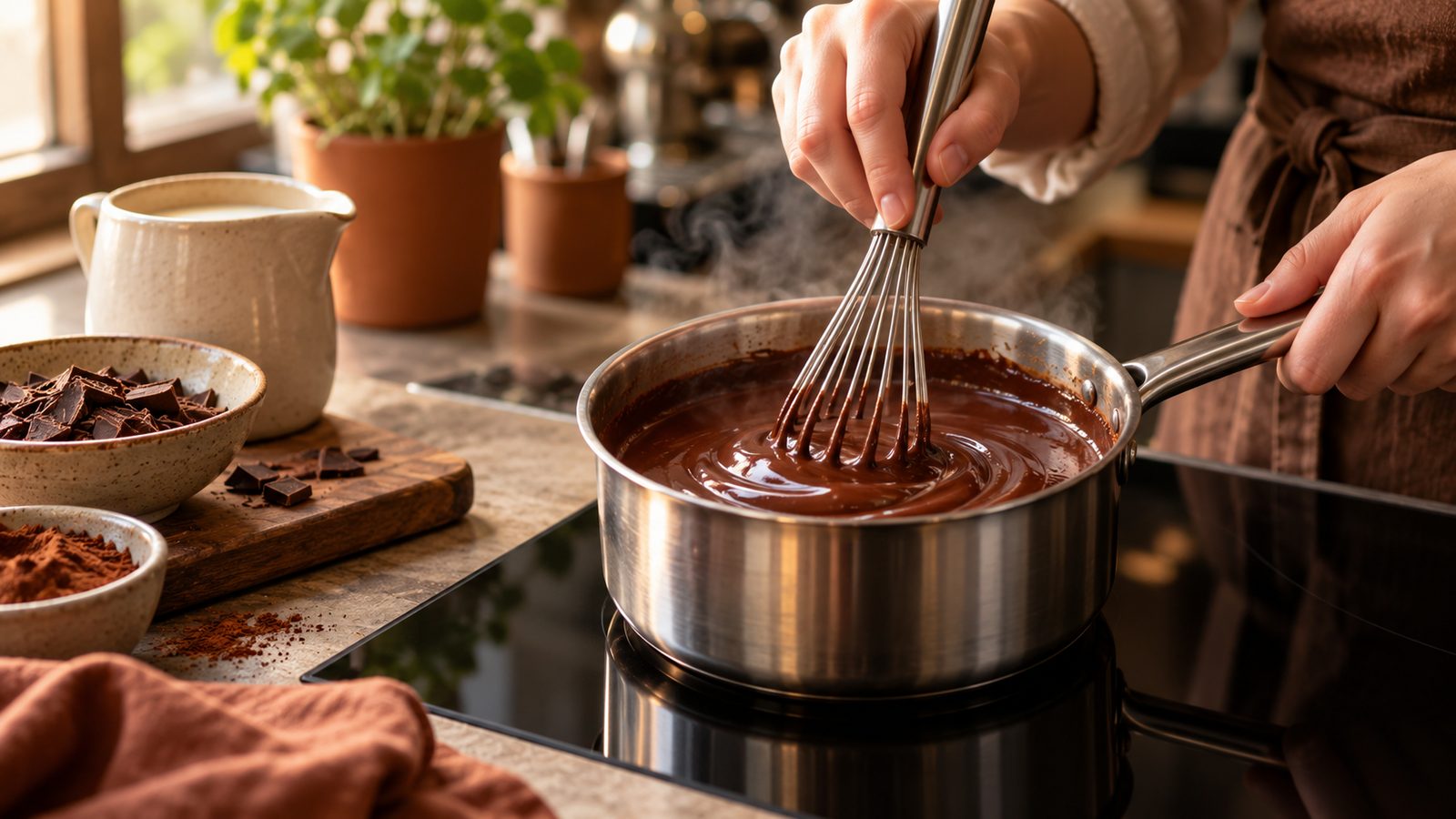 The methodHow Cafes Make Hot Chocolate, and Why Most Cups Taste Thin5 min read →
1. Powder on the steam wand. The barista puts premix in the milk jug and steams both together. It is fast, and it uses the machine that is already hot.
2. Scooping by eye. A scoop of powder is not a fixed weight. A heaped scoop holds more than a flat one. Two staff on two shifts make two different drinks.
3. Water in place of milk. Some cafes cut the milk with water, or make the whole cup with hot water, to save cost.
Each habit saves a few seconds or a few rupees. Each one costs you the cup.
A steam wand is built to heat milk for coffee, not to cook a drink. Three things happen in the jug.
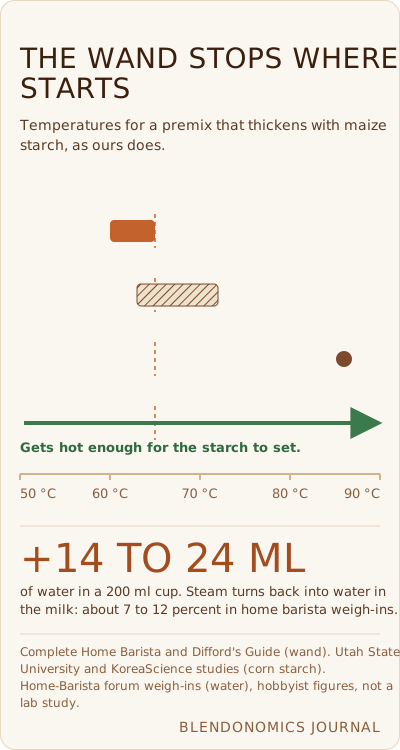
1. It stops too cold for starch. Barista guides tell staff to stop steaming milk at about 60 to 65 °C, because hotter milk loses its sweetness. Many premixes, ours included, thicken with maize starch. Food science studies show maize starch starts to swell at about 63 to 72 °C and needs more heat than that to finish. At wand temperature, the starch has barely started.
2. It adds water. Steam turns back into water when it hits cold milk. Home baristas who weighed their jugs before and after steaming report about 7 to 12 percent extra water. So a 200 ml cup can gain 14 to 24 ml of water before anyone pours it.
3. It adds air, not body. Froth makes the cup look full. In our experience it drains out in a few minutes, and the customer is left with a thin drink and a ring of foam.
Trade suppliers also warn against it for the machine's sake. Ringtons, a UK coffee supplier, tells cafes never to steam milk and chocolate powder together in the jug. The wand is for milk only, and powder sticks to the tip.
A steam wand stops at the temperature where thickening starts.
The fix is to heat the drink in a pan, on a hob, where it can get hot enough for the starch to set. If you must use the wand, steam the milk alone. Then mix the powder into a paste with a little of that hot milk in the cup, and pour the rest on top.
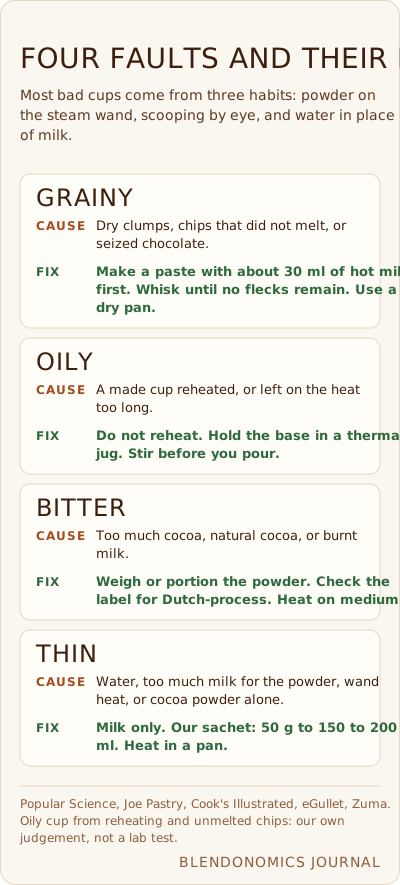
Grainy hot chocolate has three common causes.
1. Dry clumps. Popular Science explains it: when liquid hits dry cocoa powder, the outside of each clump gets wet and seals the dry powder inside. Stirring moves the clumps around but does not open them.
2. Chips that did not melt. If a premix contains chocolate chips, a short stir leaves them whole. In our own cups, they sink and show up as gritty specks at the bottom.
3. Seized chocolate. Pastry cooks call this seizing. A small splash of water on melting chocolate makes the sugar in it turn sticky. The sugar glues the cocoa into a stiff, grainy paste. This applies when chocolate is melted on its own first, for a ganache base, in a wet bowl or near steam.
The fix for each: make a paste first, with the powder and about 30 ml (two tablespoons) of hot milk, then add the rest. Whisk until no dark flecks remain, and keep going a few seconds after it looks done. Use a dry pan or jug.
An oily cup usually shows as a shiny film or small drops of fat on top.
Some of this is normal. Hot milk forms a skin of protein and fat as the surface dries, a common kitchen effect. A stir puts it back.
In our experience, a cup turns truly oily when a finished drink is reheated, or left on the heat too long. The fat separates from the milk and floats. This is our judgement from making the cup, not a lab result.
The fix: do not reheat a made cup. If the counter is busy, hold the finished base in a thermal jug and pour from it. Stir before you pour. Serve within a few minutes.
Bitterness has three common causes.
1. Too much cocoa. Cocoa powder is unsweetened, so a heavy scoop adds bitterness without adding sweetness. This is the scooping habit again.
2. The wrong cocoa. Cook's Illustrated notes that natural cocoa powder is acidic and tastes sharper. Dutch-process cocoa is treated with an alkali that removes most of that sharpness. If your cocoa is natural, the cup will taste harsher.
3. Burnt milk. Milk left on high heat catches on the bottom of the pan. In our tasting, the cup then tastes burnt and bitter, and no sugar hides it.
The fix: weigh or portion the powder, never scoop by eye. Use the weight on your pack for your cup size, every time. Check whether your cocoa is natural or Dutch-process on the label. Heat on medium and keep the whisk moving. Bring the milk to a gentle simmer, take it off the heat, and whisk the powder in.
Thin is the fault customers notice first, and the one they remember.
1. Water. Water carries no fat and no body. Every ml of water you add dilutes the cup.
2. Too much milk for the powder. Zuma's trade fact sheet for a thick hot chocolate uses 40 g of product to 100 ml of milk. Our own sachet is 50 g to 150 to 200 ml. In our experience, a 20 g scoop in a 250 ml mug does not come out thick, whatever the method.
3. Not hot enough. As above, starch needs heat. A cup heated only on the wand stays thin.
4. Cocoa powder alone. Cocoa powder brings flavour, not richness. The next section explains why.
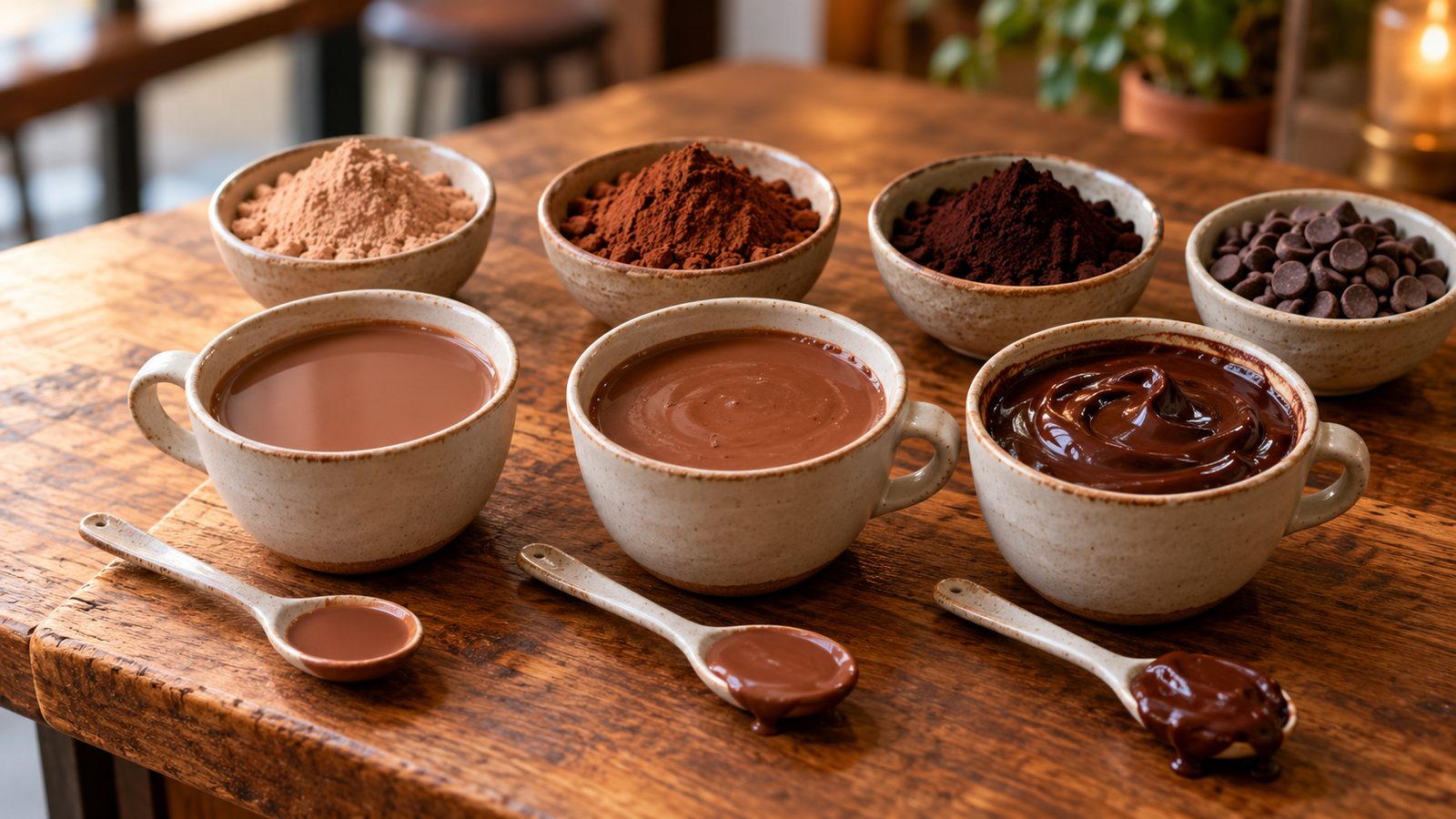
Cocoa powder is what is left after most of the cocoa butter is pressed out of ground cocoa beans. Rouxbe, a cooking school, puts supermarket cocoa powder at about 10 to 12 percent cocoa butter. Premium cocoa powder keeps about 22 percent or more.
Chocolate keeps all of its cocoa butter (The Nibble, linked below). That fat gives the cup its body.
So a cup made from cocoa powder, sugar and milk is lighter by nature. A cup made with chocolate, as chips, callets or a ganache, is thicker by nature. Neither is wrong. But if your menu says "thick hot chocolate", cocoa powder alone will not deliver it.
A premix that combines cocoa and chocolate chips, portioned per cup, gives both flavour and body and removes the scoop. Ours is built that way.
 Choosing a premixHow to Choose a Hot Chocolate Premix for Your Cafe6 min read →
1. Heat in a pan, not on the wand.
2. Portion or weigh, never scoop by eye.
3. Use milk, never water.
4. Whisk until no flecks remain.
5. Do not reheat a made cup.
Yes, but steam the milk alone. Do not put powder in the jug. Mix the powder into a paste in the cup with a little hot milk, then pour in the rest. The cup will be lighter than a pan-made one, because the wand stops at about 60 to 65 °C, before most starch thickens.
Dry cocoa forms clumps that seal on the outside when liquid hits them. Stirring moves them without opening them. Make a paste with the powder and a small amount of hot milk first, then add the rest. If your mix has chocolate chips, whisk until no dark specks remain at the bottom.
No. Cocoa powder has most of its cocoa butter pressed out, so it keeps only about 10 to 24 percent fat. Hot chocolate made with chocolate keeps all of the cocoa butter, which gives body. A drink made with cocoa powder alone tastes lighter and can taste dusty or thin.
Milk. Water carries no fat and no protein, so a water-based cup tastes thin. Milk adds body and helps the cocoa mix in smoothly. Cutting milk with water saves a few rupees per cup. In our experience, customers taste the difference by the second sip.
Remove the scoop. Weigh the powder on a small scale, or use pre-portioned sachets, so every cup gets the same amount. Fix the milk volume with a marked jug. Then the only variables left are heat and whisking. In our experience, staff learn those in one shift.
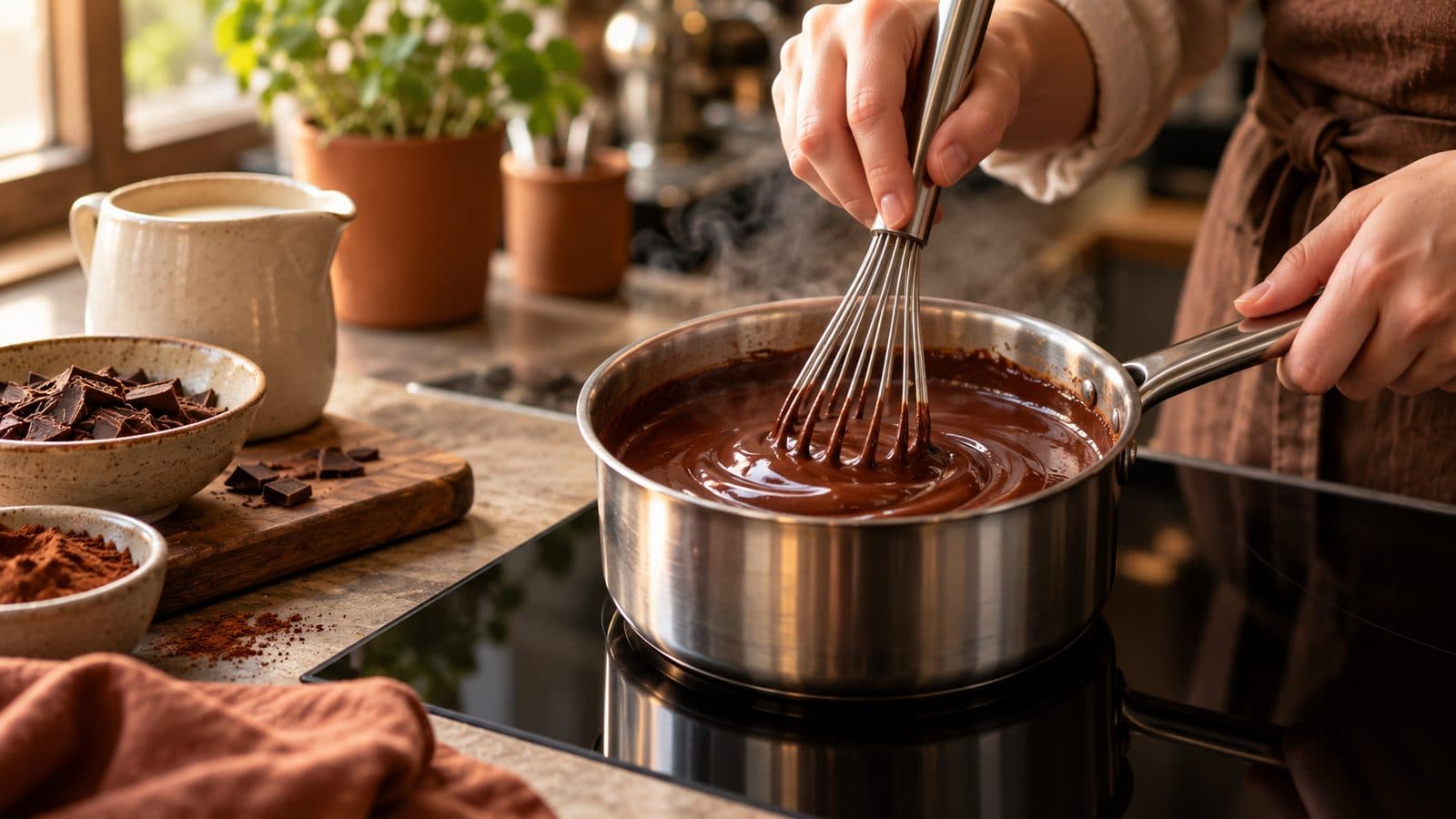
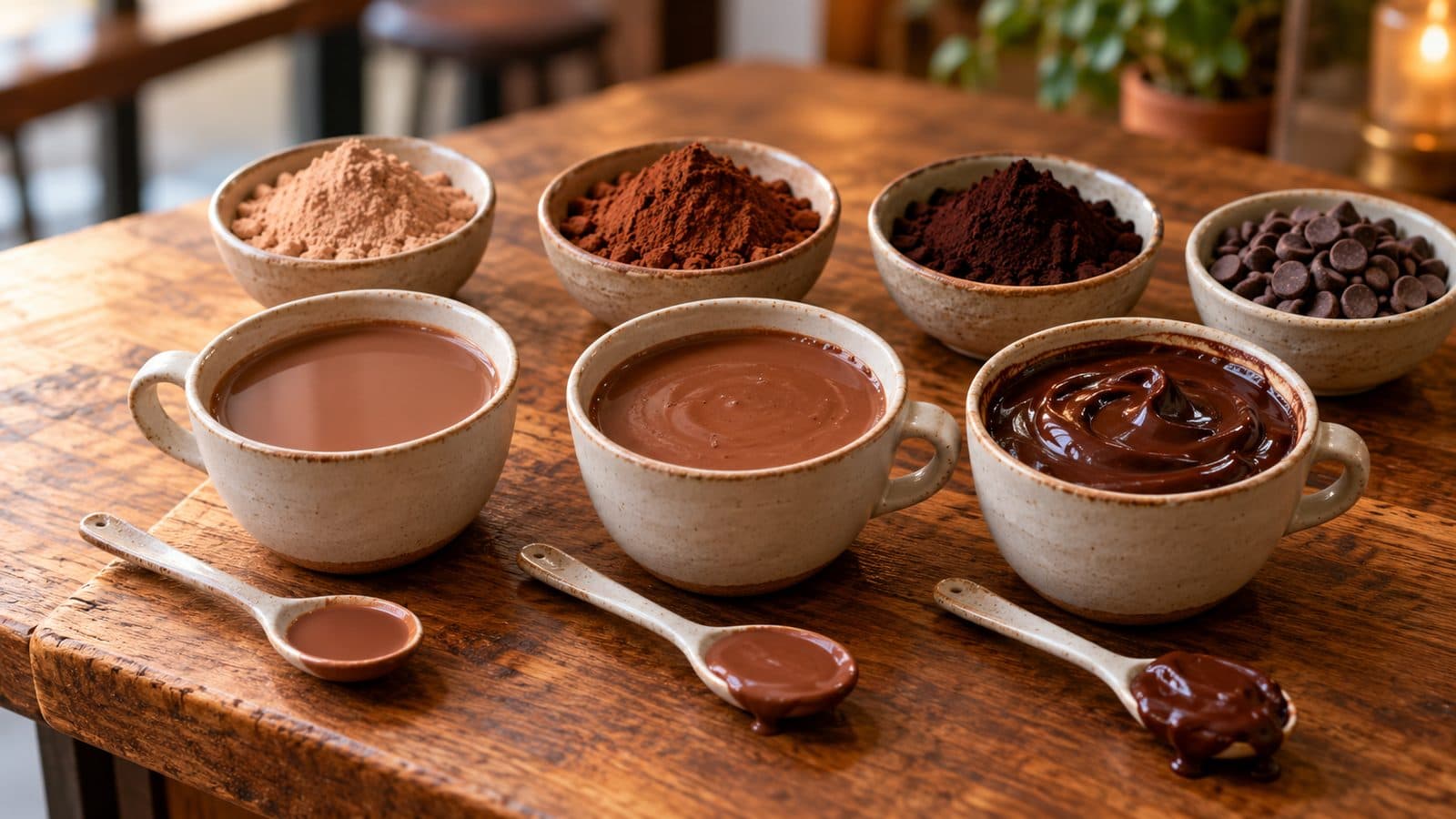
Four ways cafes make hot chocolate, what each one does to the cup, and the method we use for a thick cup in up to 2 minutes.
Price per kilo is the wrong first number. Eight questions to ask any supplier, including us, before you buy.
A kiosk costs Rs 3 to 5 lakh. A small cafe costs Rs 8 to 15 lakh. Every guide stops there. Here is the line that keeps costing you after the doors open.