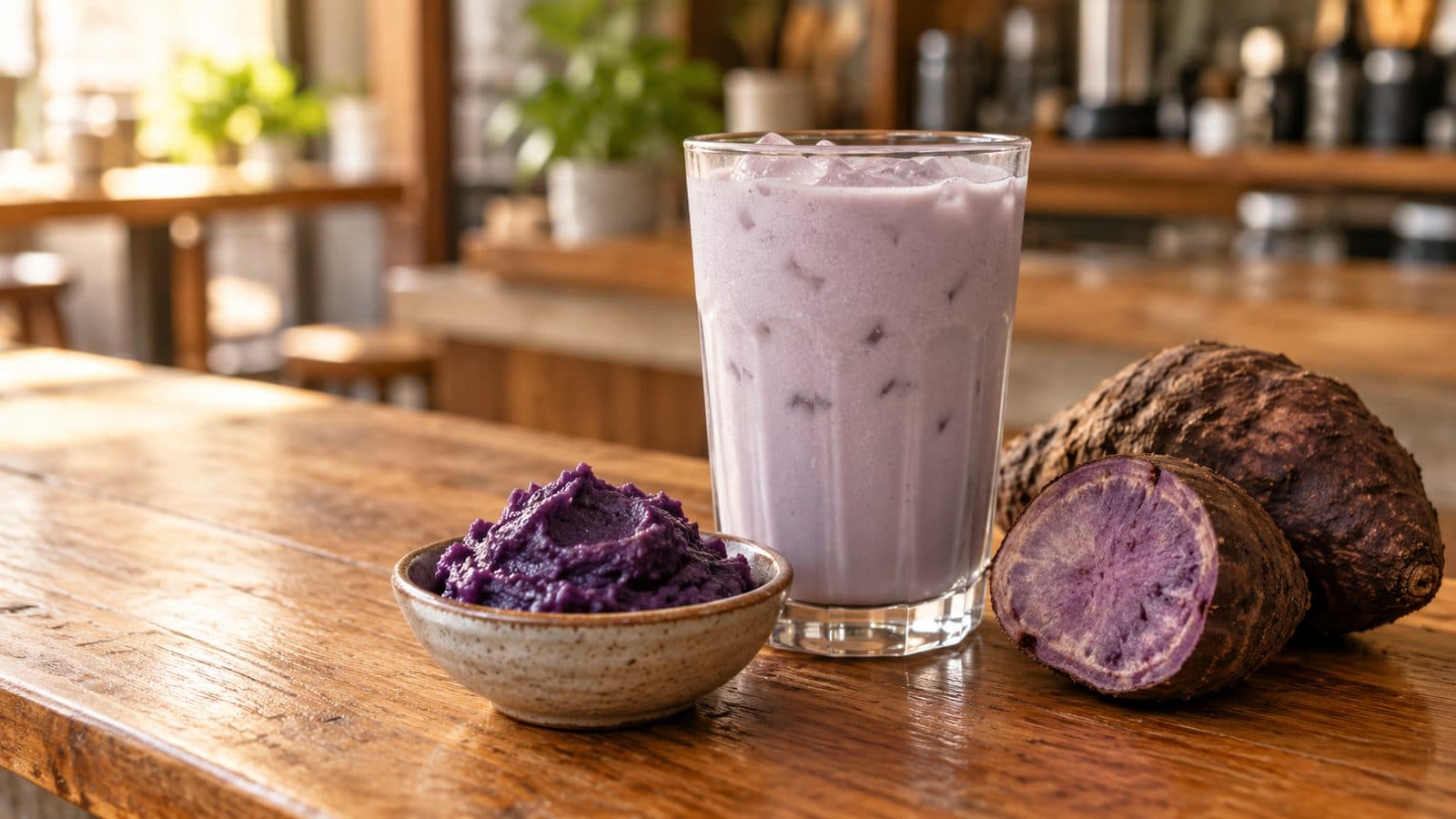
Our R&D team tasted an ube sample this year and found almost nothing. A little earthiness. Mostly colour.
We asked a supplier we work with in the Philippines what we were doing wrong. The answer changed how we think about ube.
Two reasons ube can taste of nothing
The first reason is that it might not be ube. A lot of what trades as ube around the world is something else.
The second reason is how it was tasted. Ube's aroma compounds are largely fat-soluble. Tasted dry, off a spoon, even genuine ube gives very little. The flavour arrives when it meets fat and dairy.
Ube tasted plain is subtle. Ube cooked into milk is the real product.
What ube is, and what it is not
Ube is a purple yam. It is not taro. It is not purple sweet potato either.
Purple sweet potato is sweeter, less starchy and cheaper, and it is the bulk of what trades internationally as ube. Add dye and flavouring and it looks the part.
The bigger problem is that the market treats ube as a colour. Products get built backwards from the purple. That is why buyers expect neon, and expect it to taste loud.
How to test an ube sample
Four checks, in this order.
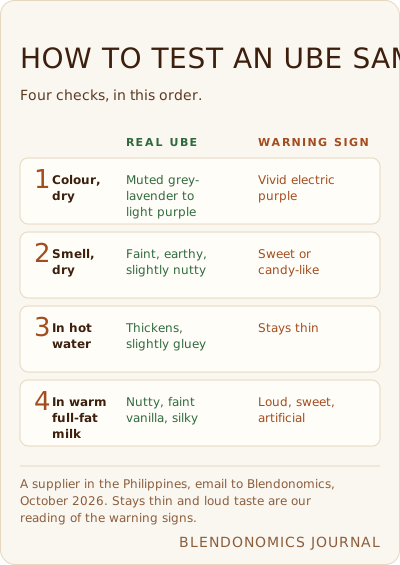
1. Colour. Dry powder should be a muted greyish lavender to light purple, darkening when wet. Vivid electric purple means dye, or purple sweet potato mixed in.
2. Smell. Faint, earthy, slightly nutty. A sweeter, roasted sweet potato smell points to sweet potato. A strong vanilla or candy smell means added flavouring.
3. Hot water. Ube is high in starch and low in sugar. A spoonful in hot water should thicken and turn slightly gluey.
4. Warm milk. Cook a spoonful into warm full-fat or condensed milk. This is where it arrives: nutty, faintly vanilla, silky.
Run it through the durability test
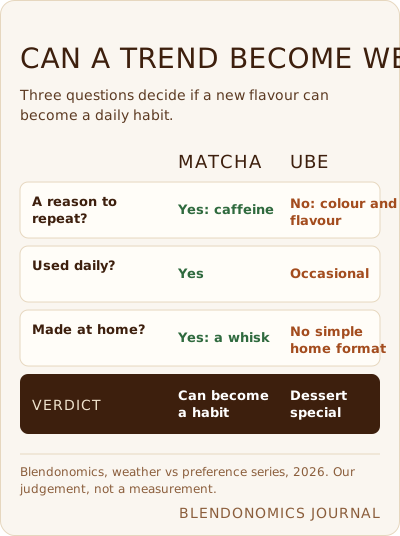
Matcha has caffeine, a reason to come back every day. Ube does not. It is a flavour and a dessert, and the trend is young: global online interest only took off from February 2026. One trade forecast gives ube growth of 6.9 percent a year to 2035. That is a forecast, not a measurement.
And in India, we found no data on ube demand at all. Anyone who tells you ube is proven here is guessing.
So ube is not a daily habit in the making. It is a dessert flavour. That is still a good thing to sell, if you sell it the right way.
Do not copy Western cafes
Matcha struggled in the Philippines for a while, partly on quality and partly because it was served plain, grassy and unsweetened. Ube carries the same risk if it is launched the same way.
In the Philippines, ube goes into a creamy base: milk or condensed milk cooked down with ube into a jam called ube halaya. That base is the foundation of almost every Philippine ube dessert.
That points somewhere natural for India. Indian desserts are already built on milk cooked down: rabri, basundi, kulfi, halwa. One cook in the Philippines made gulab jamun coloured and flavoured with ube, and it worked.
How to put ube on your menu
1. Make a base, not a sprinkle. Cook ube into milk or condensed milk once, in the kitchen. Dose that base per drink or dessert. Do not stir dry powder into cold milk at the counter.
2. Start with a dessert or a milky drink. Ube shake, ube kulfi, an ube milk cake. Things with fat in them.
3. Do not chase neon. A muted purple is what the real thing looks like. Tell customers so.
4. Run it as a special, with an end date. Count how many people order it a second time.
Ube is a dessert strategy, not a daily-drink strategy.
The series in one line each
Hot chocolate sells where milk is scarce, so it goes South and East.
Specialty coffee sells where the filter coffee habit is weak, so it goes North and West.
Matcha has no habit anywhere, so it goes wherever the cafes are.
Ube goes into the dessert menu, cooked into milk.
Sources
- A supplier in the Philippines, email to Blendonomics, October 2026 (testing ube, ube halaya, fat-soluble aroma)
- Beverage Daily, the next matcha? Ube surges in popularity, April 2026 (interest surging since February; 6.9 percent annual growth forecast to 2035)
Keep reading
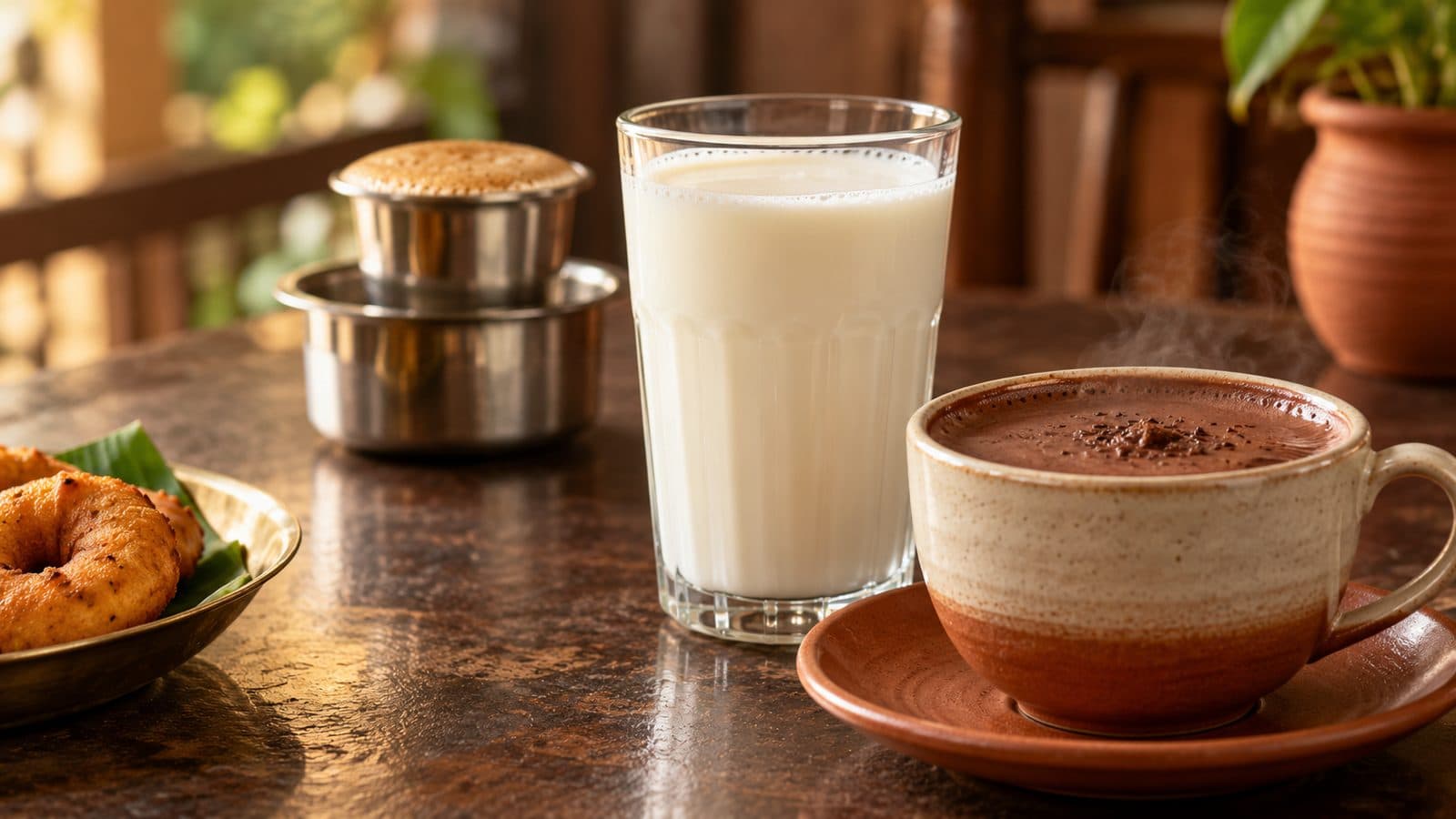
Hot Chocolate Sells Best Where Milk Is Scarcest
India's dairy belt looks like the obvious market for hot chocolate. It is not. Part 1 of our weather vs preference series.
Matcha Has No History in India. That Is Its Edge and Its Risk.
No childhood habit, no price anchor, no regional heartland. What that means for a cafe putting matcha on the menu. Part 3 of our weather vs preference series.
The Milk Line: Which Drinks Sell in Indian Cafes, and Why Habit Beats Weather
Habit decides who buys a drink in India. Weather decides when. The milk line, the model behind it and what 59 cafe accounts say, in one place.