INDUSTRY
The Milk Line: Which Drinks Sell in Indian Cafes, and Why Habit Beats Weather
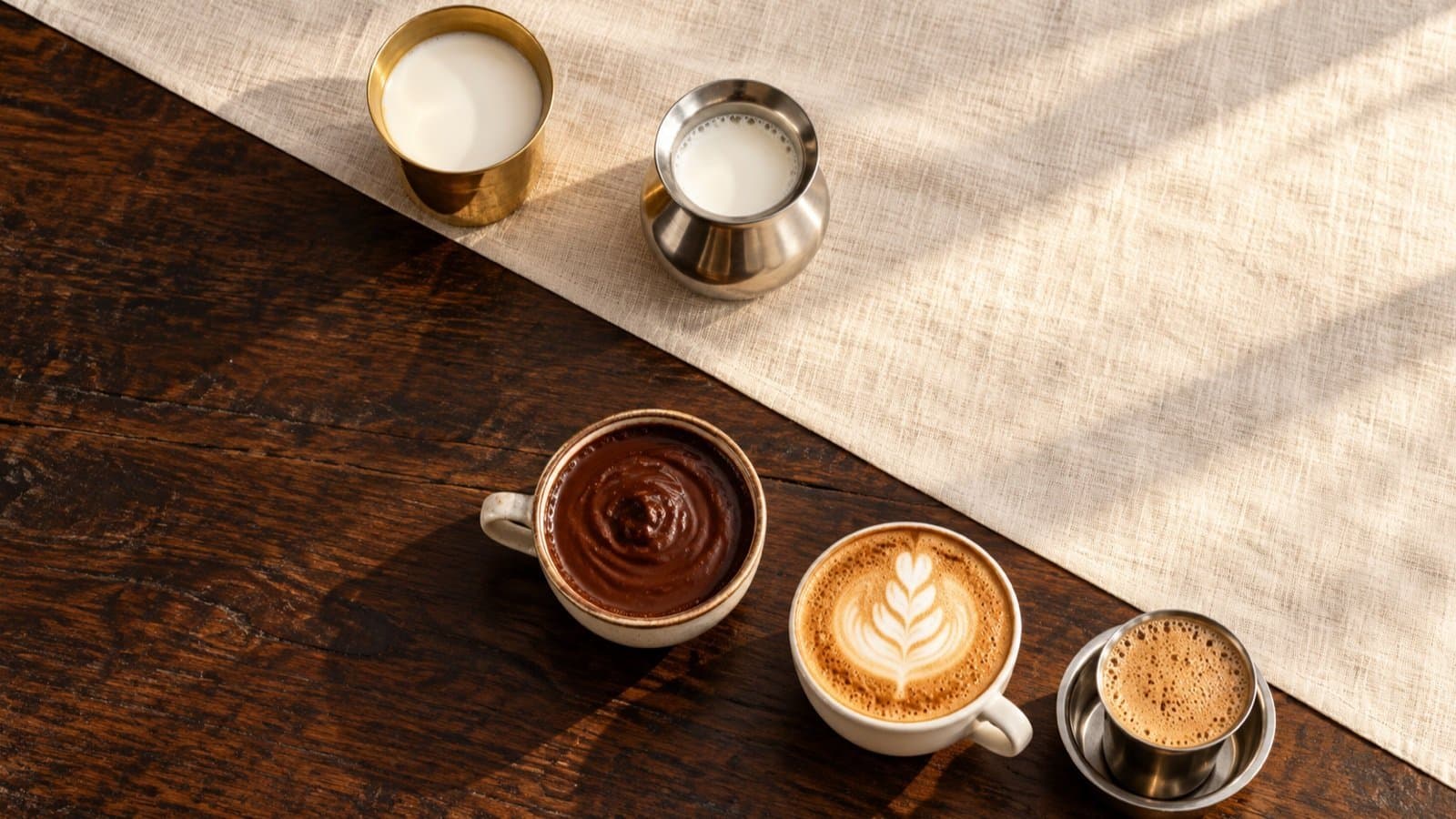
Twelve articles. One idea. And the question still lands in our inbox every week: what should my cafe sell in my city? This page is the whole answer, and the map of where each piece lives.
The answer rests on NDDB milk data for 10 states and on 59 cafe and restaurant accounts that bought from us. If you run or plan a cafe, the decision table near the end is where to look first.
What are weather and preference?
Picture a steel glass of milk in a Punjab home. Nobody ordered it. That is weather: the habit you grew up inside. Preference is a choice made against it. A habit holds a product up in a bad month. A choice has to keep winning. The full idea is in Hot Chocolate Sells Best Where Milk Is Scarcest.
How much milk does each Indian state drink?
Start with the number that surprised us. Milk per person per day, NDDB 2023-24, runs from 1,245 g in Punjab to 197 g in Kerala. Punjab has 6.3 times Kerala's milk per head.
The India figure is 471 g. Draw a diagonal from Gujarat to Bihar. Above it milk is plentiful. Below it much less so. We call that diagonal the milk line.
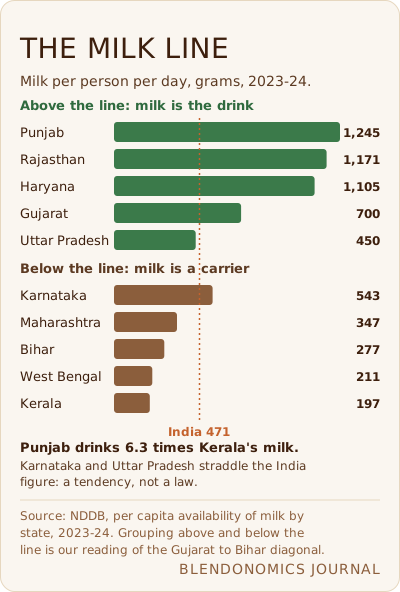
Two states do not sit neatly. Uttar Pradesh, a northern state, is at 450 g, just under the India figure. Karnataka, in the South, is at 543 g, just over it. So the line is a tendency. It is not a law.
Why do milk-rich states not pay to flavour milk?
Most people miss this: the milk line is a competition map, not a demand map. Where milk is the drink, a flavour has nothing to sell against. Where it is a carrier for coffee, tea or malt, a better cup has a budget to compete for. The argument, the malted drink precedent (about 15% of its sales in the North and West, one case study) and the lactose question are in the first article. The East version is in Kolkata.
Do weather and habit decide the calendar or the customer?
One objection is fair. Hot chocolate is a cold weather drink, and the markets with the strongest milk-drink habit have the mildest winters. Does habit really beat the thermometer?
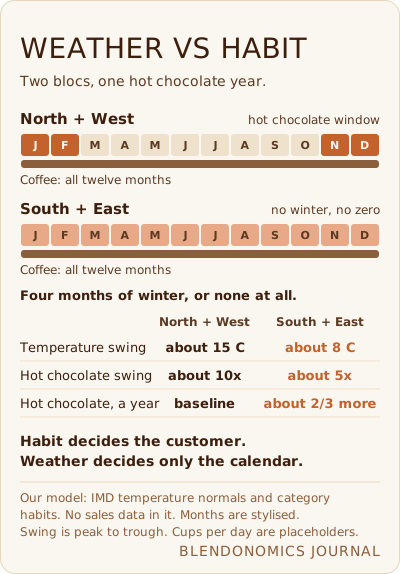
So we built a model. Two blocs. North + West, with Delhi NCR, Mumbai, Pune, Lucknow, Ahmedabad, Jaipur and Nagpur. South + East, with Bengaluru, Hyderabad, Chennai, Kolkata and Patna. Cities were weighted by quick-commerce dark-store counts from July 2026.
To be plain: the model has no sales data in it. The demand curves are argued, not fitted. Cups per day are placeholders. Read it as structure, not a forecast.
Three results.
- Habit beat the thermometer. Over a year, South + East came out about two thirds ahead on hot chocolate, with no winter at all.
- The shape differs. North + West is a sharp spike, a swing of about 10 times from peak to trough. South + East is gentler, about 5 times, and never drops to zero.
- The colder bloc is the steadier one. With coffee in the mix, both blocs stay close to flat over the year, about 1.0 to 1.1 times, and the colder bloc is the flatter one. Coffee is a habit, so it holds the floor. Seasonality is a mix problem, not a climate problem.
That is the whole idea in one line. It is also why this model is only half the story. We needed our own orders to see if it held.
What did our own orders confirm, and what did they break?
We pulled every cafe, restaurant and hotel account that bought from us since July 2025. 59 accounts (our data). Of their order value, hot chocolate is 86%, coffee blends 10%, 100% Arabica coffees 2.5%, single origin 1%, ube 0.3% and matcha 0.2%.
One limit first. This map shows where our sales team and partners reached. It is not all of India's demand. The full cut is in what 59 cafes ordered.
Here is what held.
- Hot chocolate led everywhere we reached. From 59% in the North to 95% in the South (our data).
- Maharashtra held. It has 347 g of milk a person, under the India figure. The West is our biggest block, 28 accounts and 70% of cafe order value. It leans on one Pune-based chain whose 24 outlets buy from us.
- The North showed the coffee side. The 21 North accounts put 33% of their order value into blends. Nowhere else is it a real share.
And what broke.
- Gujarat did not hold. It has 700 g of milk a person, and the West still bought 93% hot chocolate. We cannot split the West by state, so we claim no more than that. Ahmedabad gives one reason: a thick cup sells as an evening dessert, not as milk.
- The model said South + East. Our orders said West. We have 7 South accounts (8% of order value) and 1 East account. That is too few to confirm or deny the model.
- Search and orders split. Hot chocolate search is middling in the West (Gujarat 44, Maharashtra 63, Google Trends, last 12 months) and our orders there are the highest. The side by side is in what 59 cafes ordered.
Where do coffee, hot chocolate, matcha and ube sit now?
Four products, four different answers. Same test for each: is the customer buying a habit, or a choice?
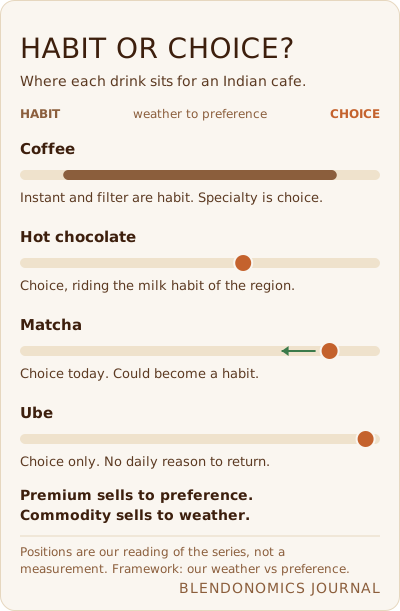
- Coffee is both. Instant is 60 to 65% of India's coffee by volume, a habit at commodity prices. Specialty coffee is a choice, and it grew up in the North, not where the habit is oldest. See Specialty Coffee Grew Up in Delhi, Not Chennai, the milk line for coffee and hill station coffee.
- Hot chocolate is a choice that rides a habit. In our view it needs a habit of paying for milk drinks under it, and it has no home habit of its own. See Ahmedabad, Chandigarh, Kolkata and hill station cafes.
- Matcha is a pure choice, with a path to habit. Searches in India went from an index of 11 to 53 between 2021 and 2026 (Google Trends, scored inside its own comparison). 4 cafe accounts bought it from us and 0 of them reordered (our data). Caffeine and a home format give it a route. See the matcha article and the matcha test.
- Ube is a pure choice, with no clear path. Its index went from 5 to 13 inside its own comparison. 1 account bought it from us and did not reorder (our data). A colour does not give anyone a daily reason. See the ube article.
A habit keeps a product alive. A choice has to keep winning.
What should your cafe lead with, by region?
Here is the table we would use. Read the first column as a tendency, not a border.
| Region | Lead the menu | Add second | Season |
|---|---|---|---|
| North dairy belt | Coffee blend and hot chocolate, as equals | Cold coffee for summer | Hot chocolate Nov to Feb, coffee all year |
| West | Thick hot chocolate in a small cup | One coffee blend, not a list | Hot chocolate peaks Nov to Feb |
| South | Hot chocolate on the main menu | Iced hot chocolate, cold coffee | All year, not a winter special |
| East | Hot chocolate that does not taste malted | A coffee blend, tested small | All year, but test it first |
| Hills | Thick hot chocolate as the main drink | One all-round blend for the crowd | Cool months, and May in Ooty |
| Metro preference pockets | House blend plus one single origin | Iced matcha, tested for 8 weeks | Matcha in summer, hot chocolate in winter |
Our orders back the North and West rows. The South, East and hills rows rest on 7, 1 and 1 accounts, so they are our read of the milk line and the spoke articles, not proof. The metro row comes from search and from the matcha test.
If you run a chain, do not put one menu in every city. Keep one base menu, one blend and one hot chocolate, and change which one leads. Our new city checklist covers the rest.
What do we still not know?
More than we would like.
- The model has no sales data. We will fit it to real monthly orders after a full winter.
- Our orders show where we reached. The West leans on one 24 outlet chain. The South, East and hills are one to seven accounts each.
- The Horlicks split is one case study. Part of its North and West gap is reach.
- We cannot split the West by state. So Gujarat against Maharashtra stays open.
- We found no data on ube demand in India. Anyone who calls it proven is guessing.
What would change our mind?
- A full winter of orders in which North + West cafes buy more hot chocolate per account than South + East cafes.
- A matcha test in which any of our accounts reorders.
- A state split of the West showing Gujarat behaves unlike Maharashtra.
If those happen, the line moves. We would rather say so now than defend it later.
If hot chocolate leads your menu, our classic dark base and everyday coffee blends are made for the lead and second slots in the table, and a sample kit lets you taste both before an order. Ask on our B2B partnership page.
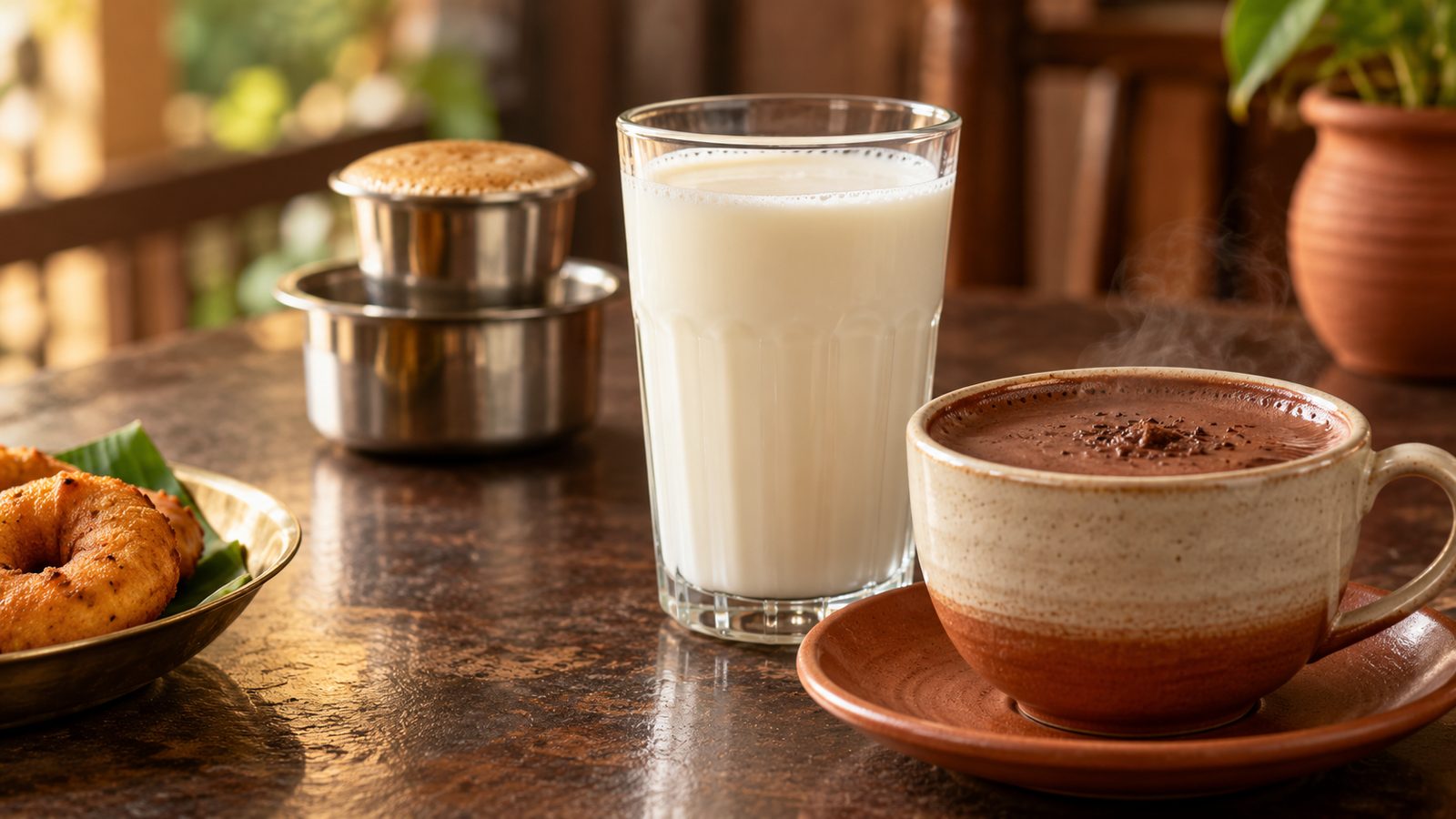 Start of the seriesHot Chocolate Sells Best Where Milk Is Scarcest6 min read →
 Our order mapWhat Indian Cafes Order Most: Hot Chocolate or Coffee? 59 Accounts Against the Milk Line6 min read →
What to do next
- Find your row in the table. Write down the lead drink and the second drink.
- Count what your own cafe sells in a week. Hot chocolate, blends, anything else.
- Test the second drink small, for 8 weeks, and count the reorders.
- If you run a chain, keep one base menu and change only which drink leads in each city.
- Ask for a sample kit before you commit to a bulk order.
Weather sets the month. Habit sets the customer. Which one is your menu planned around?
Sources
- NDDB, per capita availability of milk by states and union territories, 2023-24 (Punjab 1,245 g, Rajasthan 1,171, Haryana 1,105, Gujarat 700, Karnataka 543, Uttar Pradesh 450, Maharashtra 347, Bihar 277, West Bengal 211, Kerala 197, India 471)
- IIM Shillong journal, case study on Horlicks (North and West about 15% of sales; GSK expanding distribution there)
- Coffee Board of India and CRISIL, Coffee consumption trends in India, 2023, published April 2024 (80% add milk; South 75 to 80% of volume; instant 60 to 65% of volume)
- Google Trends, India, yearly averages of weekly interest 2021 and 2026, and hot chocolate by state over the last 12 months, pulled 24 October 2026, our pull (index 0 to 100 inside each comparison).
- Blendonomics order records (Busy accounts, sales since July 2025, 59 cafe and restaurant accounts, one Pune-based chain with 24 outlets in the West count), pulled 24 October 2026, our data. Shows where our sales team and partners reached, not all of India's demand.
- Blendonomics seasonality model: IMD temperature normals 1991 to 2020 and category habits, quick-commerce dark-store counts July 2026 for bloc weights. No sales data in it. Our model.
- Blendonomics journal: Hot Chocolate Sells Best Where Milk Is Scarcest; Specialty Coffee Grew Up in Delhi, Not Chennai; Weather vs Preference: Matcha and Ube; Ahmedabad, Chandigarh, Kolkata and hill station hot chocolate; What 59 Cafes Ordered; the milk line for coffee; hill station coffee; the matcha test.
Use it on your menu
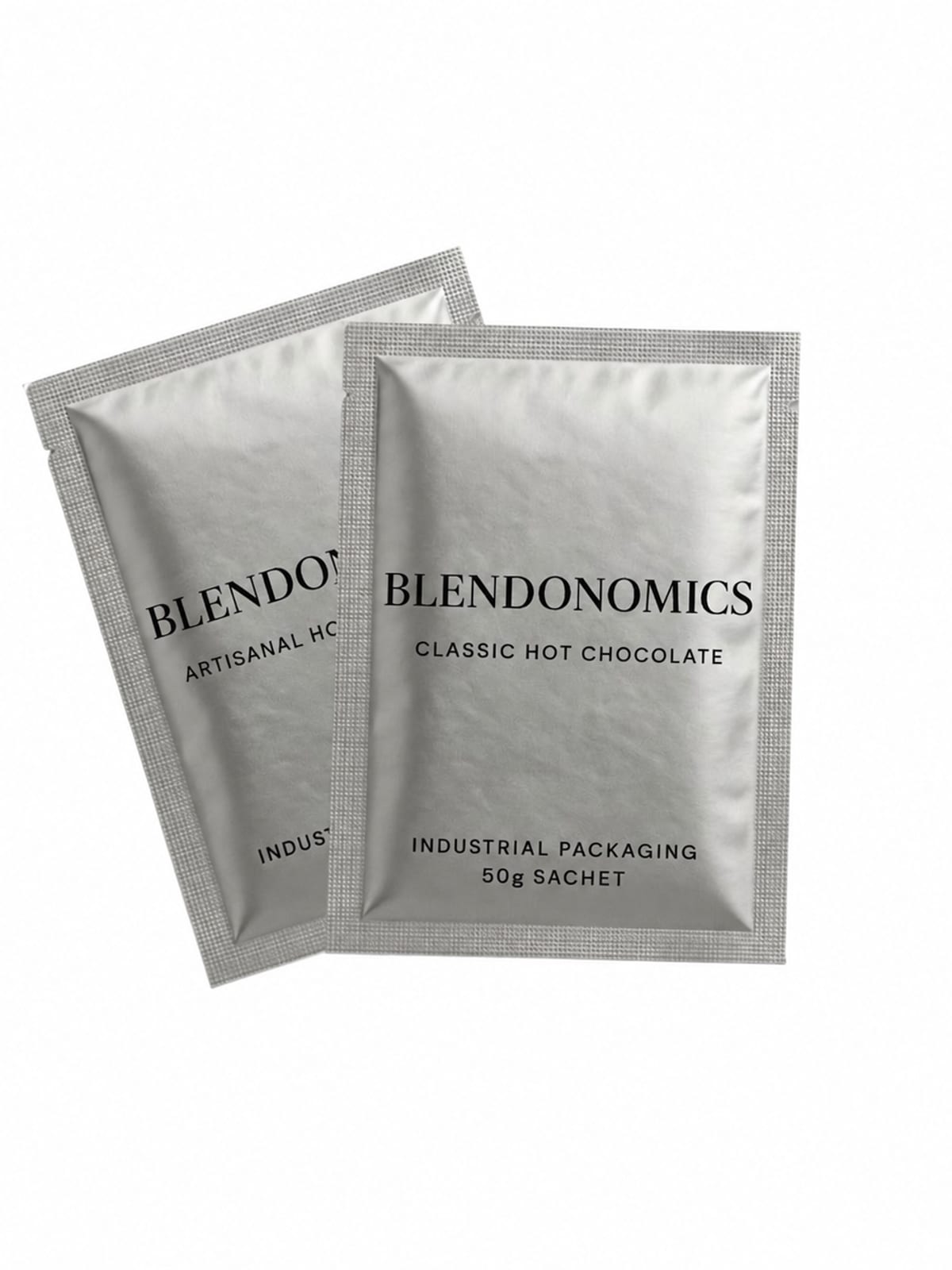 Hot chocolateClassic DarkThe Foundational Gold StandardView product →
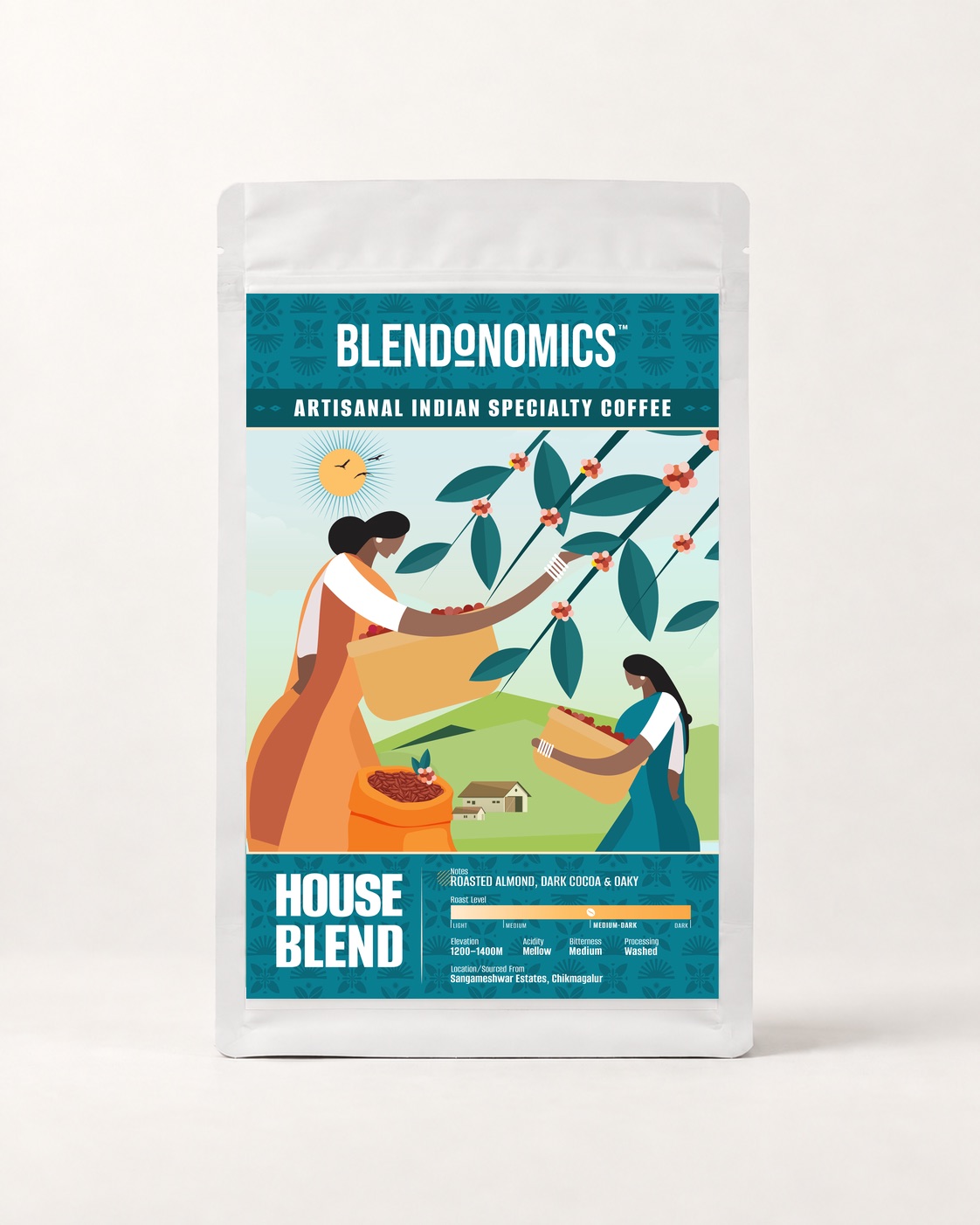 CoffeeHouse BlendOur Everyday BlendView product →
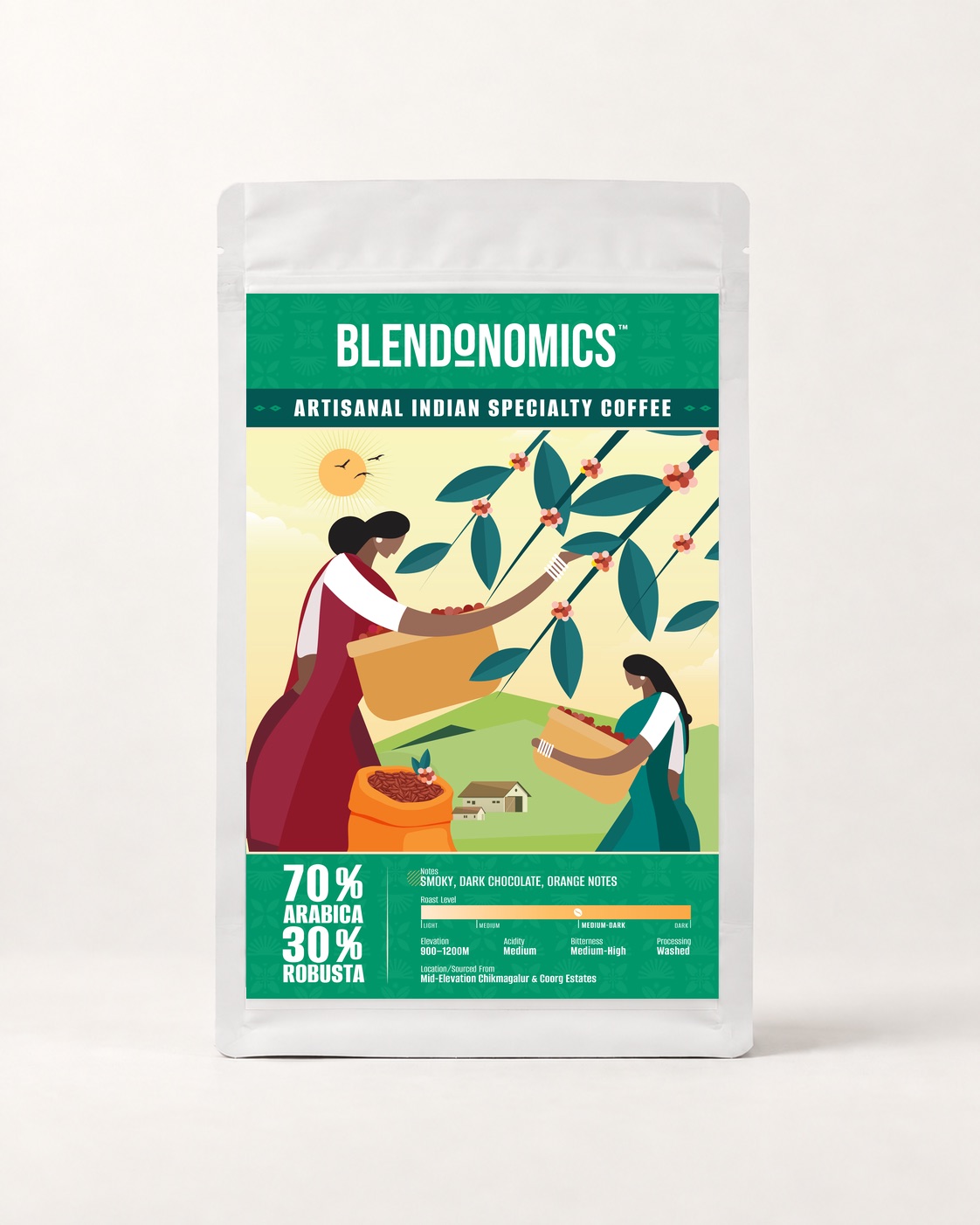 Coffee70/30 Blend70% Arabica / 30% RobustaView product →Sample kitClassic Flavours SamplerClassic Dark / Hazelnut / Irish / Orange / StrawberryView product →
Supplying a cafe? Request a sample kit →
Keep reading
Hot Chocolate Sells Best Where Milk Is Scarcest
India's dairy belt looks like the obvious market for hot chocolate. It is not. Part 1 of our weather vs preference series.
What Indian Cafes Order Most: Hot Chocolate or Coffee? 59 Accounts Against the Milk Line
In the West, 93% of what cafes ordered from us was hot chocolate. In the North, coffee blends were a third. Our order map against the milk line.
The Coffee Mistake New Cafes Make: Pick the Blend by Location
New cafes buy the dearest coffee or a famous brand before they know what customers order. The milk line for coffee shows which blend fits where.