HC | CLASSICS
INDUSTRY
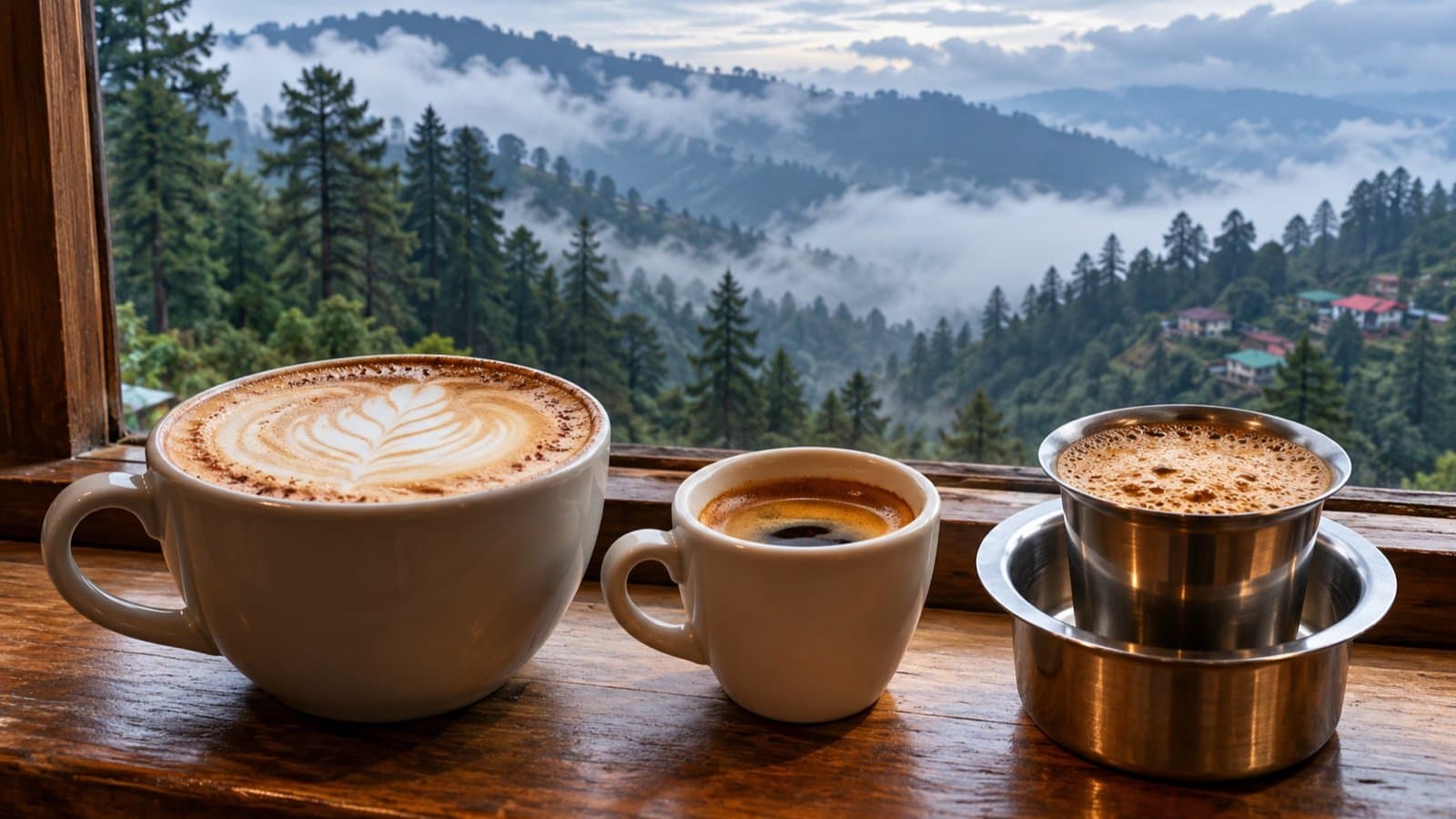
We thought hill stations were the exception to the milk line. Our assumption: a cafe on Mall Road serves people from every side of India at once, so it cannot follow one local habit.
Then we looked at the numbers. We were half right. The crowd is mixed, but from one side.
Picture Shimla's Mall Road in May. Every table is a family from somewhere else. The waiter does not know which table drinks what. So which coffee blend should the cafe buy?
The milk line sorts customers by the habit of the region they grew up in. Above a Gujarat to Bihar diagonal, milk is plentiful and is the drink itself. Below it, milk is a carrier for coffee, tea or malt.
So a cafe in Chennai and a cafe in Chandigarh face different customers. That works when the customers live nearby. A hill station breaks it, because the customers do not.
Most people miss this: a hill cafe is not mixed from every side. It is mixed from the side next door.
In Himachal, a 2017 state tourism survey put Delhi at 22% of visitors, Punjab at 18.5%, Haryana at 11% and Chandigarh at 6.6%. Together that is 58%. Maharashtra was 4.1% and West Bengal 2.1%. Foreign visitors were 83,000 of about 1.8 crore in 2024, about 0.5%.
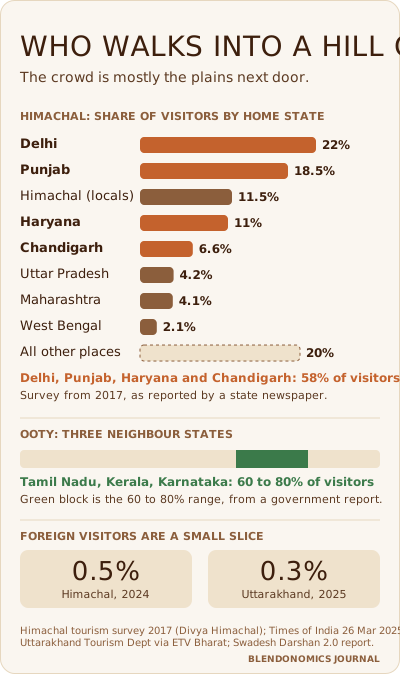
Ooty looks the same from the South. A government tourism consultant puts Tamil Nadu, Kerala and Karnataka at 60% to 80% of domestic visitors there. Uttarakhand's foreign share was 1,92,533 of 6.03 crore in 2025, about 0.3%.
We found no origin split for Uttarakhand or Darjeeling. The Ministry of Tourism says it keeps no district-level numbers. The Himachal split is 9 years old and the Ooty range is a report, not a count. Treat both as direction.
Yes, but it moves with the visitors, not the town. Our read: the milk line follows the crowd. In Himachal that is the dairy belt. In Ooty it is the filter coffee South. Our milk line for coffee article shows how to pick a blend by location when the customers are local.
Each crowd is still not one habit. Delhi is itself a mix of states. A Punjab family may want a milky cup. A Bengaluru family on the same street may want a strong black decoction. Both land in the same queue.
The Coffee Board's 2023 survey says North India's coffee demand is driven by tourists, and that milk is the most common add-on to coffee. So a hill cafe needs a coffee that works with milk first and holds up black second.
The milk line follows the visitors, not the town.
 The milk lineHot Chocolate Sells Best Where Milk Is Scarcest6 min read →
Hot chocolate. Not coffee.
Of the 59 cafe and restaurant accounts that bought from us since July 2025, 1 is a hill cafe (Himachal, Uttarakhand or Ladakh). It bought only hot chocolate. A Shimla distributor that supplies hill cafes also buys mainly hot chocolate. Our map shows where our sales team and partners reached, not all of India's demand.
So everything below about coffee is our reading, not our hill sales data. I would rather say that than sell you a story.
We would pick one blend and run the whole bar on it. Three reasons, each with a number.
1. Most of your orders are milk drinks.
In most Indian cafes the bulk of coffee orders are cappuccinos, lattes and cold coffee, as our two-SKU menu article puts it. The blend has to hold its taste through milk and sugar. A blend with some Robusta, 70/30 or 80/20, does that.
2. Some of your guests drink it black.
Pick a blend that does not turn harsh without milk. Our House Blend is medium roasted and washed, with roasted almond and dark cocoa up front and a mellow acidity. That is why we list it for machine, press or pour over.
3. The season has no slack.
A hill cafe's rush is a few busy weeks, and new staff arrive for it. One bag, one grinder setting, the same cup on day 1 and day 60. That matters more here than a clever origin.
Which one? Our suggestion: House Blend (Rs 990 a kilo) if you serve filter and pour over alongside. 70/30 (Rs 1,100) if milk drinks are most of your orders. 80/20 (Rs 1,300) if you pull a lot of espresso and want more Arabica in the cup. Prices are from our site on 24 October 2026.
One blend. Five lines on the menu. The first figure below is our suggestion, not data from a hill cafe.
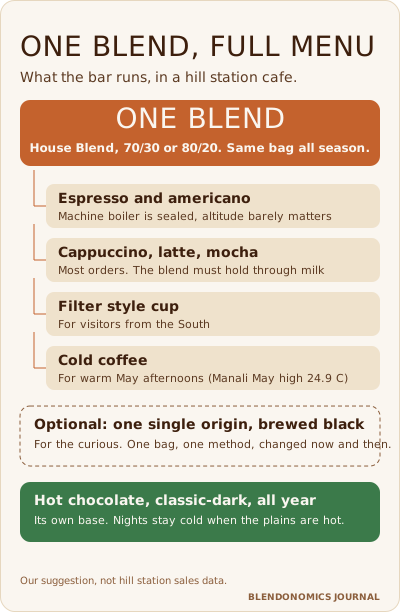
The single origin is for a coffee people drink once in a while. The blend is the coffee for every day. Do not make the single origin carry your bar.
 The two coffee menuThe Case for a Two-SKU Coffee Menu5 min read →
Yes. In May, Manali's average afternoon is 24.9 C (IMD normals, 1991 to 2020). That is a cold coffee afternoon.
Across India in 2026, Google Trends gave "cold coffee" a yearly average of 75 against 29 for "hot chocolate" in the same comparison. Cold coffee is searched far more than hot chocolate nationally. Plains visitors arrive expecting it.
So sell both. The cold coffee runs on the same blend, so it adds a drink, not a bag. Hot chocolate keeps the cool nights. Ooty's May night is 11.8 C.
Yes. Water boils at a lower temperature when the air is thinner. At sea level it is 100 C. At 2,057 m it is 92.9 C, and at 2,438 m it is 91.6 C (Engineering ToolBox). That puts Mussoorie, Darjeeling and Manali at about 93 C, Ooty at about 92 C and Shimla a little lower.
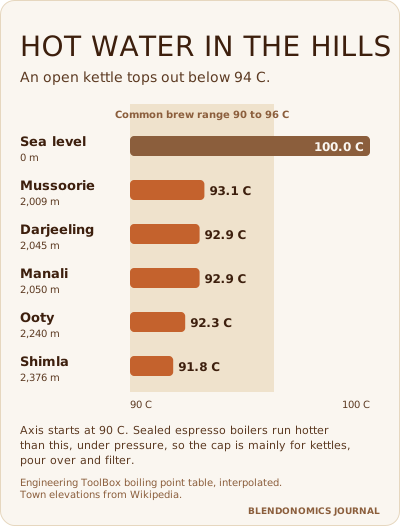
What that changes:
The simple read: espresso and milk drinks barely notice altitude. Filter and pour over do. That is one more reason to build the bar on the machine and treat the filter cup as the add-on.
All year, because the hill nights stay cold when the plains are hot. Our hill station hot chocolate article has the calendar.
We do sell hot chocolate to hill accounts. That is the one claim in this article that comes from our own books.
House Blend, 70/30 and 80/20 are our everyday blends. Classic-dark is our hot chocolate base. We would start any hill cafe on one blend plus classic-dark and add a single origin only when the first two run smoothly.
Our pages: House Blend, 70/30, 80/20 and classic-dark hot chocolate.
We can send a cafe sample so you taste it in your own milk before you buy a kilo. Ask on our cafe partnership page.
The plains buy coffee where they live. The hills sell it to whoever arrives. One blend, same cup, every day of the season.
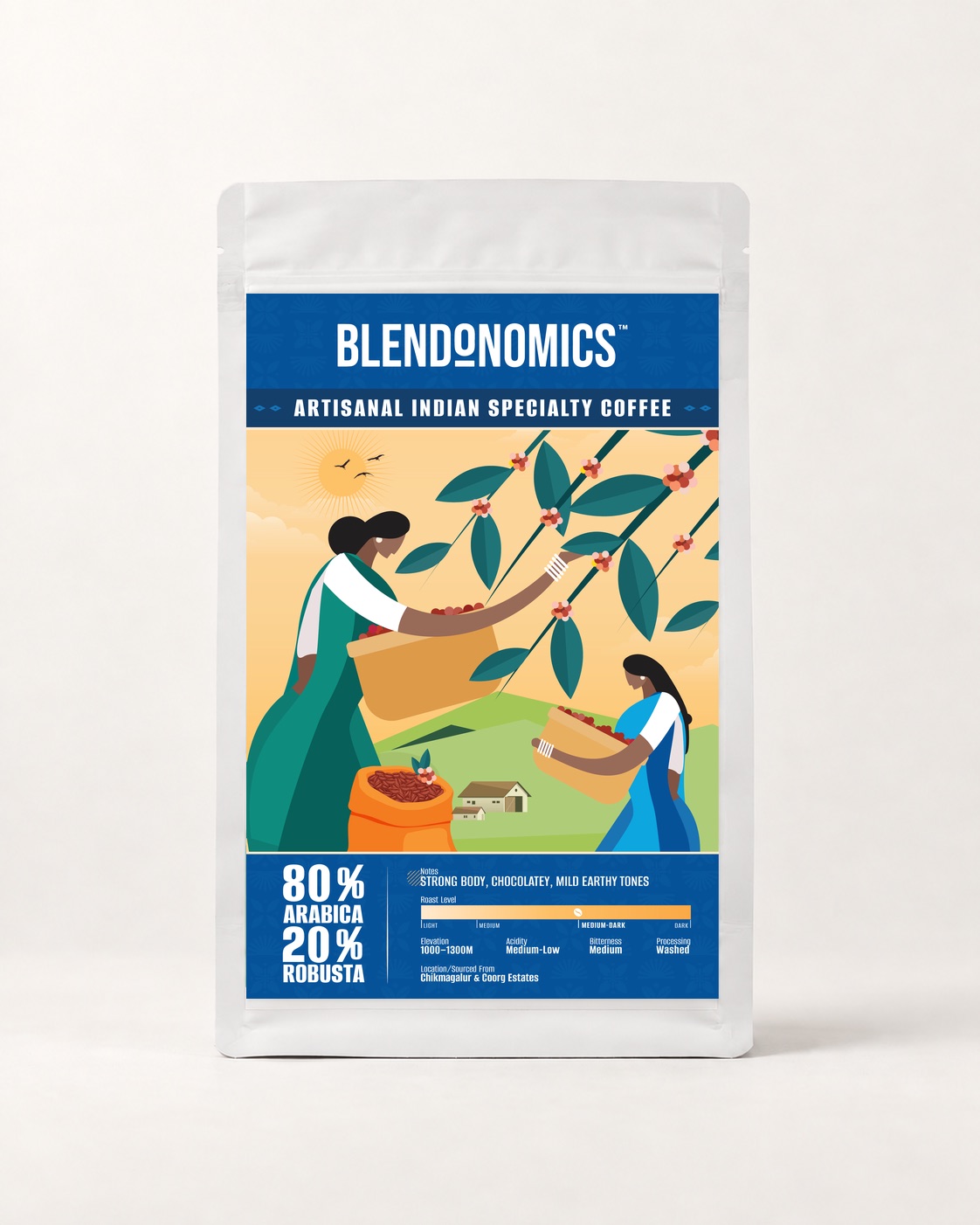 Coffee80/20 Premium Blend80% Arabica / 20% RobustaView product →
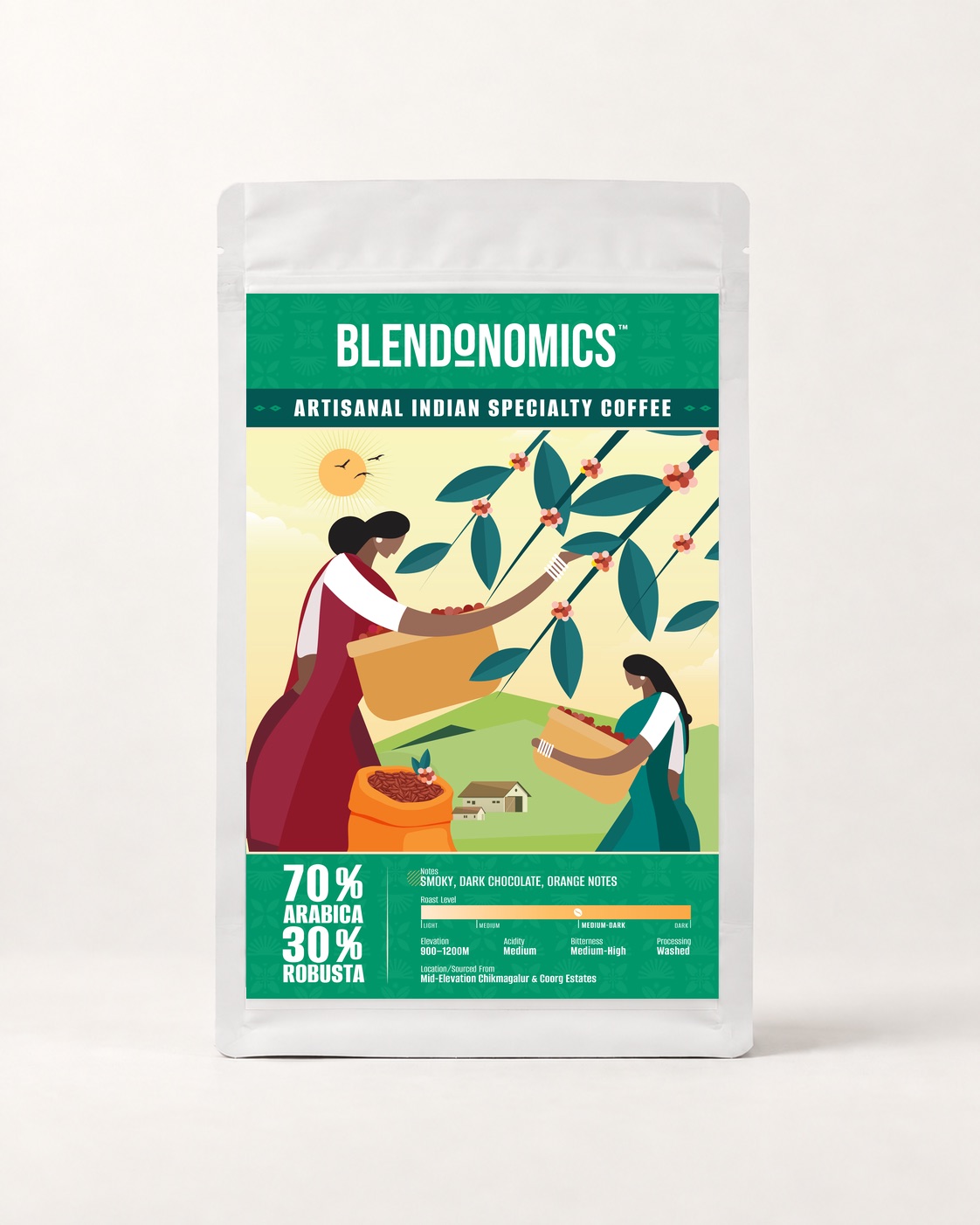 Coffee70/30 Blend70% Arabica / 30% RobustaView product →
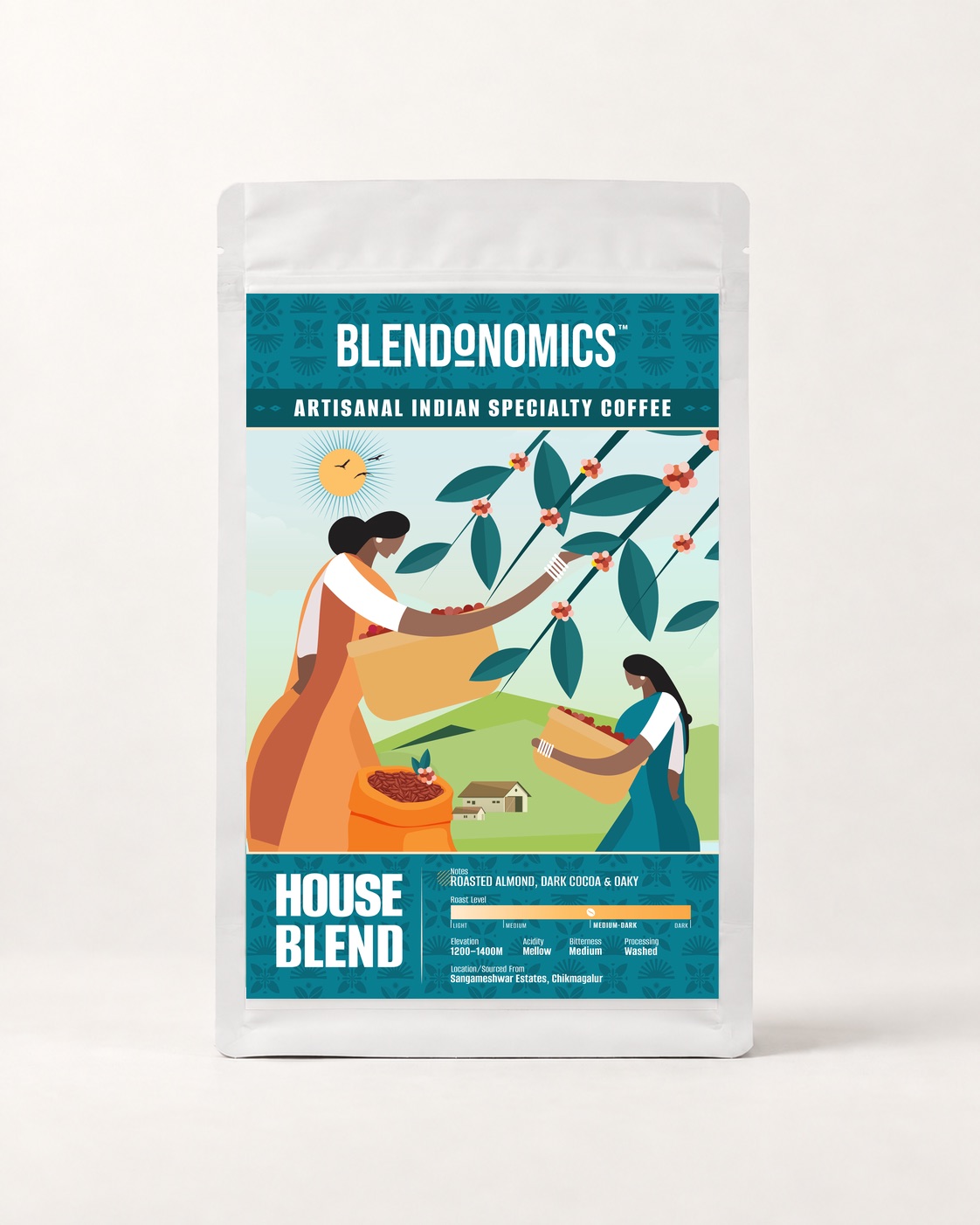 CoffeeHouse BlendOur Everyday BlendView product →
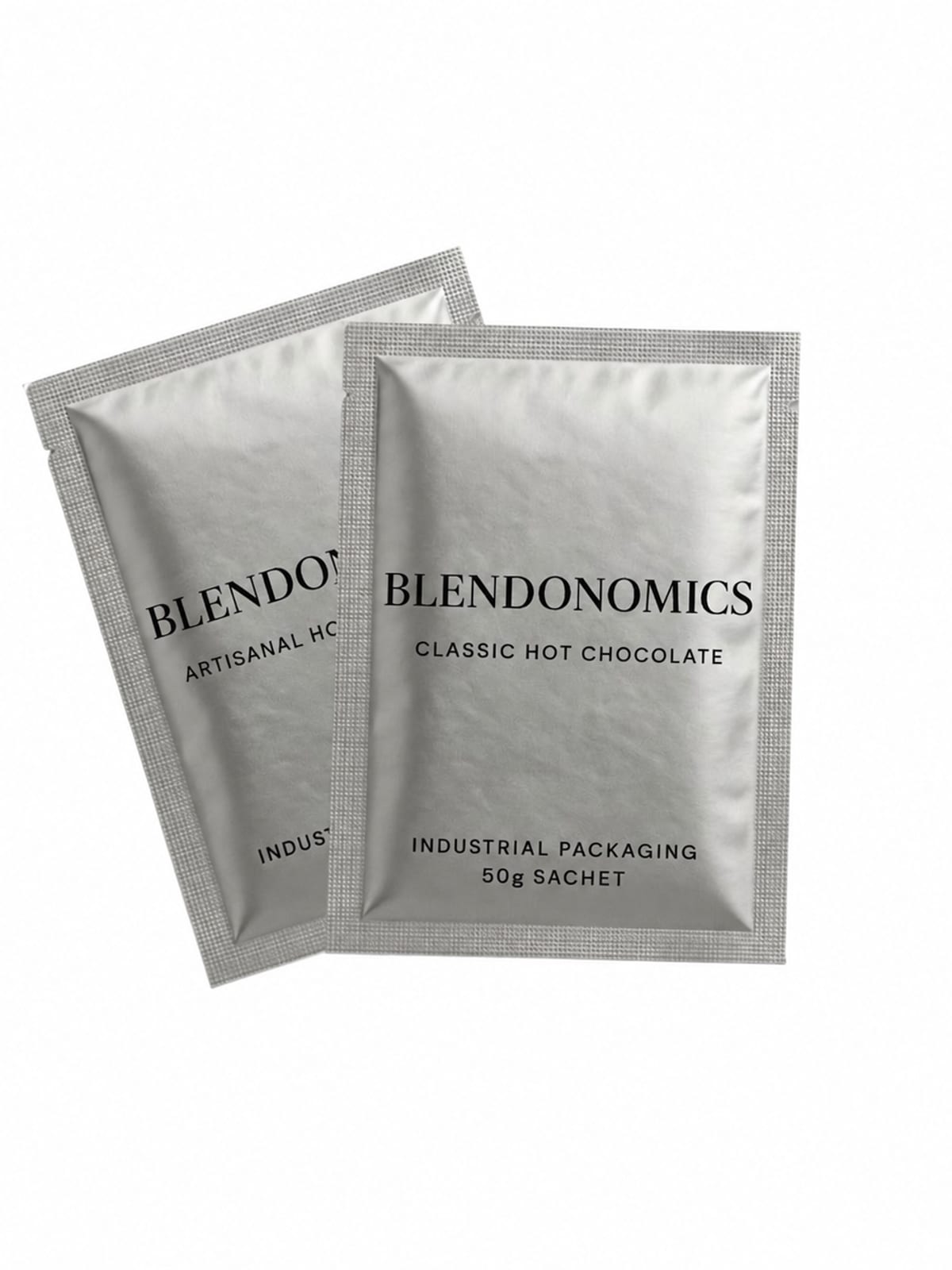 Hot chocolateClassic DarkThe Foundational Gold StandardView product →
Supplying a cafe? Request a sample kit →
Ooty and Kodaikanal sell thick hot chocolate in May, when the rest of India buys the least. What a hill station cafe should put on its menu.
India's dairy belt looks like the obvious market for hot chocolate. It is not. Part 1 of our weather vs preference series.
Habit decides who buys a drink in India. Weather decides when. The milk line, the model behind it and what 59 cafe accounts say, in one place.