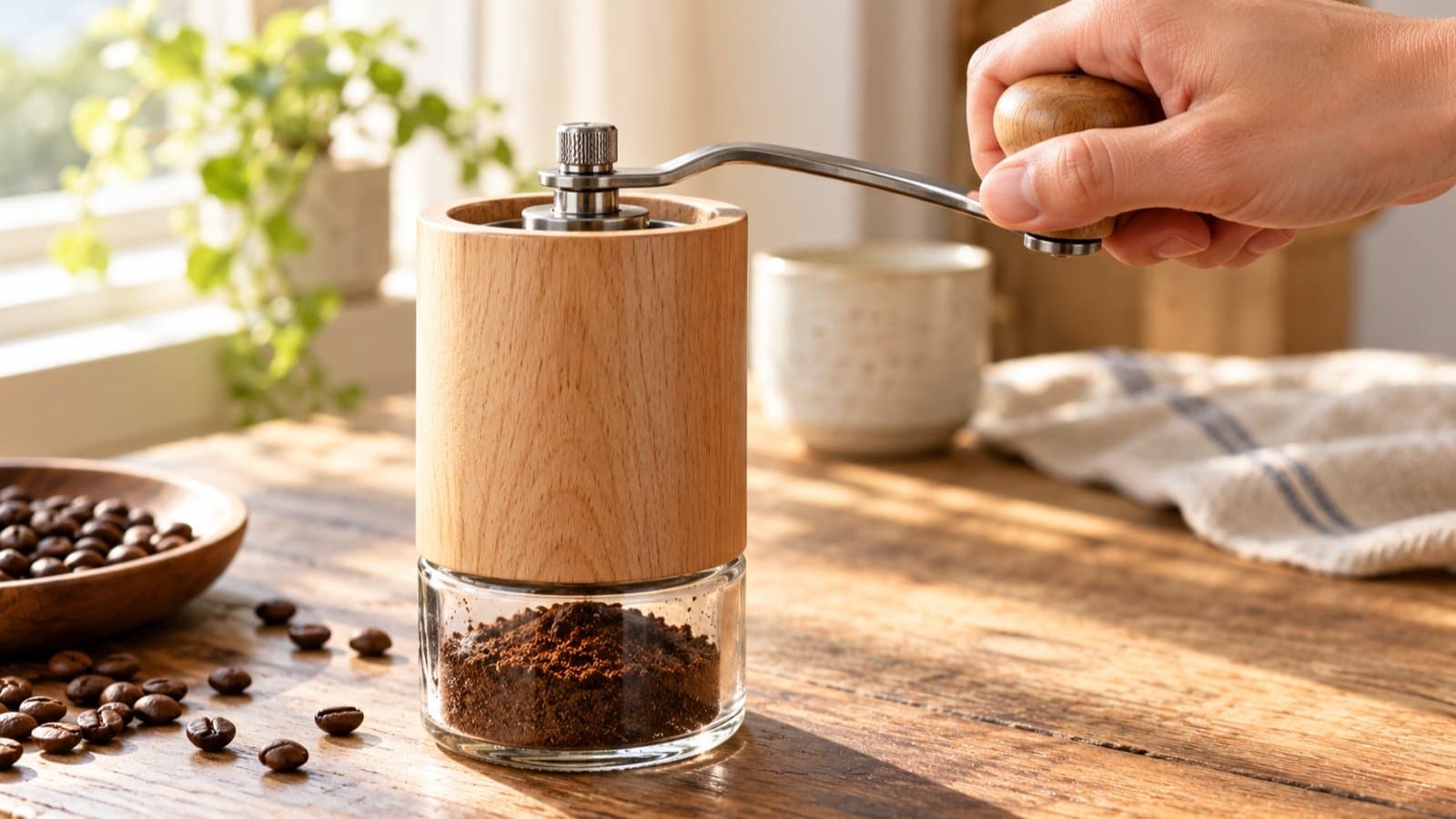
In India, the coffee most people buy is powder. In Google searches, "coffee powder" still beats "coffee beans", 72 to 48.
But look at the direction. "Coffee beans" has gone from 19 to 48 since 2021. People are moving up from powder and instant, and the first question they ask is which one is fresher.
Short answer: same coffee, same price per cup. Ground just fades first. Own a grinder, buy beans.
That holds for a home kitchen and for a cafe buying house coffee.
What is coffee powder in India?
Most people say "powder" and mean the packet from the kirana shop. Not instant. Roasted coffee, ground and ready for the filter.
Roasted and ground coffee is not always pure coffee. The Coffee Board of India says about 70 to 75% of the coffee drunk in India is mixed with chicory. Filter coffee powder is often sold that way, and recipe sources commonly give 10 to 20% chicory. Our instant coffee article covers what chicory does to the taste.
At home, the Coffee Board's 2023 survey found 41% buy powder to brew, 31% buy instant and 5% buy beans to brew (they could pick more than one).
So "coffee powder vs beans" is two questions. Is the powder pure coffee, and is it fresh? A whole bean pack answers both: you see the beans, and you grind them yourself.
| Search term | 2021 | 2026 |
|---|---|---|
| coffee powder | 40 | 72 |
| coffee beans | 19 | 48 |
| instant coffee | 16 | 33 |
| ground coffee | 4 | 11 |
These four were compared together, so the numbers sit on one scale: 100 is the highest week in the comparison. Our arithmetic: beans grew 2.5 times, powder 1.8 times.
Why does ground coffee go stale faster?
Think of whole jeera and jeera powder. Whole seeds keep their smell for months. Ground, the smell is gone in a few weeks. Coffee is the same.
Three things happen when you grind a bean.
- Surface area goes up. Each bean becomes thousands of small pieces, and each piece touches the air.
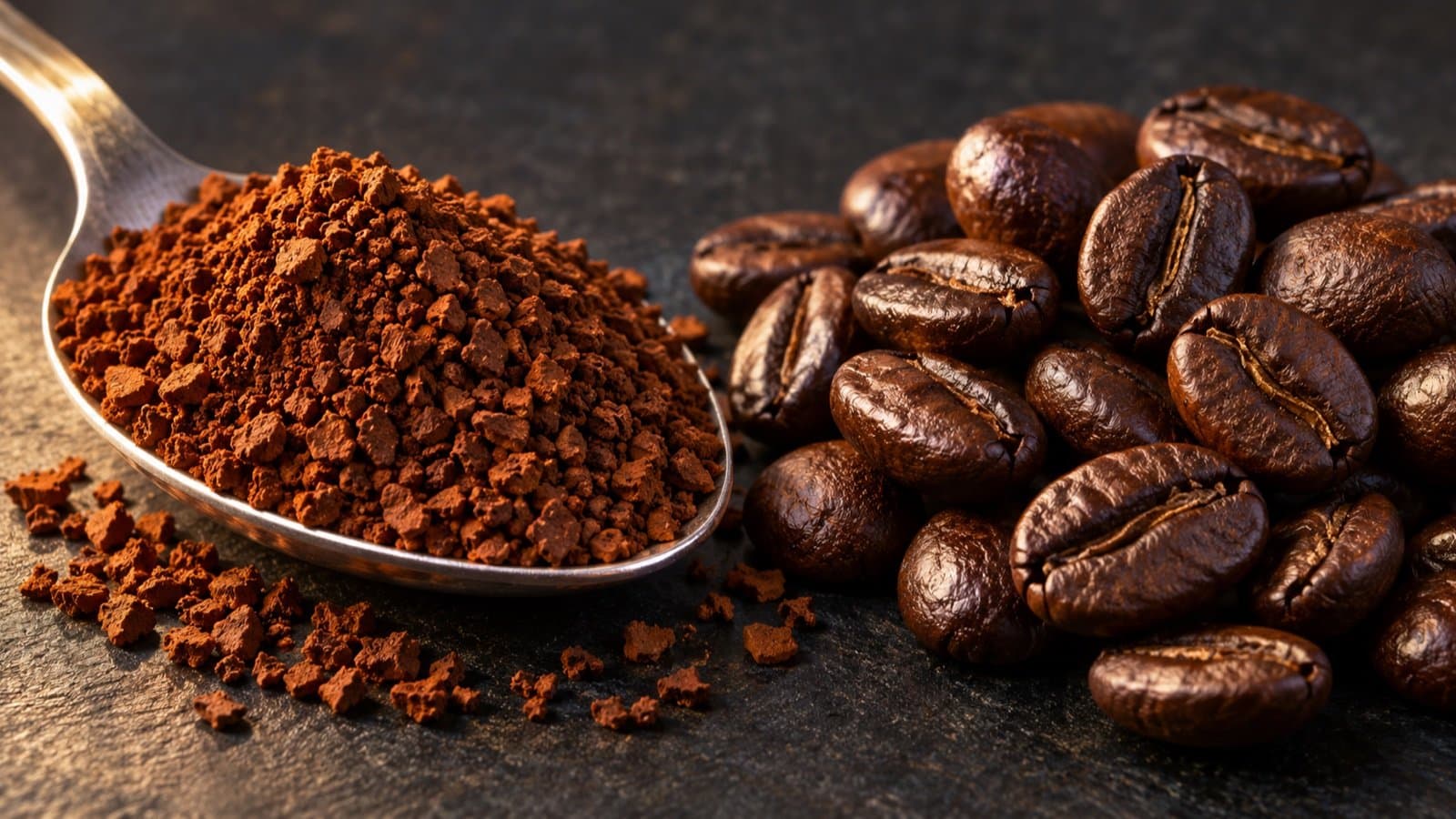
- The gas inside comes out. Fresh roasted coffee holds CO2. One lab test by Barista Hustle found ground coffee lost 0.29% of its weight in the first minute, which they tie to CO2 escaping.
- Oxygen reaches the oils and aromas. They fade and the cup turns flat.
The clock starts when you grind, not when you open the bag. A sealed bag of ground coffee is fine. An opened one is a countdown.
How long does ground coffee stay fresh?
Opened and kept airtight: whole beans about 1 to 3 weeks, ground about 1 to 2 (Healthline). Roasters give beans longer from the roast date. Nobody agrees to the day, so read these as ranges.
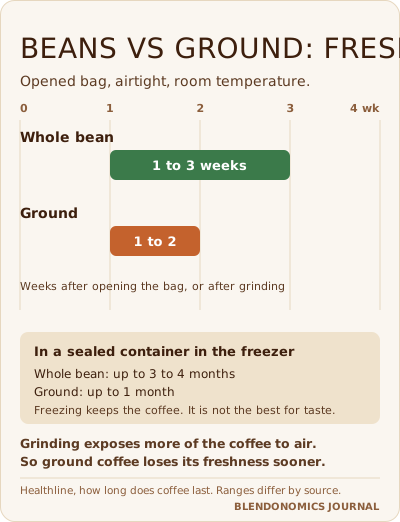
The gap in the numbers is a week or so. The gap in the cup is larger on the first day, because ground loses its aroma earliest.
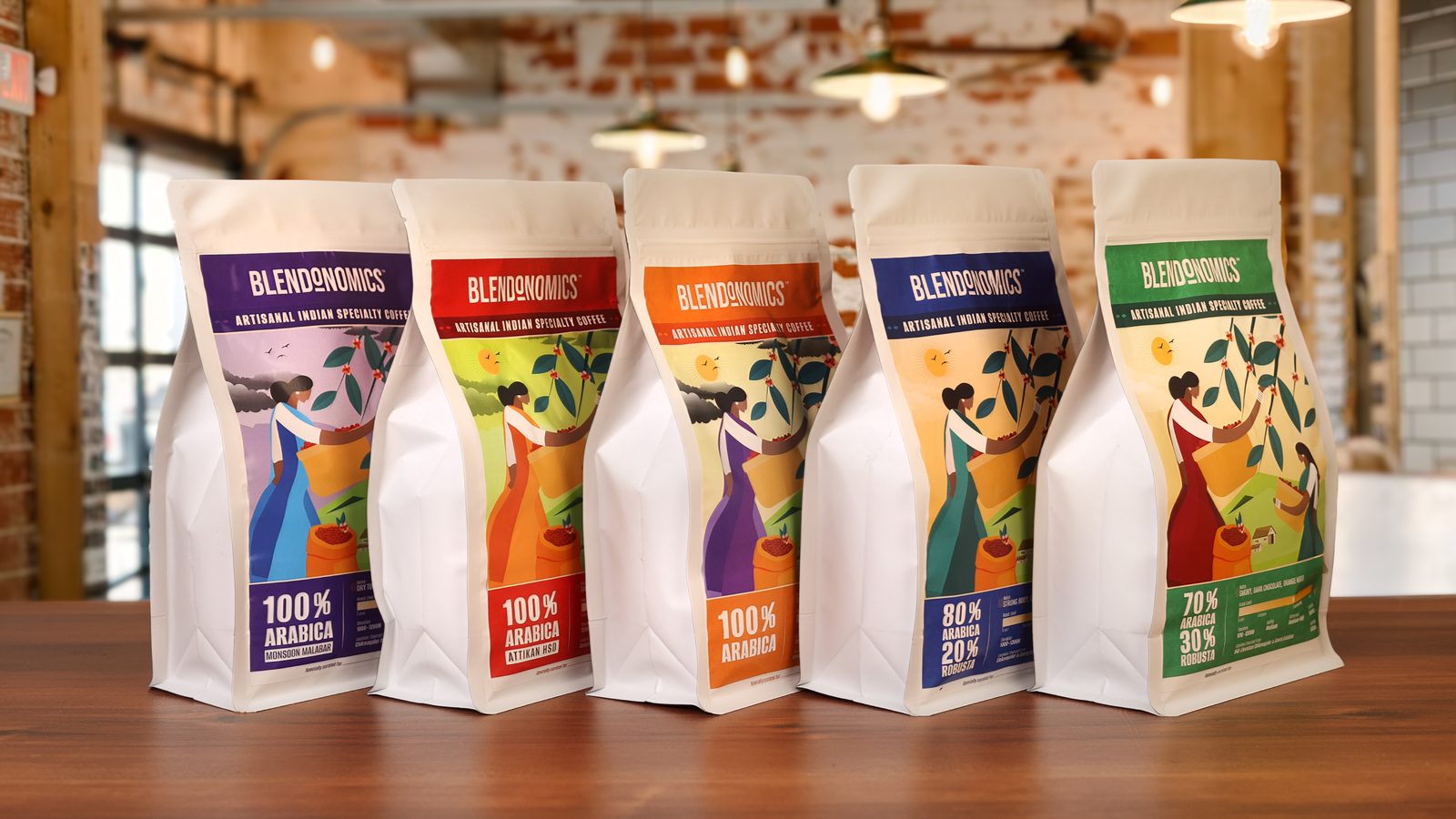
On our packs, the sealed bag is good for 6 months from the roast date. Once opened, the pack page says whole beans stay fresh longer than ground coffee.
Which grind does each brew method need?
Coarse for a long soak. Fine for a short push.
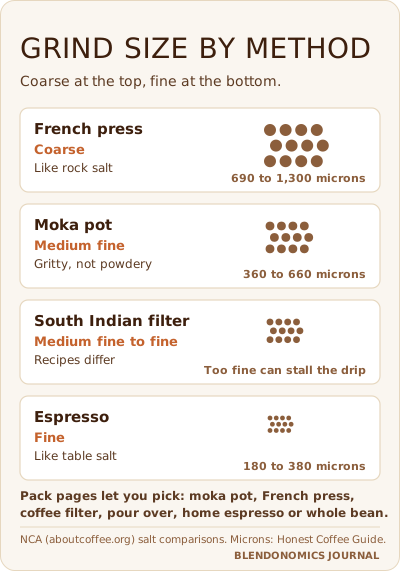
- French press: coarse. A fine grind slips through the mesh and the cup turns bitter.
- Moka pot: medium fine. Too fine and the water struggles to rise.
- South Indian filter: medium fine to fine. Recipes differ, and too fine a grind can stall the drip for a long time.
- Espresso: fine. This is the one that needs a good grinder at home.
The micron ranges are a guide, not a rule. Adjust to your brewer by taste. For which coffee to brew in each, see blend vs single origin.
When is buying ground the right call?
Not everyone should buy beans. Our read: ground is the right call in two cases.
- You have no grinder. Fresh ground to your method beats stale beans you cannot grind.
- You brew one way, always. Ground to that method means no setting to get wrong.
If you do own a grinder, or plan to, buy beans. You can use any method, and the coffee stays fresher in the bag. Our cafe beans article says the same for a cafe: buy whole bean if you have a grinder.
On our pack pages you pick the grind before you add to the cart: Moka Pot, French Press, Coffee Filter, Pour Over, Home Espresso or Whole Bean. The pack page says to choose Whole Bean only if you own a grinder.
Is ground coffee cheaper per cup?
No. The same coffee costs the same per cup.
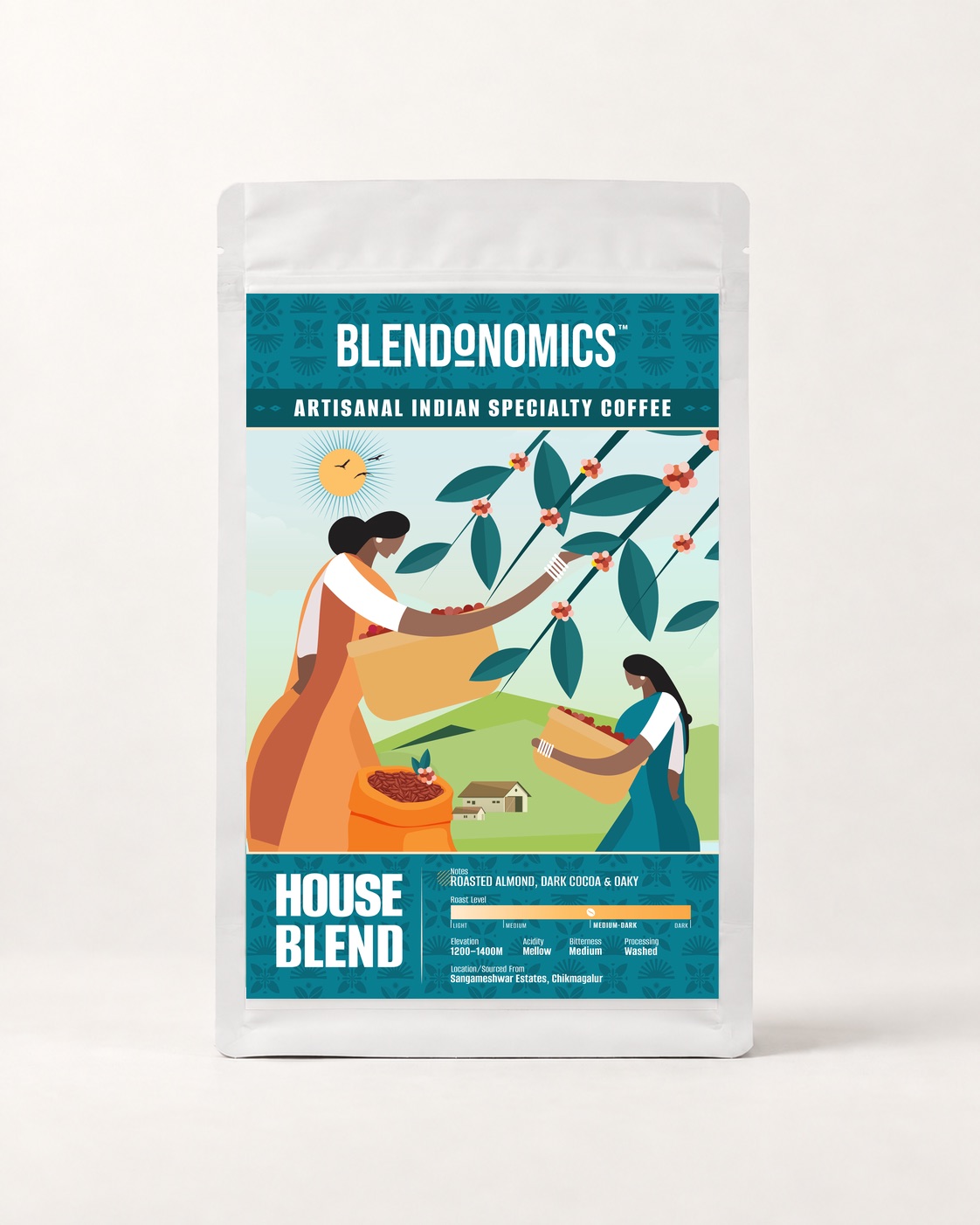
On our site the price is for the pack size, not the grind. At a 15 g home dose, House Blend at Rs 990 a kilo is about Rs 14.9 a cup (990 / 1,000 x 15), whole bean or ground.
A grinder is a one time cost on top. If you drink one cup a day, it is the cheapest way to get a fresher cup. Our read: freshness is what you are buying, not price.
How should you store coffee beans and ground coffee?
- Keep it airtight. Oxygen is what stales it.
- Keep it dark. Light and heat speed up the fade.
- Keep it dry. Moisture is the third enemy, so skip the fridge door, where condensation forms.
- Buy small. Choose a pack you will finish in 2 to 3 weeks.
- Freeze only a sealed, water free container, and only if you will not finish the bag. Beans can last 3 to 4 months, ground up to 1 month, at some cost to taste (Healthline).
Grind just before you brew. Even a small hand grinder gives you the fresher cup.
If you run a cafe
The same rule holds on a menu. If you have a grinder, buy whole bean, and order small and often so the stock stays fresh. A supplier with a large minimum order pushes you to hold stale stock.
If you have no grinder, ask for the coffee ground to your machine and ask for the roast date. Our cafe beans article has the eight questions to ask any supplier.
 From instant to beansWhy Cafe Coffee Tastes Sour to India's Instant Coffee Generation6 min read →
 For cafesHow to Choose Coffee Beans and a Supplier for Your Cafe6 min read →
What to do next
- Check your pack. Is it pure coffee or mixed with chicory? Is there a roast date? Cafe owners: ask for the date on every order.
- Pick your method first. Then choose the grind, or whole bean if you own a grinder.
- Buy the smallest pack. Finish it in 2 to 3 weeks.
- Store it airtight, dark and dry. Grind just before brewing.
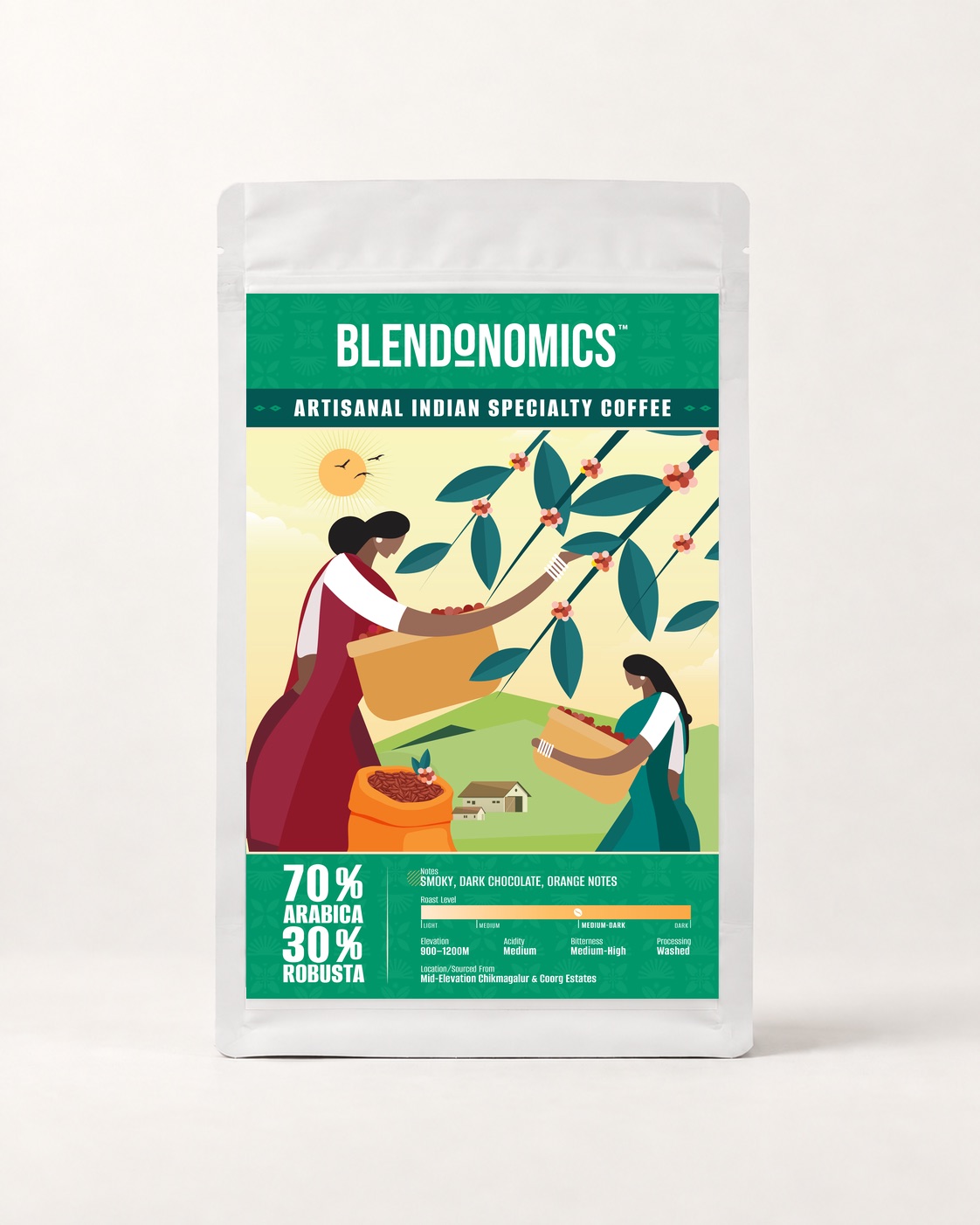
- To try ours, the house blends sampler has four blends in small packs. The House Blend page lets you pick a grind or whole bean.
Fresh is a habit, not a price. Grind last.
Sources
- Google Trends, India, yearly averages of weekly interest 2021 and 2026, pulled 24 October 2026, our pull (index 0 to 100 inside the comparison of instant coffee, coffee powder, coffee beans, ground coffee)
- Coffee Board of India, CRISIL, Coffee consumption trends in India, 2023, April 2024 (41% powder to brew, 31% instant, 5% bean to brew at home; about 70 to 75% chicory mixed; 80% add milk)
- Healthline, how long does coffee last (opened whole beans 1 to 3 weeks, ground 1 to 2 weeks; freezer, beans 3 to 4 months, ground 1 month)
- Barista Hustle, Grinding fresh (0.29% weight loss one minute after grinding, tied to CO2)
- National Coffee Association, About Coffee, French press and espresso brewing pages (rock salt, table salt)
- Honest Coffee Guide, coffee grind size chart (micron ranges, third party)
- Saveur, South Indian style filter coffee (a medium grind in one recipe; other recipes call for medium fine to fine)
- Blendonomics pack pages, 24 October 2026 (grind choices, 6 months sealed)
- Blendonomics journal: How to Choose Coffee Beans and a Supplier for Your Cafe; Why Cafe Coffee Tastes Wrong to India's Instant Coffee Generation.
Keep reading
Why Cafe Coffee Tastes Sour to India's Instant Coffee Generation
About 65% of India's coffee is instant. That is the taste your customer grew up on. A cafe that serves a light roast first is arguing with a childhood.
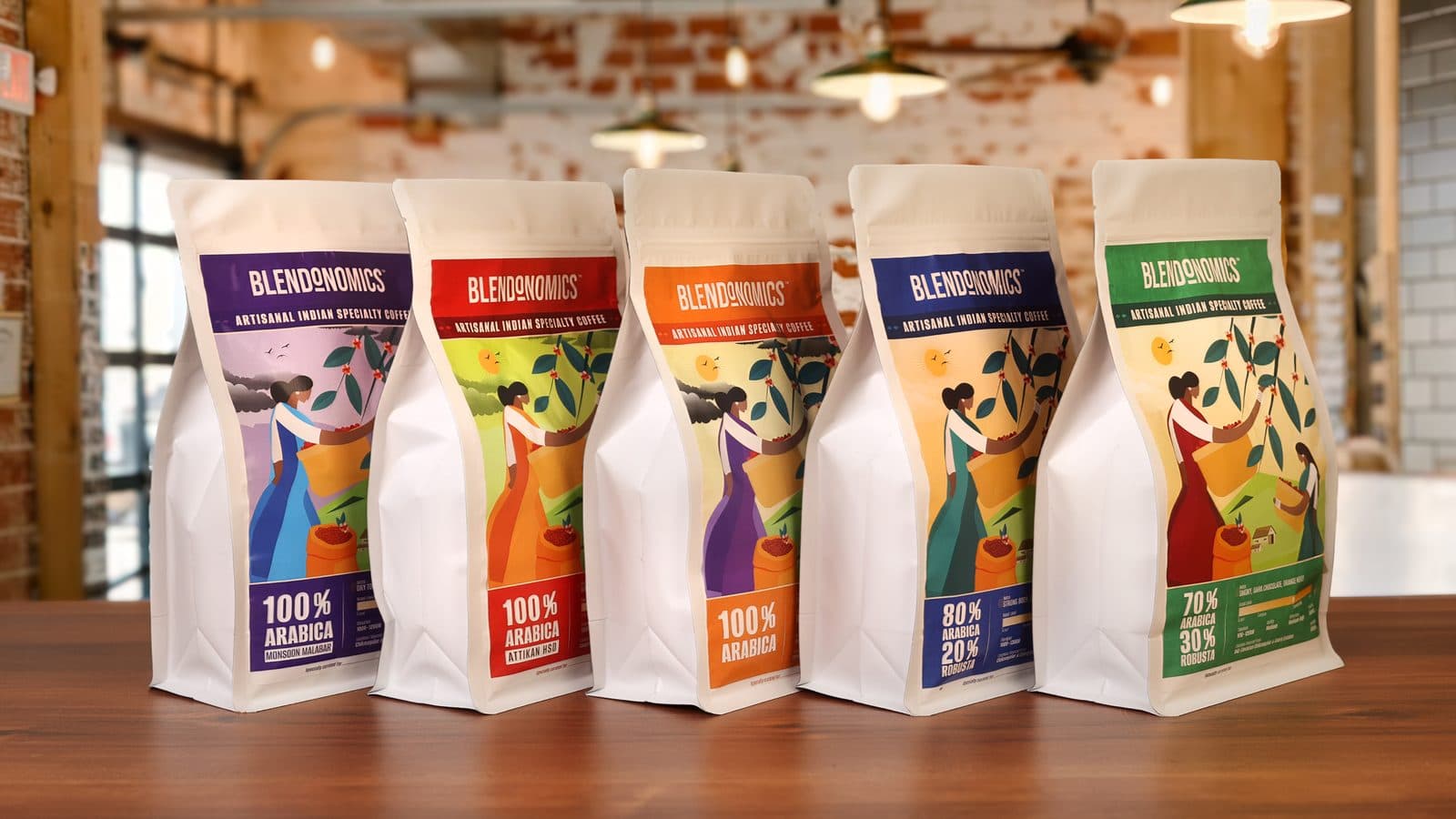
How to Choose Coffee Beans and a Supplier for Your Cafe
A dearer kilo adds about Rs 7 to a cup that sells for Rs 180. Eight questions to ask any coffee supplier, including us, before price.
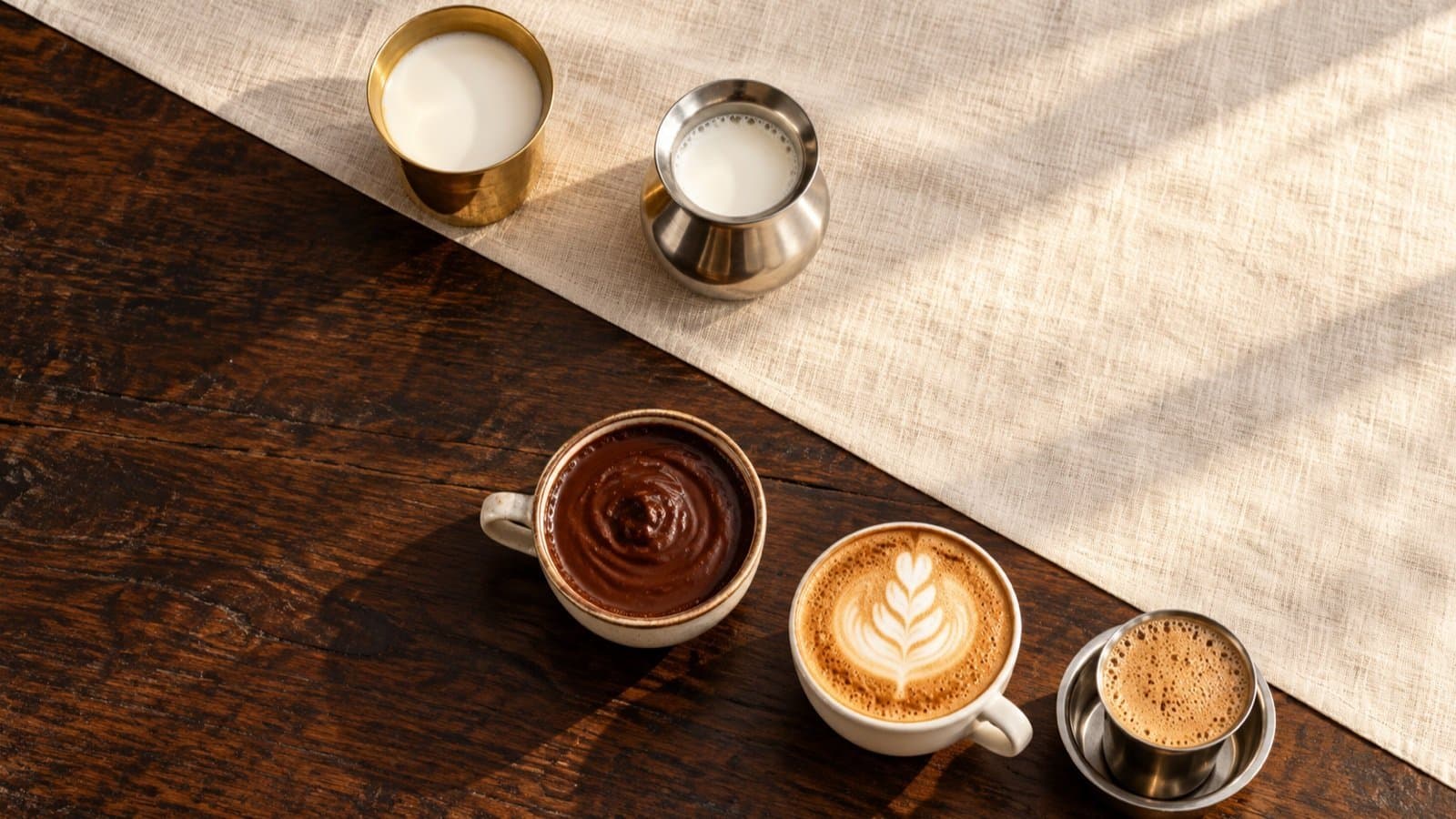
The Milk Line: Which Drinks Sell in Indian Cafes, and Why Habit Beats Weather
Habit decides who buys a drink in India. Weather decides when. The milk line, the model behind it and what 59 cafe accounts say, in one place.