COFFEE
Move up from instant to single origin. That is the usual advice.
We sell two single origins. Of the 8 accounts that bought one from us, 0 ordered again.
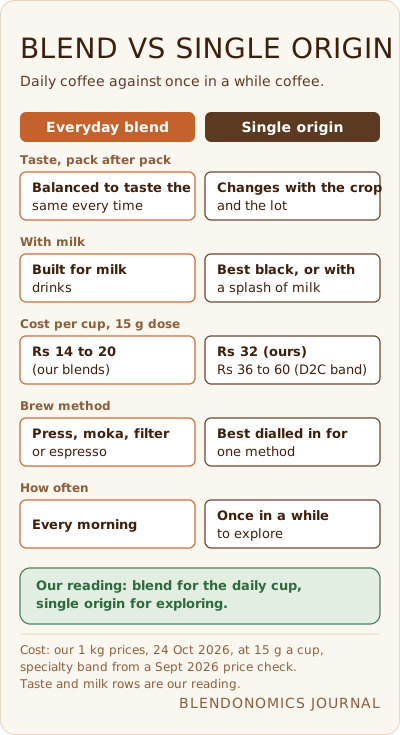
So which coffee should you drink every day, a blend or a single origin? Our answer: a blend for the daily cup, a single origin for the weekend. Single origin is a coffee to drink once in a while, to explore.
If you are moving from instant to beans, start here. One blend you drink every day. A single origin when you feel like it.
Most coffee in Indian homes does not start from beans. In the Coffee Board of India's 2023 survey, 41% of coffee consumers bought powder at home, 31% bought instant and 5% bought beans (they could pick more than one). What instant tastes like sets your idea of a good cup. That is the instant coffee taste baseline.
But the searches are moving. These are Google Trends index numbers for India, 0 to 100 inside each group of terms. Compare a number only with the others in its own group.
| Search term | 2021 | 2026 | Compared with |
|---|---|---|---|
| coffee beans | 8 | 19 | matcha, specialty coffee |
| french press | 4 | 23 | moka pot, grinder |
| coffee grinder | 2 | 13 | moka pot, french press |
| house blend | 0 | 22 | single origin, blended |
| arabica robusta | 16 | 52 | house blend, single origin |
| specialty coffee | 0 | 4 | coffee beans, matcha |
French press, grinder, house blend. That is what people search when they start brewing at home. This is the switch from instant, one step at a time.
"What is specialty coffee" is the top related search for specialty coffee in India. It rose 140% in 12 months.
Searches for specialty coffee itself stay at 4 or below. People ask what it is before they buy it.
A single origin is coffee from one place, often one estate, in one crop. Its taste follows that place and that year. A blend is several coffees mixed by the roaster to a target taste. A house blend is a roaster's standing recipe.
In our range, 70/30 means 70% Arabica and 30% Robusta. 80/20 means 80% Arabica and 20% Robusta. House Blend and Vietnamese Blend follow the same idea without a printed ratio. What the numbers mean: what is a coffee blend.
Not better. Different.
Nobody drinks first flush Darjeeling every day. In most Indian homes there is one chai patti, bought for years from the same shop. It is what gets made every morning. The special tea comes out for guests.
Here is the pattern: the coffee you talk about is not the coffee you drink every day. Call it the chai patti rule.
A single origin shows you one farm and one year. Good to try black, slowly, to find out what you like. But coffee is a farm crop. The taste shifts from harvest to harvest. Roasters blend to keep a cup steady, and some revise a recipe through the year to keep it the same.
A single origin is a conversation. A blend is a habit.
The best coffee is not the expensive one. It is the one you like.
1. A blend tastes the same, pack after pack.
The roaster does the balancing, so you do not have to. Trade sources name this as the main reason roasters blend. It is the main thing a daily drinker wants.
2. A blend is built for milk. 80% of coffee consumers add it.
Only 18% drink coffee black, in the Coffee Board's survey. A blend with some Robusta gives body that holds through milk. Our cafe beans article explains the ratio.
3. A blend costs less a cup.
At a 15 g dose, a single origin costs about double. The arithmetic is in the next section.
4. A blend forgives your brew method.
Our pack pages list espresso, French press, pour over, filter and moka. We have not run a brew test, so this is our read, not a result.
Take a 15 g dose. Divide the price of one kilo by 1,000, then multiply by 15.
House Blend at Rs 990 a kilo: 990 / 1,000 x 15 = Rs 14.85. Attikan and Monsoon Malabar at Rs 2,100 a kilo: Rs 31.50.
Specialty brands that sell direct charge about Rs 240 to 400 per 100 g in our September 2026 price check. That is a band, not one brand. At 15 g it is Rs 36 to 60 a cup.
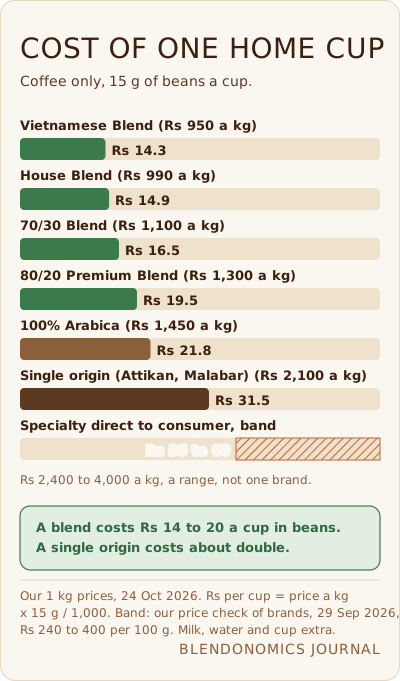
One cup a day for 30 days is about Rs 445 in beans for House Blend. For a single origin it is about Rs 945. Milk and sugar cost the same either way.
These are our counts, not India's market. They show where our sales team and partners reached, not all of India's demand.
Across the 59 cafe and restaurant accounts that bought from us since July 2025, blends were 74% of coffee order value, 100% Arabica 18% and single origin 7%.
Across all 105 accounts, 7 of 15 buyers of 100% Arabica ordered again, mostly roasters and bulk buyers. For blends it was 4 of 17. For single origin it was 0 of 8. The bases are small. Our read: single origin gets bought to try, not to restock.
Match the cup to how you brew. These are rules of thumb, not a taste test.
Three cases. You want to taste what one farm or one process does. You drink it black, where milk would hide the detail. Or you want a slow weekend cup, brewed one careful way.
A blend hides the farm. If you want the estate, the altitude and the process, buy the single origin. A single origin often wins as the best black cup. And if you like a roast that tastes different every few months, a blend is the wrong way to get it.
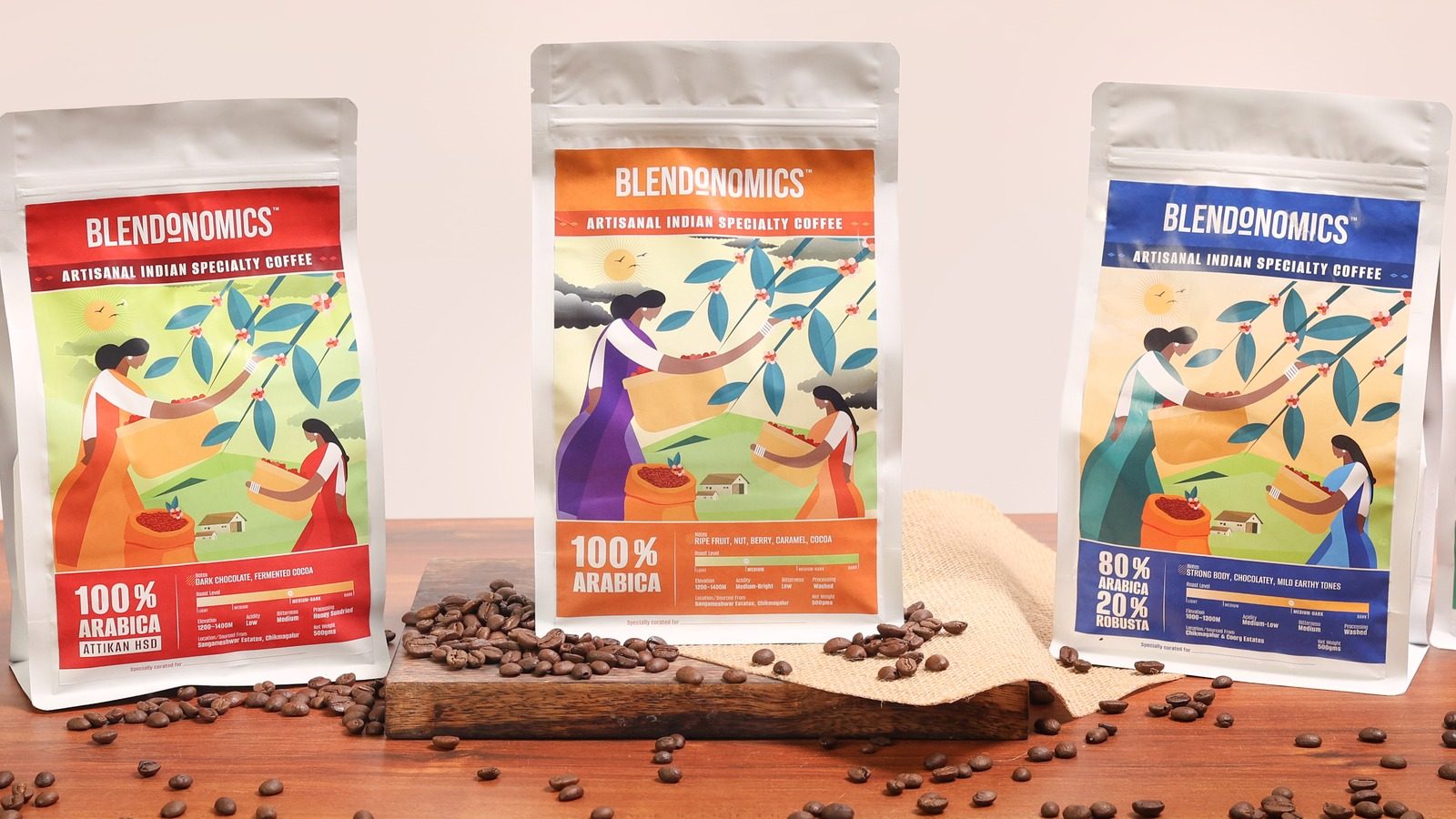
We sell two, Attikan HSD and Monsoon Malabar, and the pour over recipe shows one way to brew them. Buy one in a small pack once you have a blend you drink every day. Then you taste the difference against something you know.
The same split holds on a menu. One house blend does the milk drinks. A rotating single origin does the black coffee. Our two-SKU article covers it. Who buys specialty coffee in India covers where it sells, and which blend a new cafe should buy by location covers the rest.
 For cafesThe Case for a Two-SKU Coffee Menu5 min read →
 Who buys specialtySpecialty Coffee Grew Up in Delhi, Not Chennai6 min read →
Whoever you buy from, the steps are the same. Look for a roast date. Buy a small pack first. If you want to start with ours, the house blends sampler has four blends in 100 g packs.
Single origin is the headline. The blend is the habit. Which coffee do you reach for on a Tuesday?
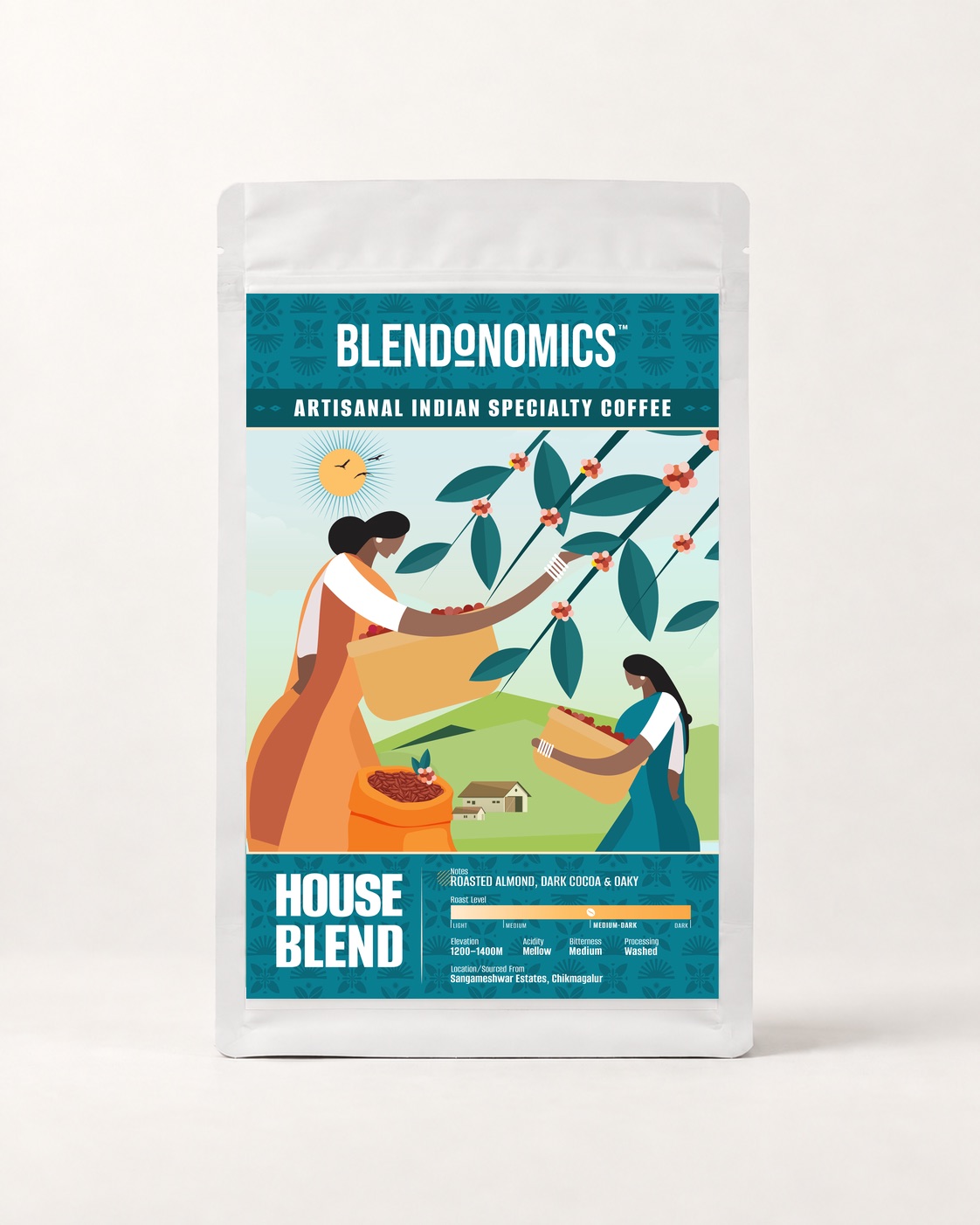 CoffeeHouse BlendOur Everyday BlendView product →
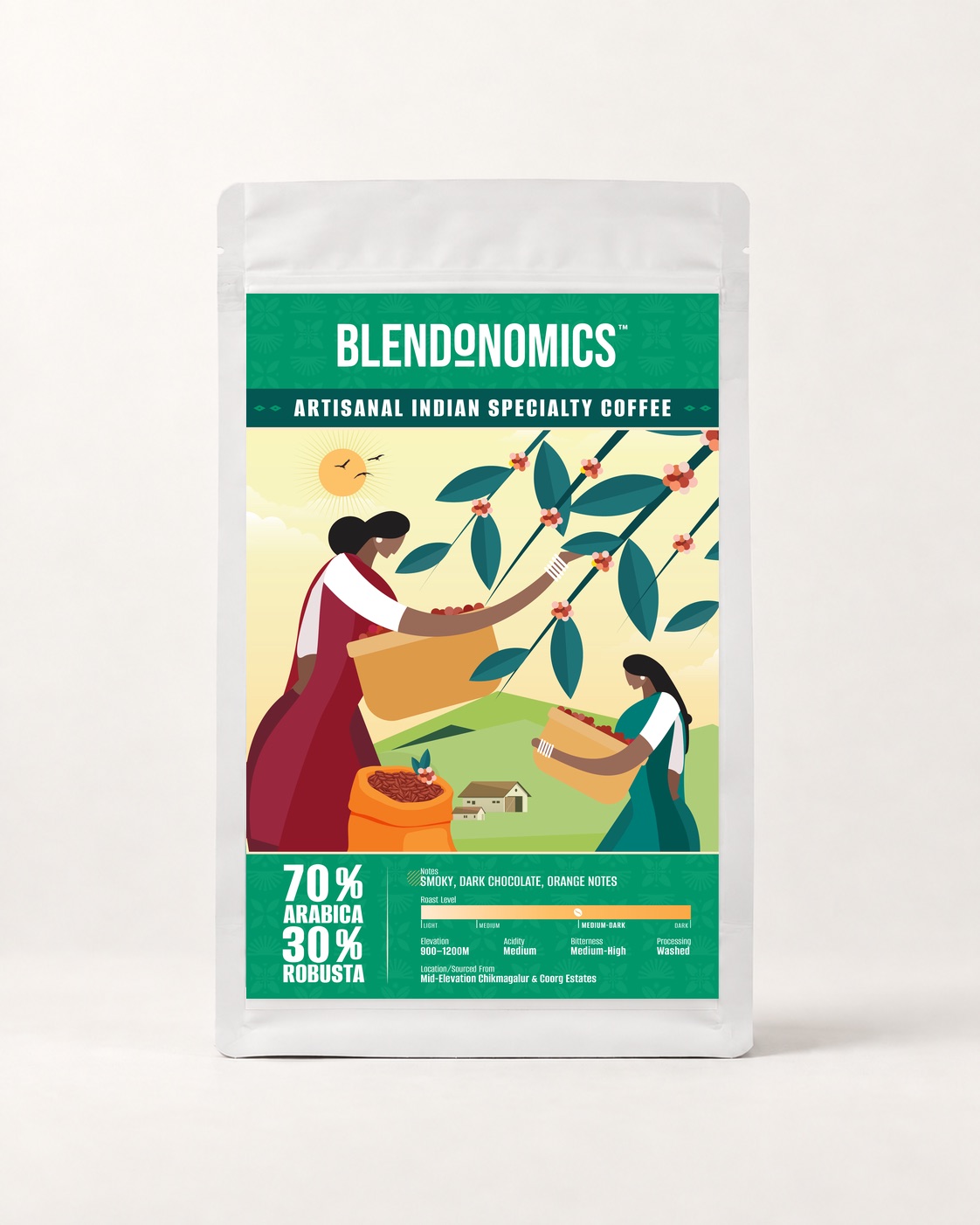 Coffee70/30 Blend70% Arabica / 30% RobustaView product →
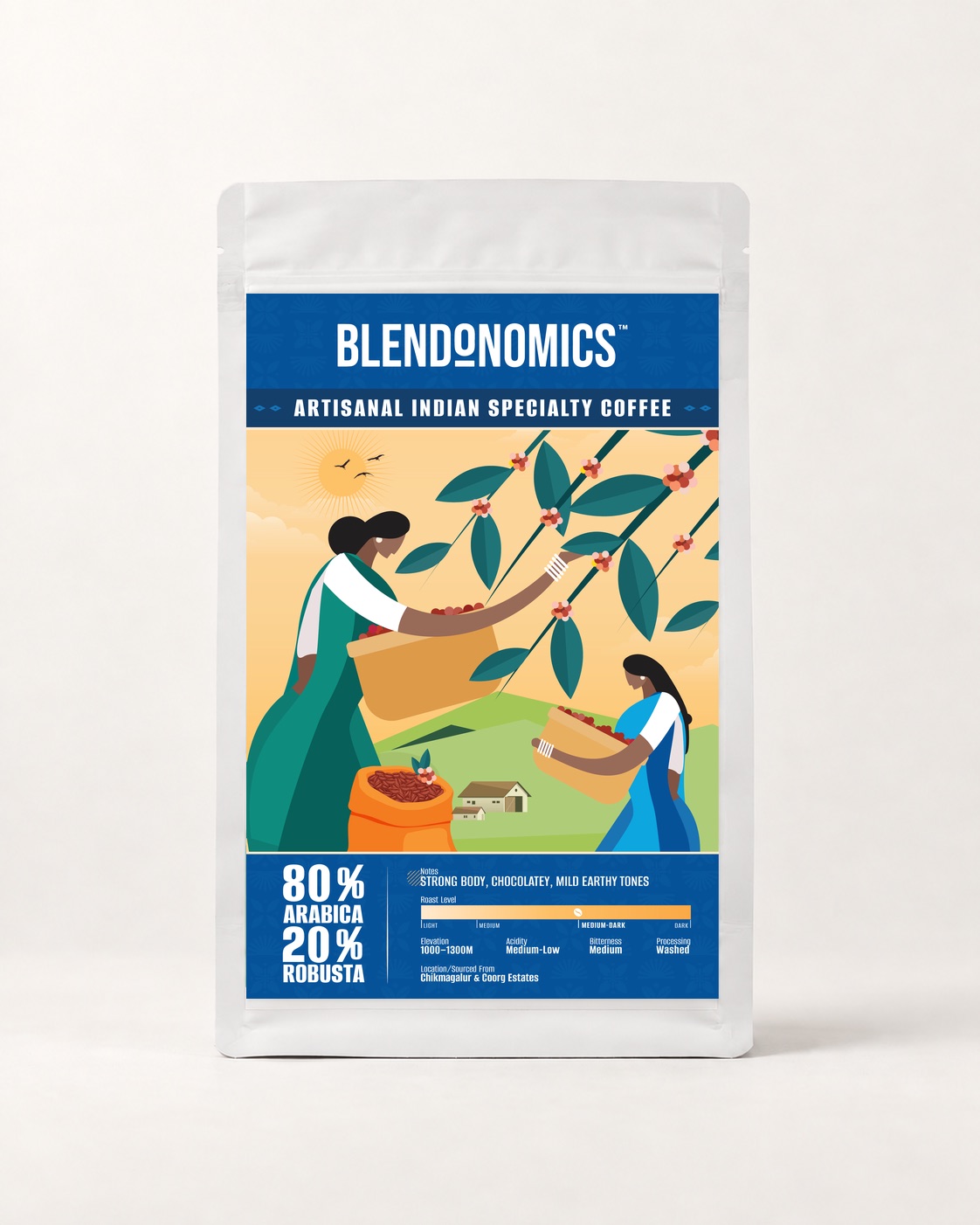 Coffee80/20 Premium Blend80% Arabica / 20% RobustaView product →
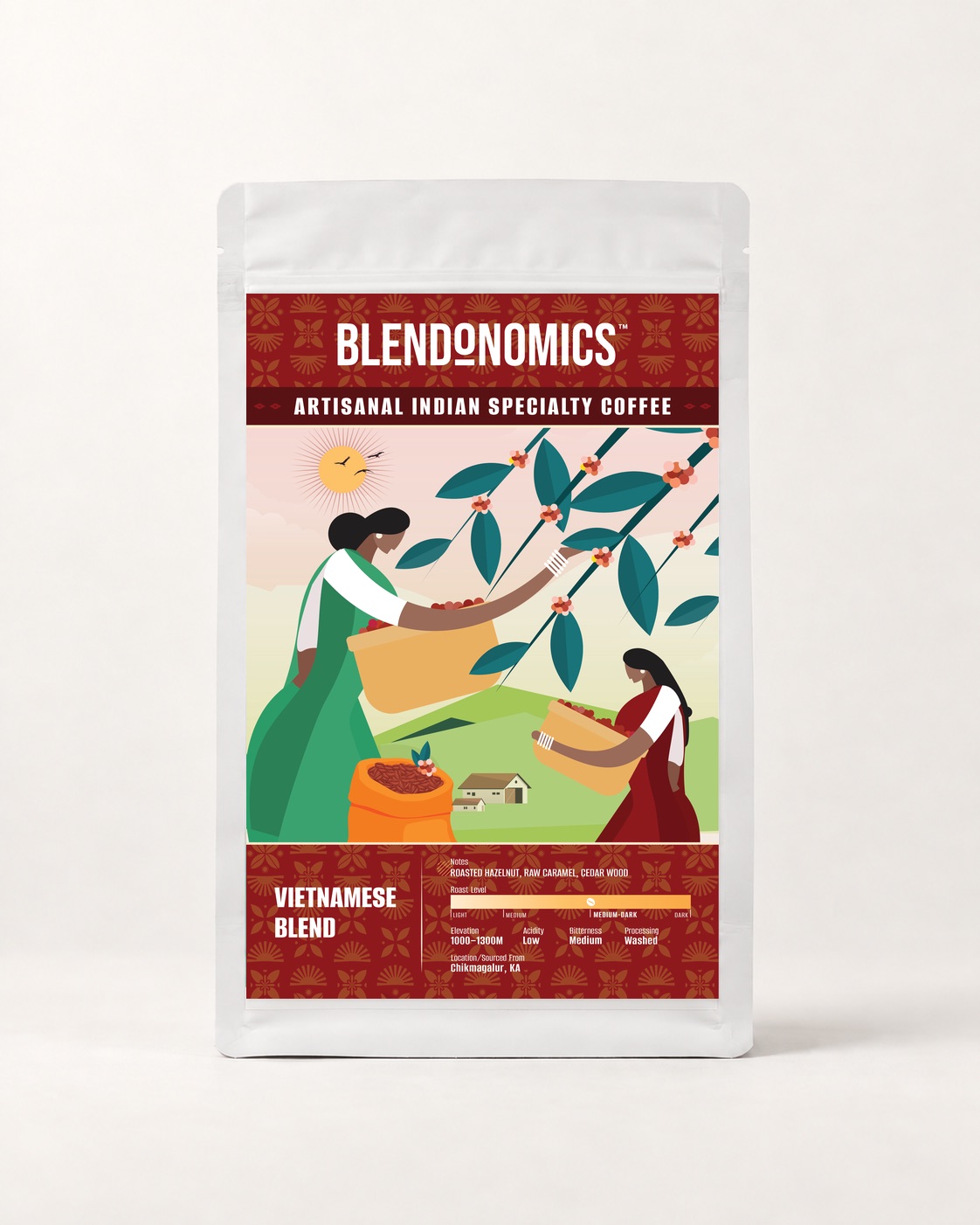 CoffeeVietnamese BlendRobusta-Forward BlendView product →Sample kitHouse Blends Sampler80/20 Blend / 70/30 Blend / House Blend / Vietnamese BlendView product →
Supplying a cafe? Request a sample kit →
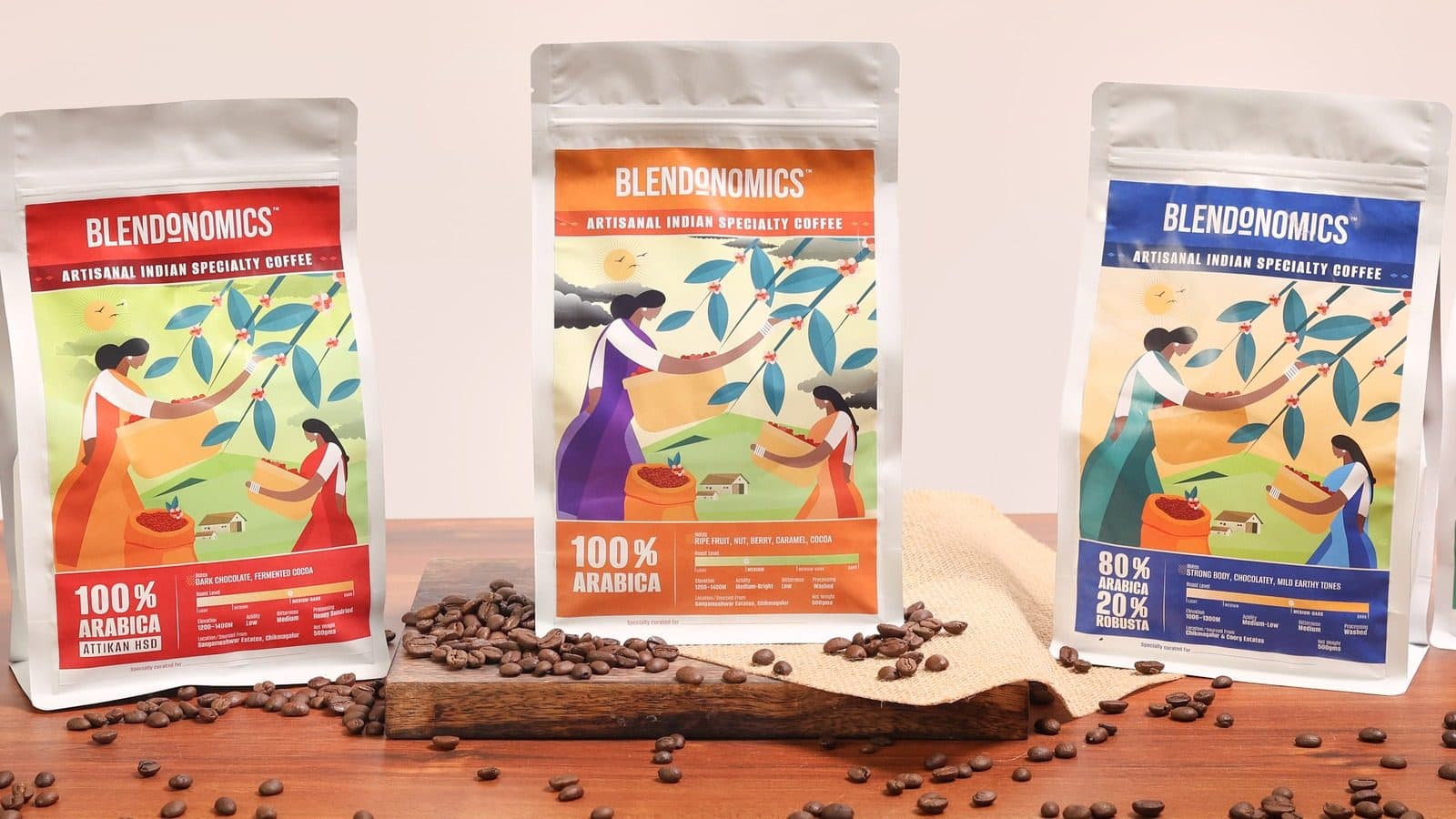
One house blend for milk drinks, one rotating single origin for black coffee. Why two coffees beat a wall of eight.
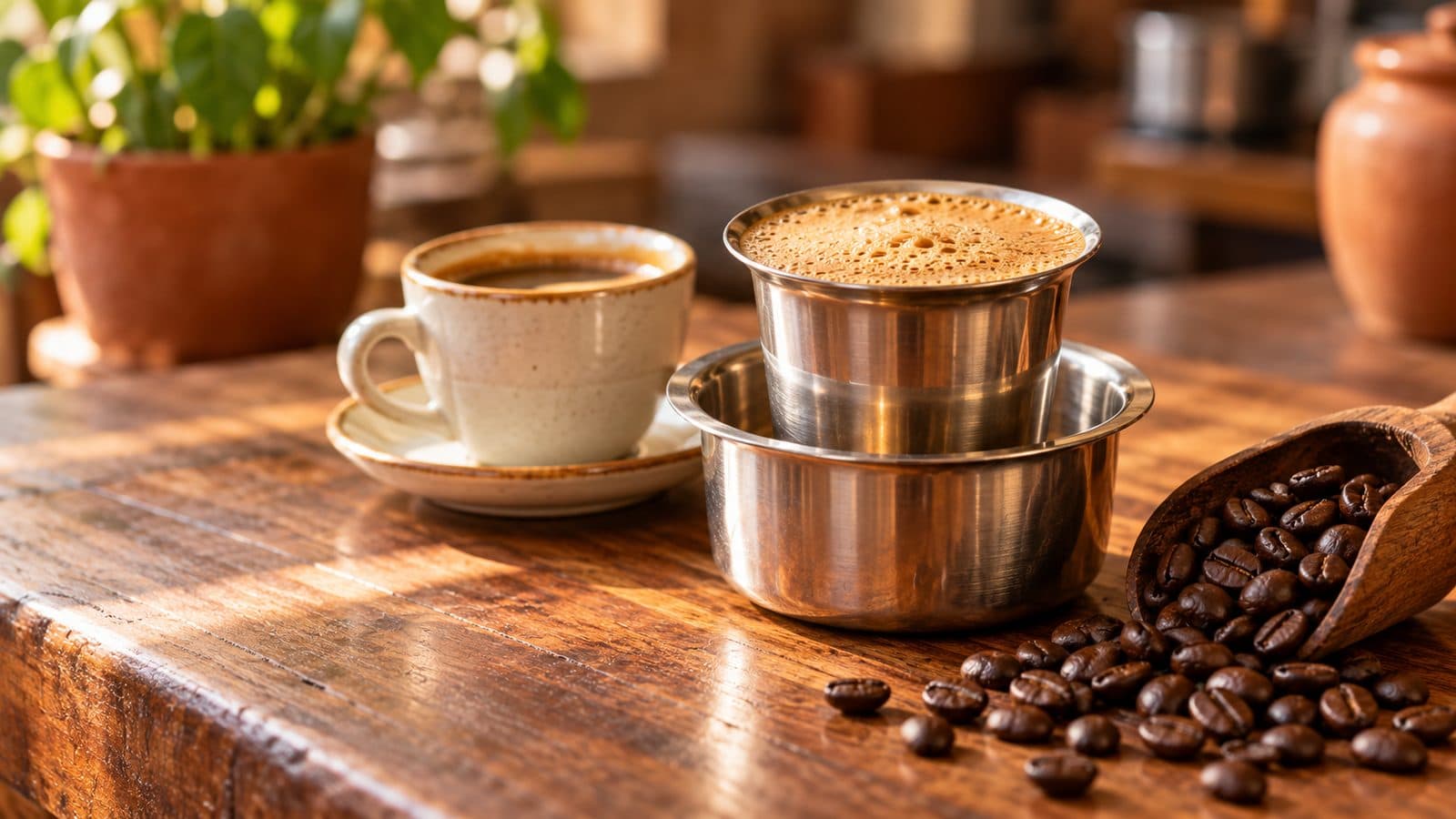
The region that drinks the most coffee is the hardest place to sell premium coffee. Part 2 of our weather vs preference series.
Habit decides who buys a drink in India. Weather decides when. The milk line, the model behind it and what 59 cafe accounts say, in one place.