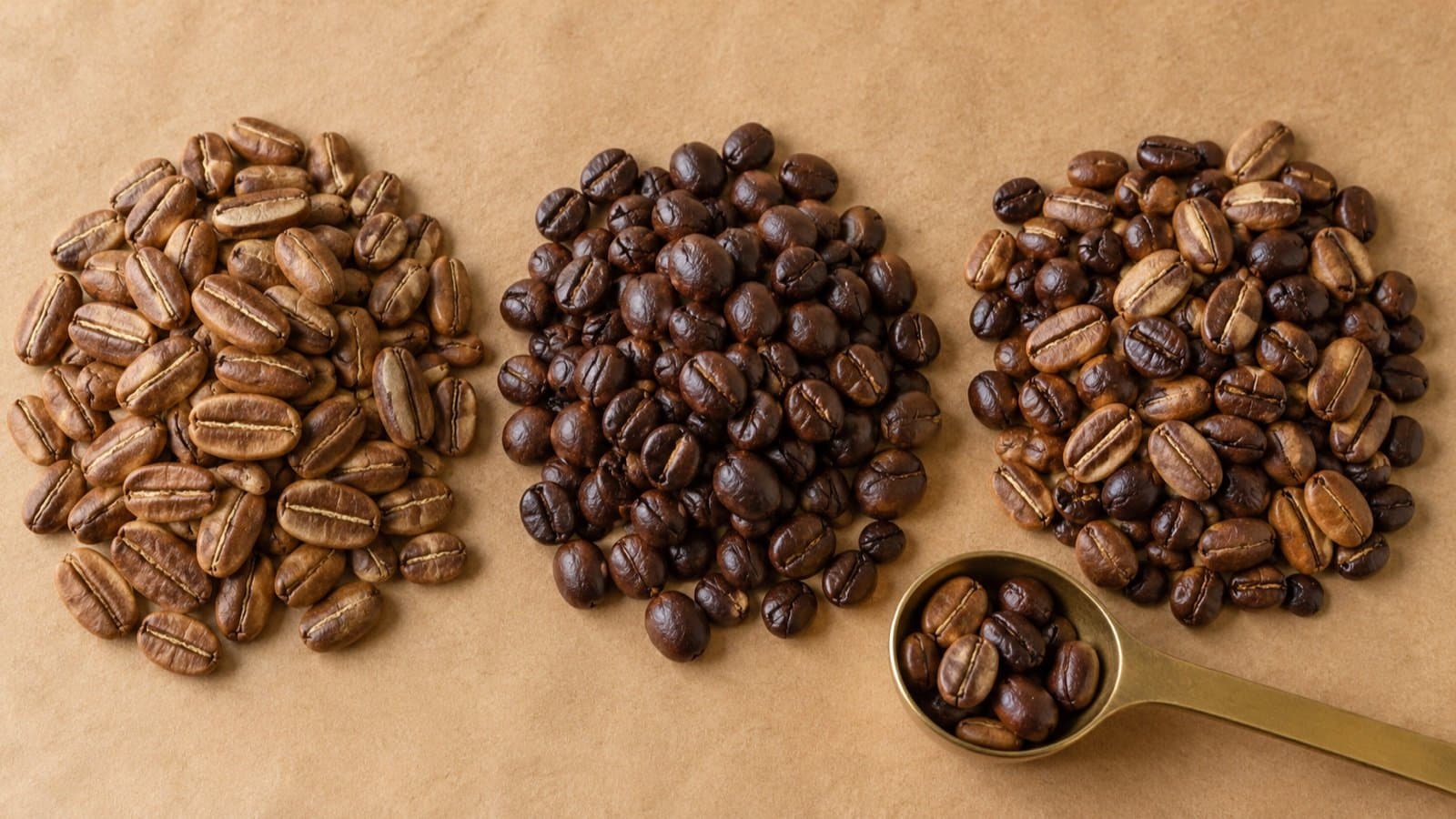
80/20 looks like a mark out of 100. It is not. It is a recipe: 80 parts Arabica, 20 parts Robusta. That one line on the bag sets the body, the crema and the price.
A coffee blend is coffee from more than one source, mixed to one recipe. Two of our four blends carry a ratio in the name. Two do not.
What is a coffee blend?
A blend is coffee from more than one source, mixed by the roaster to a target taste. A single origin comes from one place and tastes of that place and that year.
Think of multigrain atta. The shop mixes wheat with a few other grains so every bag makes the same roti. A coffee blend is that idea for the cup.
In India the blend you meet most often has two kinds of bean in it: Arabica and Robusta. That is what the ratio on the pack counts.
What does 80/20 coffee mean?
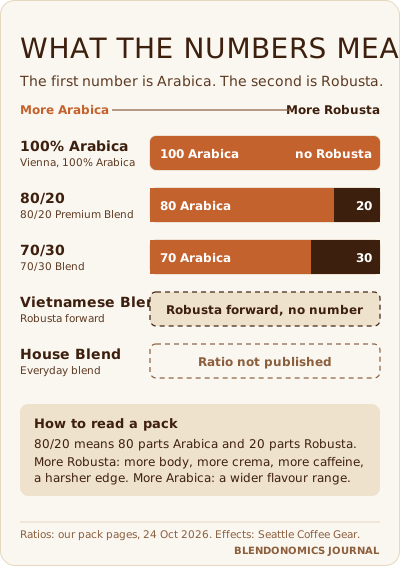
The first number is Arabica. The second is Robusta.
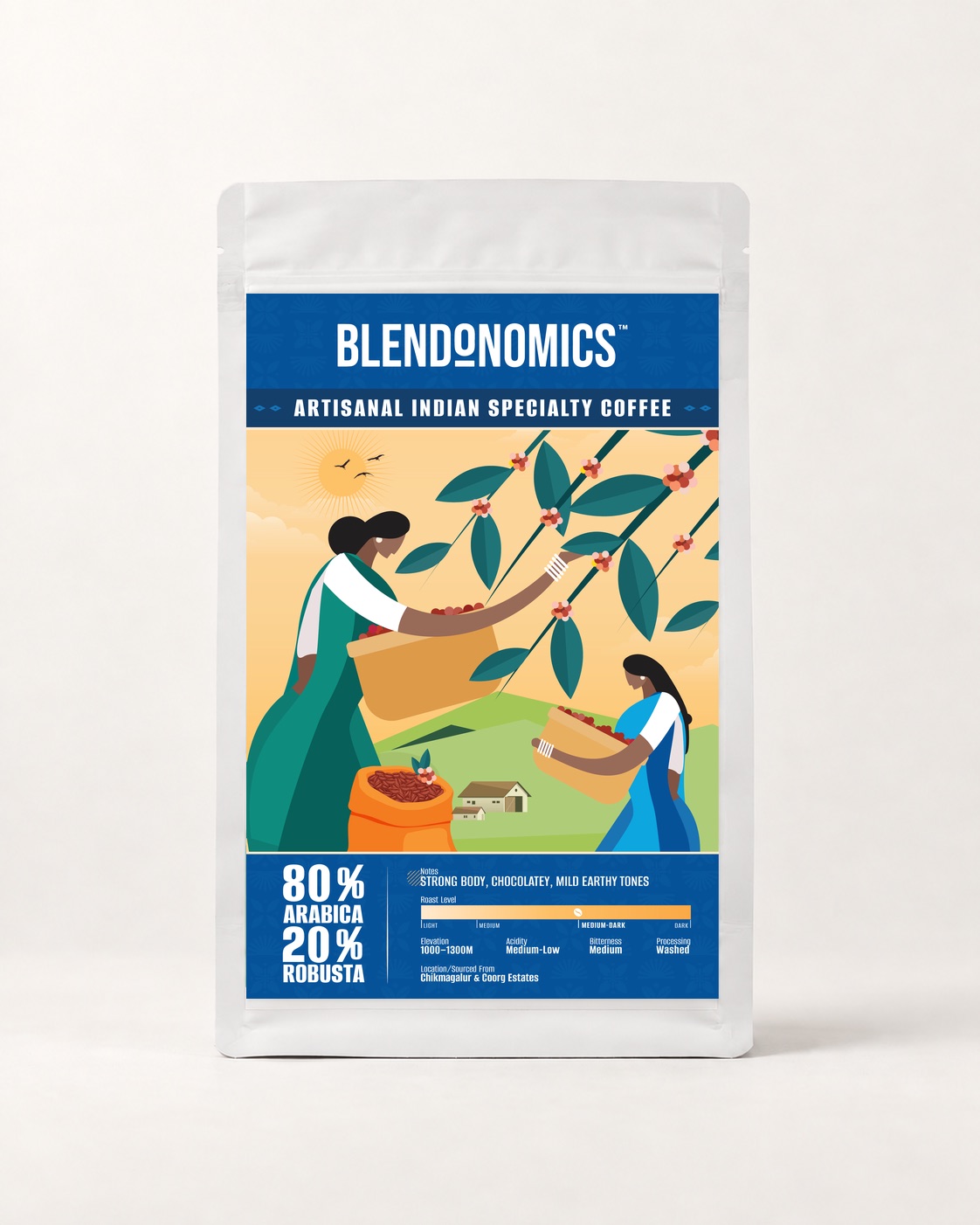
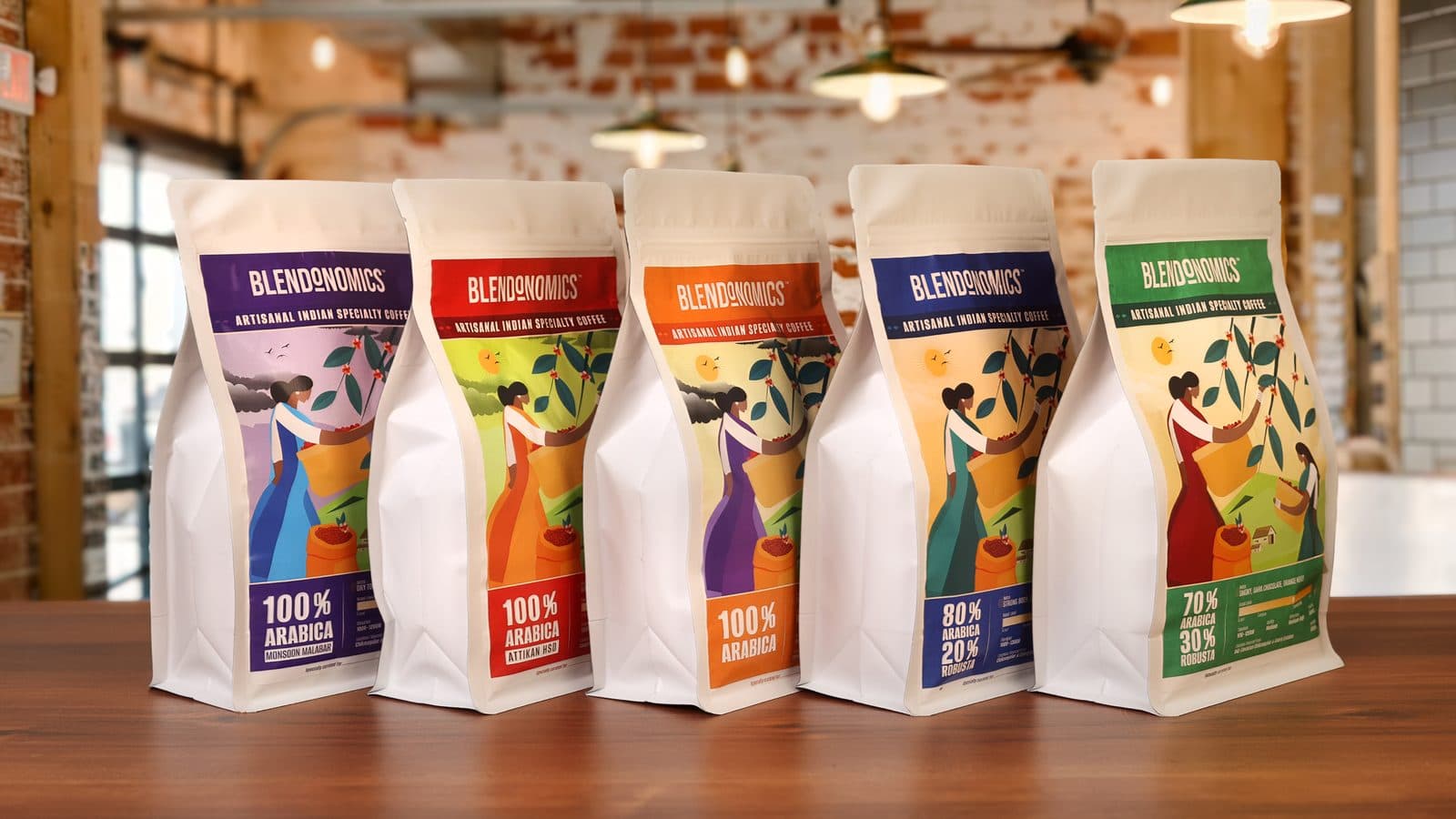
- 80/20: 80 parts Arabica, 20 parts Robusta.
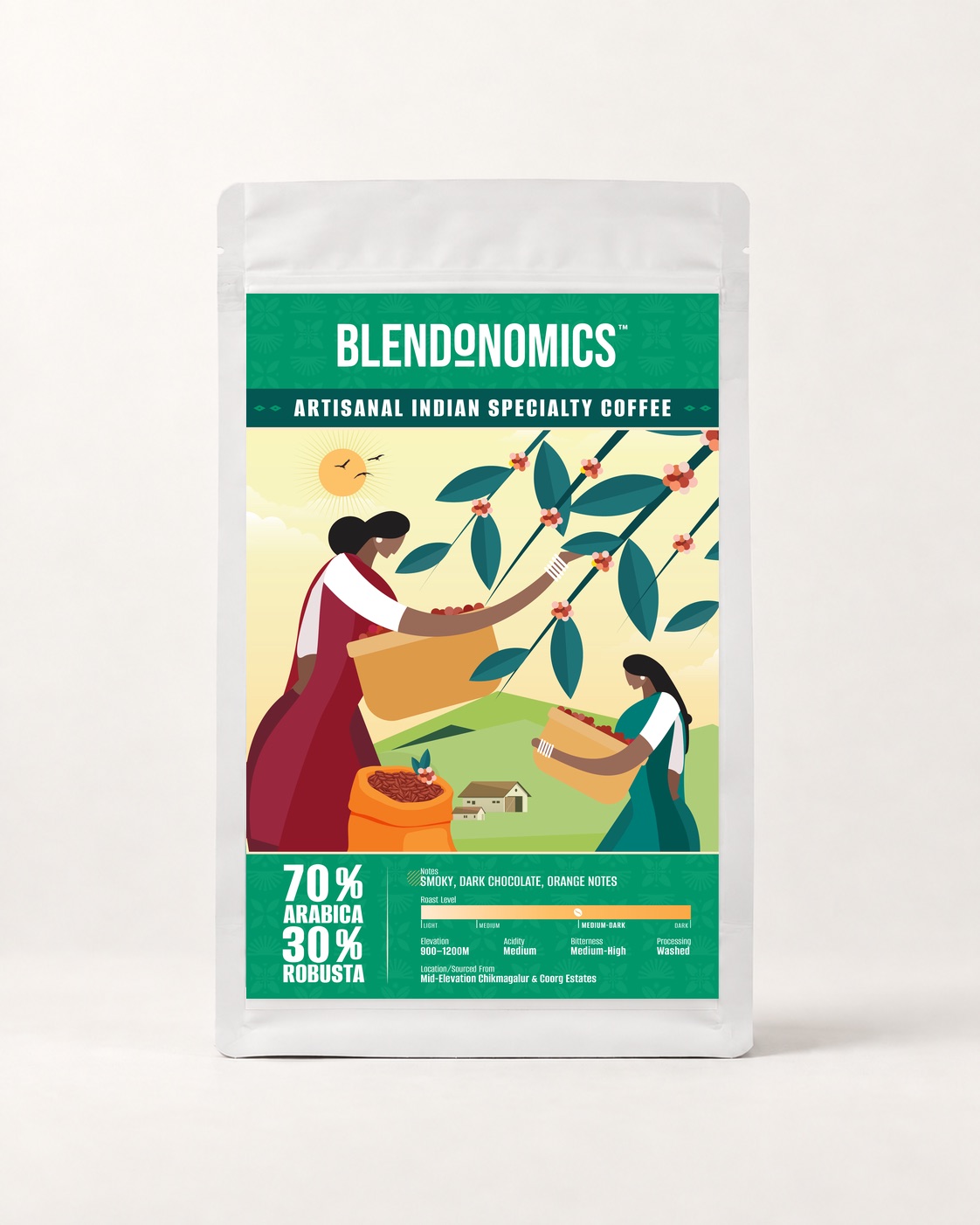
- 70/30: 70 parts Arabica, 30 parts Robusta.
- 100% Arabica: no Robusta at all. Not a blend in this sense.
Trends show people are looking for this. In India, "arabica robusta" went from 16 to 52 between 2021 and 2026, and "house blend" from 0 to 22. (Index 0 to 100 inside each comparison, so compare a number only with the others in its own group.) People are asking what is inside the bag.
What does Arabica add, and what does Robusta add?
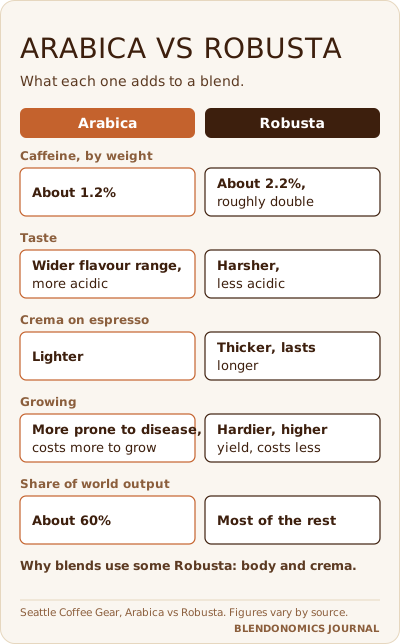
Arabica is the larger crop, about 60% of the world's coffee. It has a wider flavour range and more acidity. It costs more to grow because it is more prone to disease.
Robusta is hardier and gives a higher yield, so it costs less. It has about twice the caffeine, roughly 2.2% by weight against 1.2%. It gives a thicker, longer lasting crema.
That is why espresso blends often carry some Robusta: it gives body and crema.
How much Robusta should a blend have?
There is no right number for everyone. Our read: the right ratio depends on the drink, and no single ratio wins.
More Arabica gives a smoother, rounder cup. More Robusta gives a stronger, bolder one. On our site, 80/20 is the smoother of the two, with a chocolate core. 70/30 is the stronger, smokier one.
If you drink coffee black, lean to more Arabica. If you add a lot of milk, lean to more Robusta. In the Coffee Board of India's 2023 survey, 80% of coffee consumers add milk. Cafes: see which blend a new cafe should buy by location.
Is Robusta in a blend bad?
Most people miss this: Robusta has a reputation problem, not a quality problem.
Robusta is the bean in most low cost commercial and instant coffee. At its worst it tastes bitter and flat. At its best it adds depth, body and a lasting crema.
Our read: a blend is not a lesser coffee than 100% Arabica. It does a different job. For the case for each, see blend vs single origin coffee.
Why do roasters make blends?
Because coffee is a farm crop. Each harvest tastes a little different.
A roaster blends so the cup does not move when the harvest does. The recipe shifts a little through the year. The taste does not. (Espresso Lab and Victoria Arduino give harvest variation as the main reason.)
We do not publish our own batch tests, so we cannot show you the numbers. That is why a roast date and a batch number on the pack matter. Our cafe beans article lists the questions to ask any supplier.
What is a house blend?
A house blend is a roaster's standing recipe. The name is the roaster's, so it means whatever that roaster decides.
That is why "house blend coffee" is a question and not an answer. Two house blends can have different beans and different ratios. In Search Console, "house blend coffee" is already how people find us, at position 12.
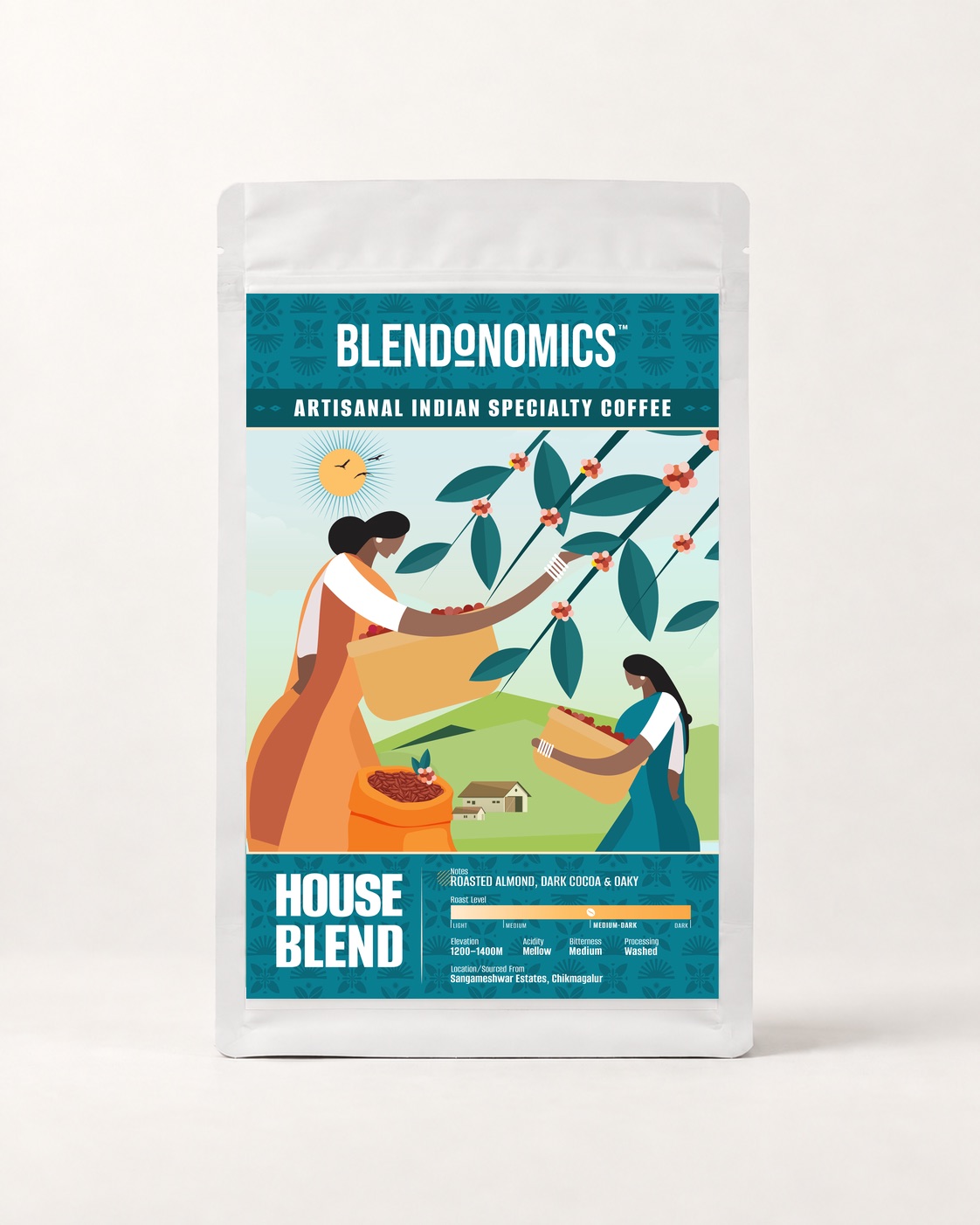
Our House Blend is a medium roast, washed, from Sangameshwar Estates in Chikmagalur. The pack does not print a ratio, so we do not claim one.
What are our blends, and what do they taste like?
| Blend | What is in it | Tastes like | Best for |
|---|---|---|---|
| House Blend | Washed, medium roast, Chikmagalur | Roasted almond, dark cocoa, oak | Espresso, French press, pour over |
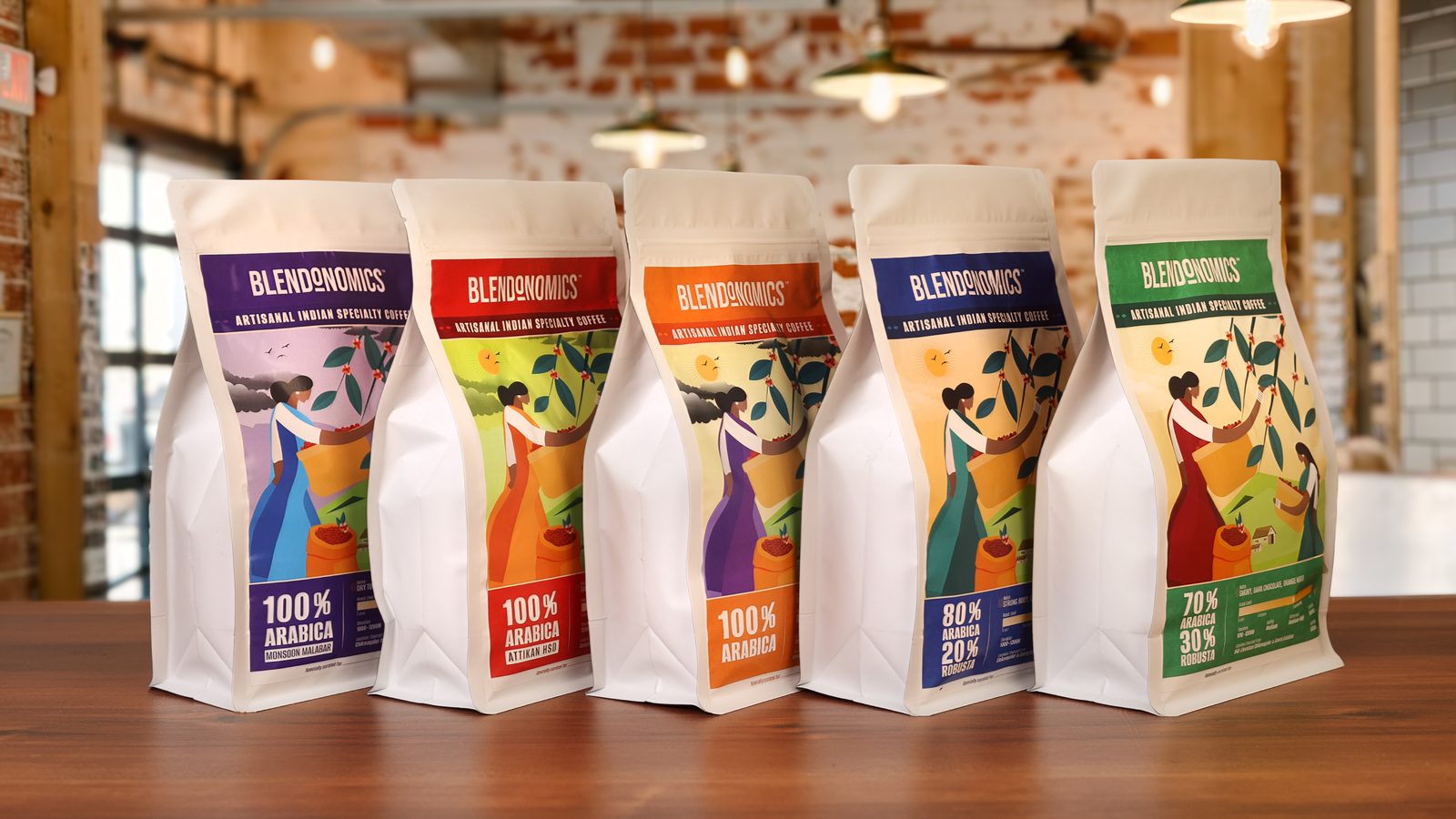
| 70/30 Blend | 70% Arabica, 30% Robusta | Smoky, dark chocolate, orange | Espresso, filter, moka pot |
| 80/20 Premium Blend | 80% Arabica, 20% Robusta | Strong body, chocolatey, mild earthy | Espresso, filter, moka pot |
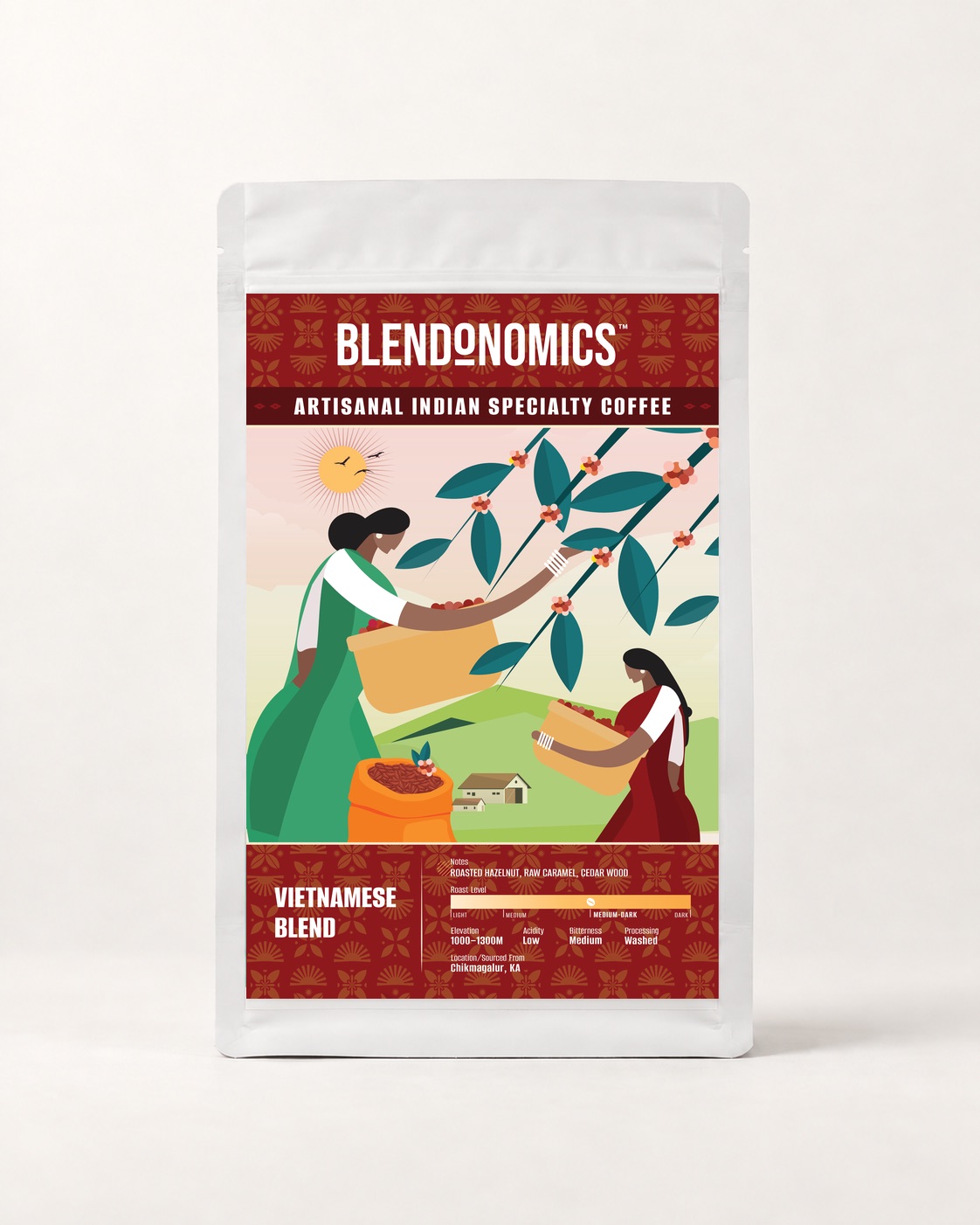
| Vietnamese Blend | Robusta forward, medium roast | Hazelnut, raw caramel, cedar | Espresso, French press, pour over |
Vietnamese Blend is Robusta forward. We give no number for it, because we do not publish one.
 Blend vs single originBlend vs Single Origin Coffee: Which One to Drink Every Day7 min read →
 For cafesHow to Choose Coffee Beans and a Supplier for Your Cafe6 min read →
What to do next
- Read the name on the pack. 80/20 and 70/30 tell you the Arabica share first.
- Choose by the drink. More Arabica for black coffee, more Robusta for a lot of milk.
- If a pack prints no ratio, ask. A good roaster will say how much Robusta is in it, or say they do not publish it.
- Buy the smallest pack first and change only after two weeks.
- To compare ours, the house blends sampler has four blends in small packs.
The ratio is the recipe. The roaster keeps it. Read the bag before the price.
Sources
- Seattle Coffee Gear, Arabica vs Robusta: what is the difference (caffeine about 2.2% vs 1.2%, Arabica about 60% of production, Robusta thicker crema, costs less)
- Espresso Lab, what is blend coffee, how is it made and why is it so popular (blending offsets harvest variation)
- Victoria Arduino, Rethinking coffee blends: why are they growing in popularity (single origins seasonal, blends steady across the year)
- Coffee Board of India, CRISIL, Coffee consumption trends in India, 2023 (80% add milk)
- Google Trends, India, yearly averages of weekly interest 2021 and 2026, pulled 24 October 2026, our pull (index 0 to 100 inside each comparison)
- Google Search Console, blendonomics.com, 25 September to 22 October 2026, our data.
- Blendonomics pack pages, 24 October 2026 (ratios, tasting notes, best for)
- Blendonomics order records (Busy accounts, sales since July 2025, 59 cafe and restaurant accounts), pulled 24 October 2026, our count.
Keep reading
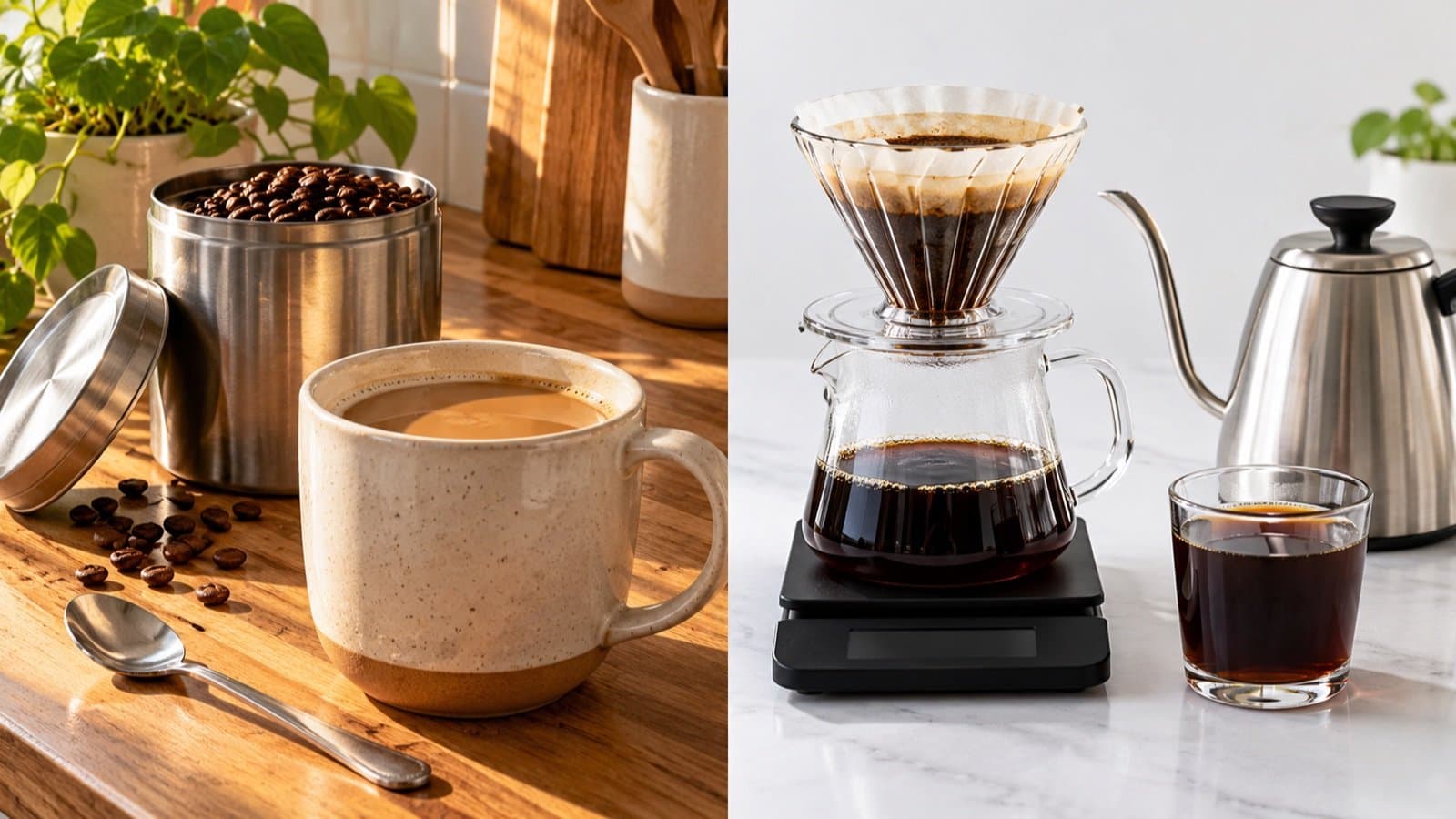
Blend vs Single Origin Coffee: Which One to Drink Every Day
Nobody drinks first flush Darjeeling every day. Why an everyday blend suits daily coffee, what it costs a cup, and where single origin fits.
How to Choose Coffee Beans and a Supplier for Your Cafe
A dearer kilo adds about Rs 7 to a cup that sells for Rs 180. Eight questions to ask any coffee supplier, including us, before price.
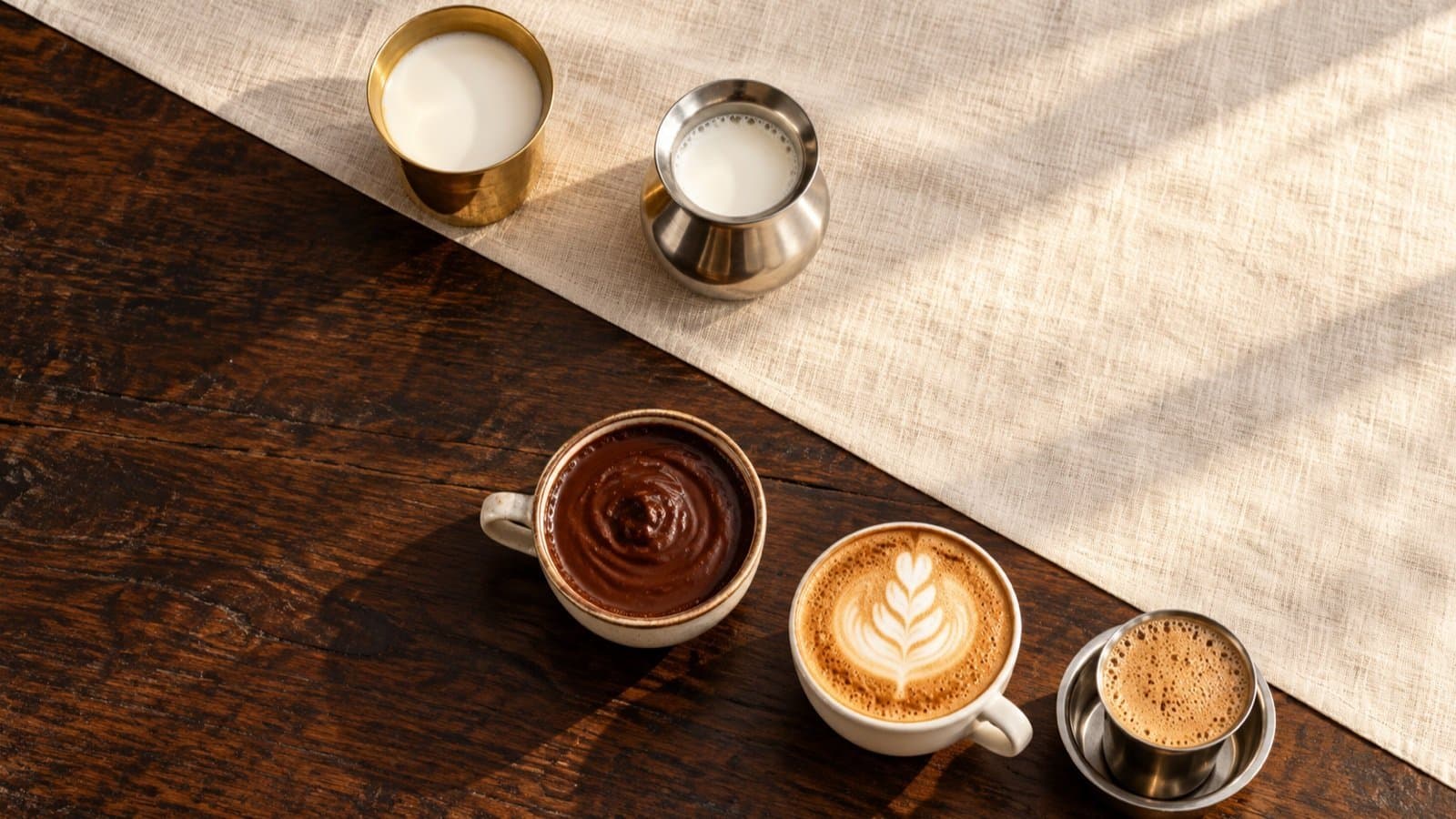
The Milk Line: Which Drinks Sell in Indian Cafes, and Why Habit Beats Weather
Habit decides who buys a drink in India. Weather decides when. The milk line, the model behind it and what 59 cafe accounts say, in one place.