Specialty coffee is supposed to taste better.
Then a first-time customer takes one sip and says, "This is sour."
Nothing is wrong with the cup. The customer is tasting it against a jar. About 65% of the coffee India drinks is instant, and about 70 to 75% of it has chicory in it (Coffee Board of India, 2023). I call that the taste baseline. It is the coffee a customer already knows, and every new cup is judged against it.
Most people miss this: sour is not a flaw in the coffee. It is a gap between the cup and the memory.
Why does specialty coffee taste sour to Indian customers?
Three things build the memory.
1. Most of India's coffee is instant, and instant is mostly Robusta. About 65% of volume is instant. Ground and filter coffee fell from 82% of volume in 2010 to 35 to 40% in 2022. India grows mostly Robusta: 262,000 of 373,000 tonnes in 2025-26, or 70% (Coffee Board). Trade sources say Robusta is the main raw material for soluble coffee. We found no published share for instant, so we say "mostly".
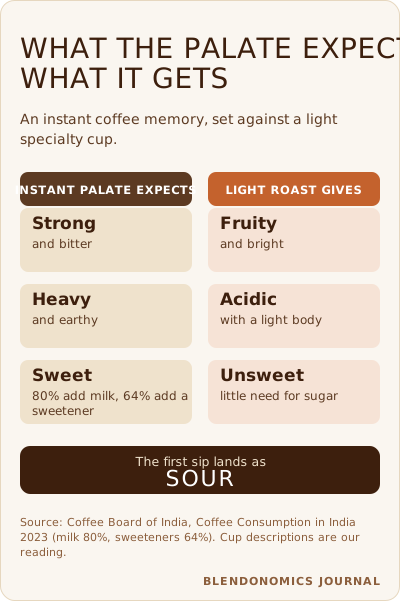
2. The cup is bitter, thick and sweetened. Robusta tastes stronger, earthier and more bitter than Arabica, which is fruitier and more acidic (trade and retailer sources agree on this). 80% of Indian coffee drinkers add milk. 64% add a sweetener. 60% say they prefer strong flavoured coffee (Coffee Board). Instant is also mixed with 20 to 40% chicory, which adds an earthy note (Coffee Board).
3. Early taste sticks. Research on infants and children finds that food preferences start early and tend to carry into later life, and that children may need about 6 to 15 tries before they like a new flavour (De Cosmi and colleagues, Nutrients, 2017). Infants given a flavoured formula for longer accepted it, and a new one, more readily (Mennella and colleagues, Pediatrics, 2004). None of that research is about coffee in India.
Our read: the same logic applies to the coffee a child smells and sips at home. We have not tested it. Researchers also argue adults learn to like coffee's bitterness because caffeine rewards them (Northwestern, 2018, an interpretation, not a test).
That is the baseline. A light roast is acid, thin and unsweetened. It lands on the opposite side.
What is instant coffee made of?
Coffee beans, dried into granules. In India, often with chicory added. Two of the best known Indian chicory mixes are sold as 70% coffee and 30% chicory, and their pages say Robusta is in the blend. Those are brand claims.
The Coffee Board report says chicory is nearly 10 times cheaper than coffee, and that companies add it to protect margins. It adds an earthy taste.
The Japan story: told by Rapaille
There is a famous version of this idea. Clotaire Rapaille, a marketing consultant, tells it in his book The Culture Code (2006).
Nestle struggled to sell coffee in tea-drinking Japan. Rapaille's account: Japanese adults had no childhood memory of coffee. His advice was to sell coffee flavoured sweets to children, so a generation would grow up with the taste before anyone sold it coffee.
Treat it as his account, not company history. A review in the Washington Monthly calls the book anecdotal, built from notes of a few dozen sessions. Japan also had coffee houses from 1888 and canned coffee by 1969, so "no coffee memory" is a stretch. We found no record that the sweets drove later sales.
We keep the idea and drop the claim. The idea is that the first taste sets the yardstick.
How should a cafe serve coffee to the instant generation?
Here is how we serve it. Untested beyond our own counter.
- Serve a cup that meets the baseline first. Body, a little Robusta, a cup that works with milk and sugar.
- Use the customer's words. Say "strong", "thick", "chocolatey". Do not say "bright" or "floral" to a first-timer.
- Do not lead with a light roast for a first-time customer.
- Move people up one step at a time, and only when they ask.
- Keep one single origin on the shelf for the curious. Do not build the menu on it.
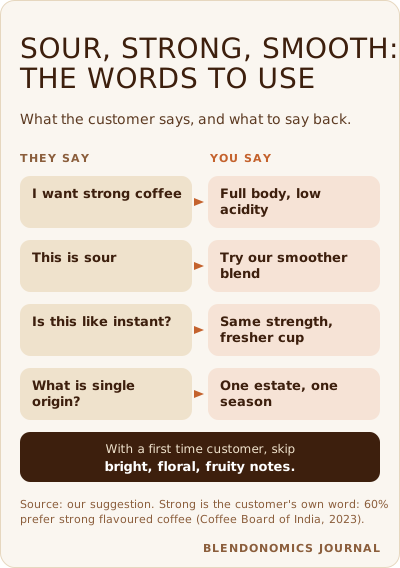
The first row is the most important one. 60% of Indian respondents prefer strong flavoured coffee. A cafe that starts with "strong" is speaking their word.
What is the ladder from instant to beans?
For a cafe choosing which blend to buy first, see the milk line for coffee. Four steps up from the baseline. Each one is a small move from the one before.
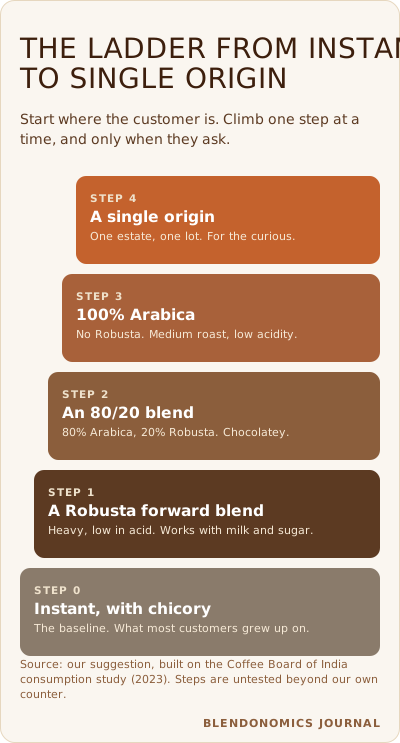
- Step 1: the Robusta forward blend. Heavy, low in acid, works with milk and sugar.
- Step 2: 80/20. More Arabica sweetness, a little Robusta body.
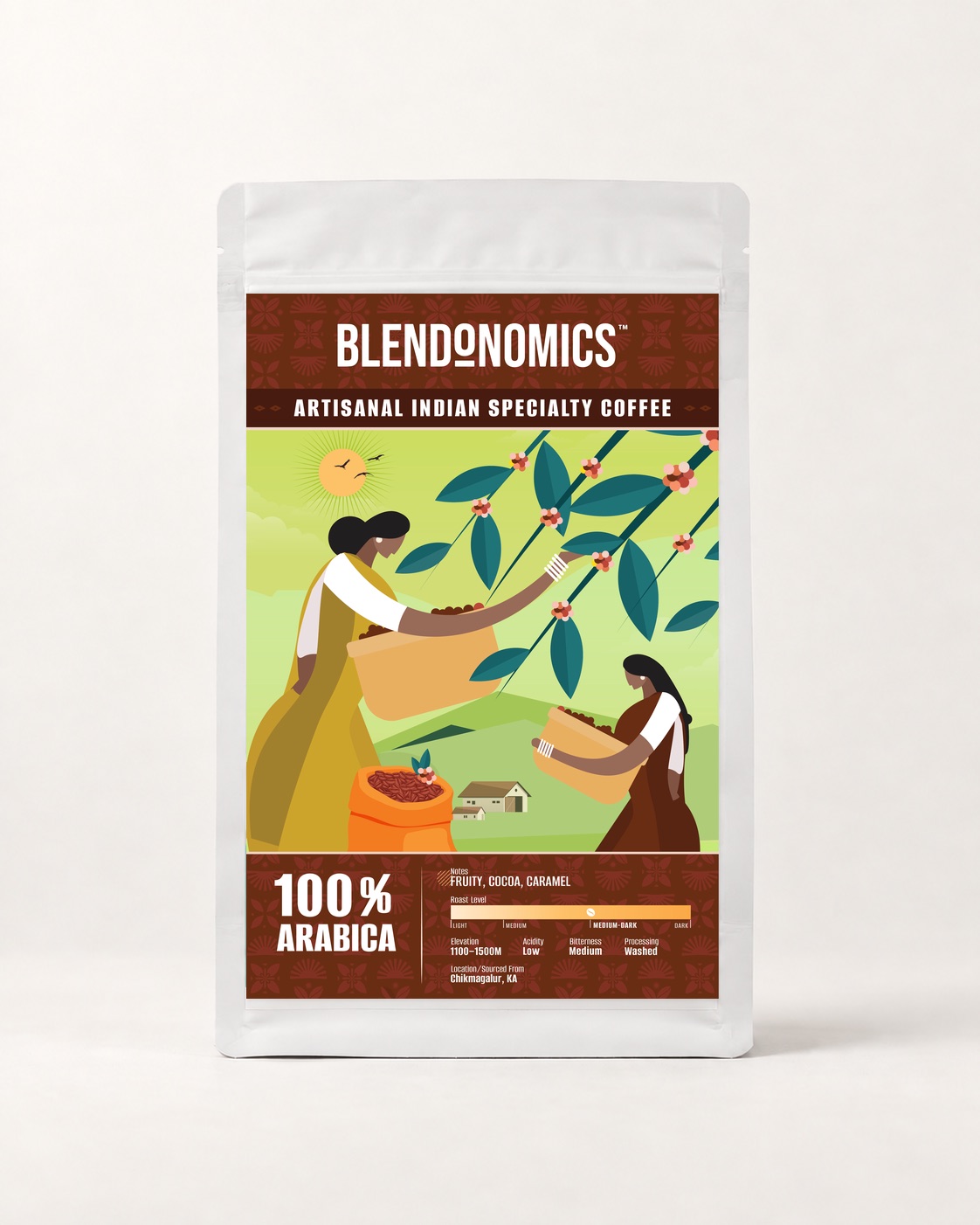
- Step 3: 100% Arabica. No Robusta, still a medium roast with low acidity.
- Step 4: single origin, for the curious. Not for everyone, and not every day.
Our own books show why the last step is a side shelf. At cafes and restaurants, blends are 74% of what they spend on coffee, 100% Arabica 18%, single origin 7%. Of the 8 accounts that bought single origin since July 2025, none came back. We sell single origin. It is the coffee that does not come back in our books.
These figures are from our Busy accounts, 59 cafe and restaurant accounts for the split, all 105 accounts for repeat buying. They show where our sales team and partners reached, not all of India's demand.
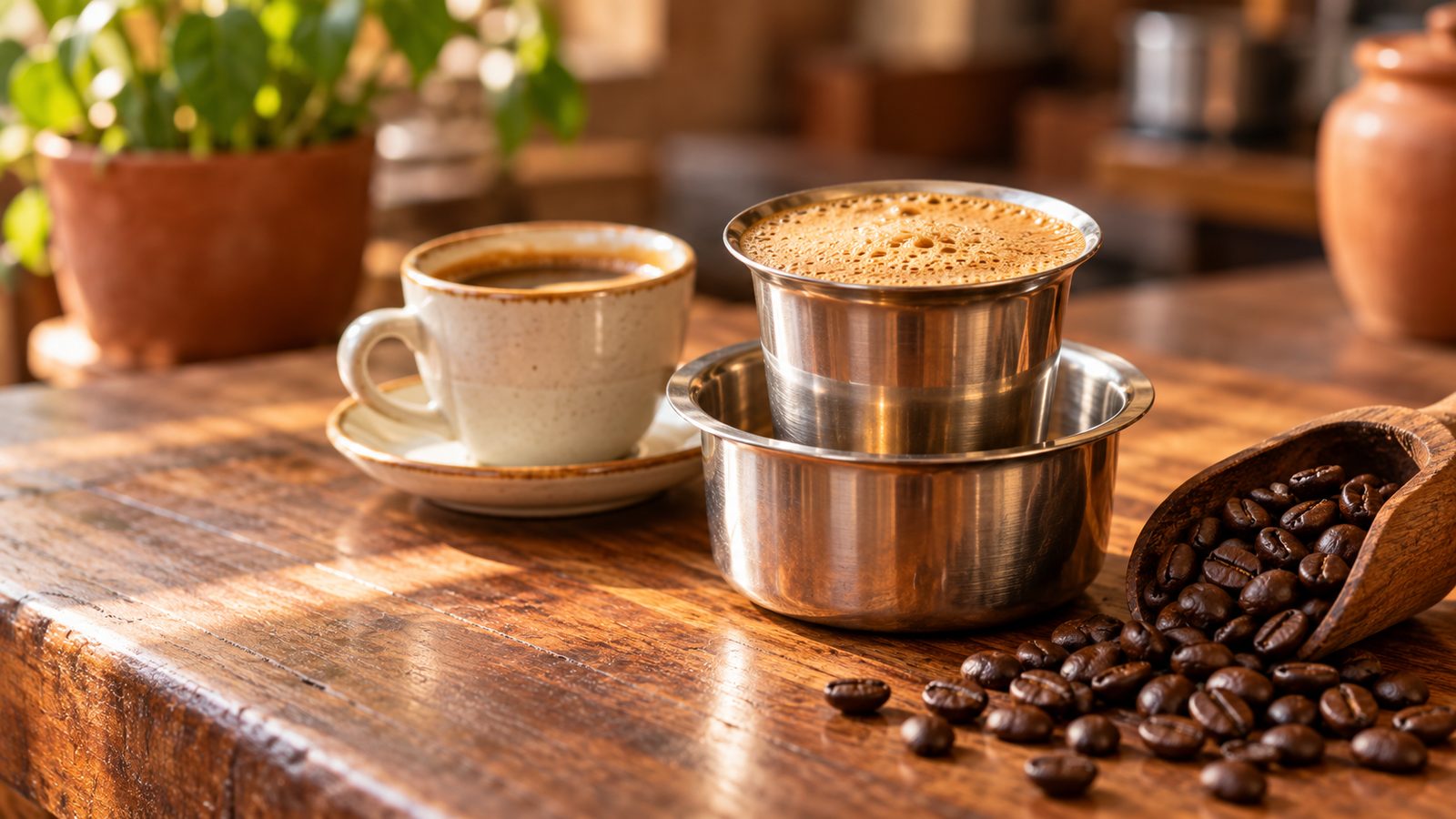 Who drinks whatSpecialty Coffee Grew Up in Delhi, Not Chennai6 min read →
How do you switch from instant coffee to beans at home?
Start one step above instant: a blend, brewed the way you already drink it, with milk and sugar. Only 5% of Indian coffee drinkers use beans at home (Coffee Board).
Change one thing at a time. The case for an everyday blend is in this article.
Where to start
Step 1 is our Vietnamese Blend, a Robusta forward medium roast at Rs 299 for 250 g. Step 2 is the 80/20 Premium Blend, Rs 369. Step 3 is our 100% Arabica, Rs 440.
To taste three steps side by side, the House Blends Sampler has four 100 g packs for Rs 699.
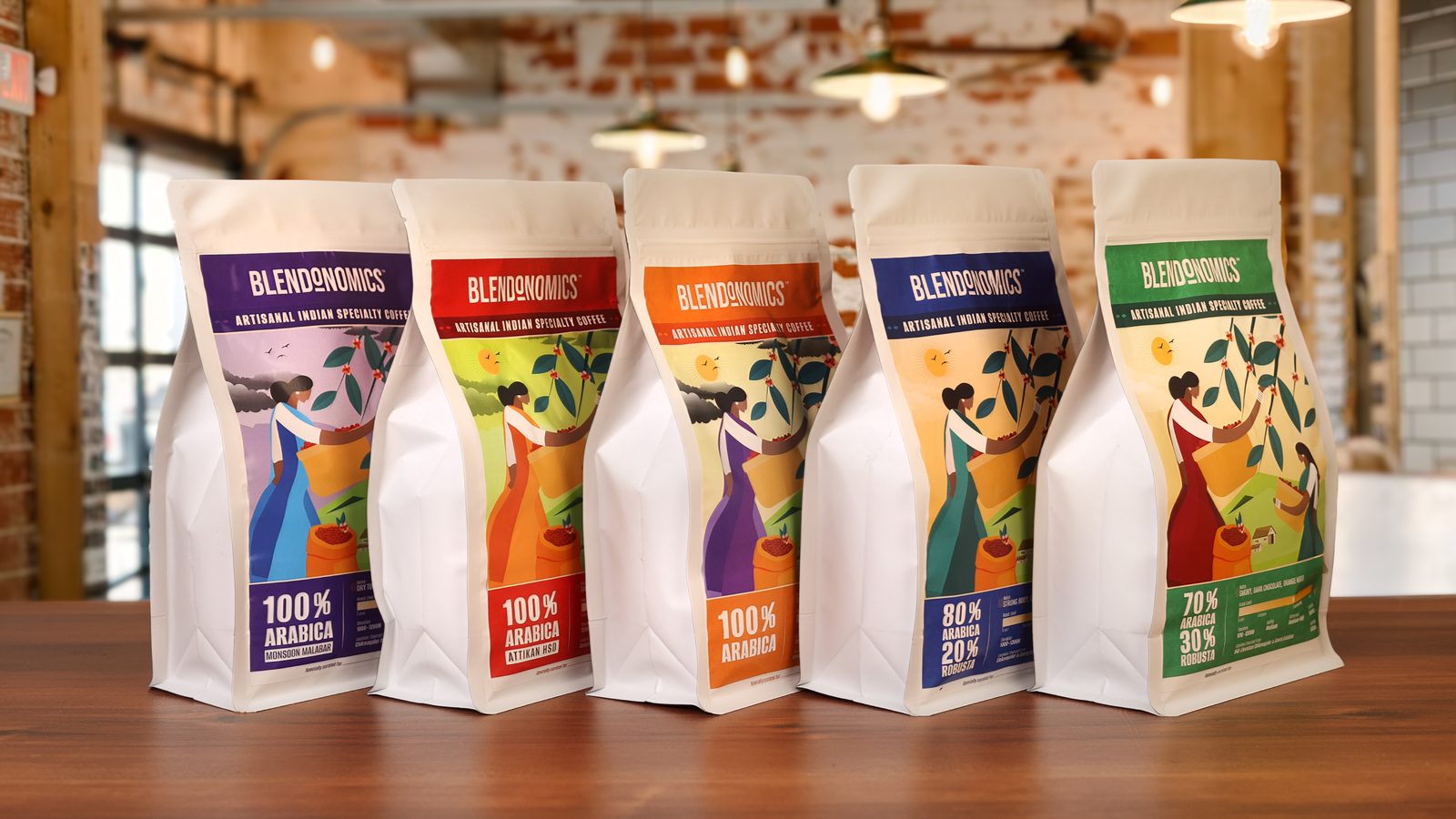 Choosing beansHow to Choose Coffee Beans and a Supplier for Your Cafe6 min read →
What to do next
- Write down what your customers drink at home. Ask five of them.
- Put one blend on the bar that meets the baseline: body, some Robusta, works with milk and sugar.
- Describe it in their words: strong, thick, chocolatey.
- Offer the next step to anyone who asks for something different.
- Home drinker? Start one step above instant, and change one thing at a time.
Instant taught a country to drink coffee. Specialty has to meet it there. The cup that wins is the one that starts where the customer already is.
Sources
- Coffee Board of India, Coffee Consumption in India 2023 (CRISIL study; instant 60 to 65%; chicory 70 to 75%; at home 93 to 94%; milk 80%, sweeteners 64%, black 18%; strong flavour 60%; home types 41% / 31% / 7% / 5%; non-drinkers first try at cafes 67%; chicory nearly 10 times cheaper)
- Coffee Board of India, coffee statistics (Arabica 111,000 and Robusta 262,000 tonnes, final estimate 2025-26)
- De Cosmi V, Scaglioni S, Agostoni C. Early Taste Experiences and Later Food Choices. Nutrients 2017, 9(2), 107
- Mennella JA and colleagues. Flavor programming during infancy. Pediatrics 2004
- Northwestern University, Why bitter coffee? (2018 study in Scientific Reports on learned liking for coffee)
- US International Trade Commission, Robusta on the rise (Robusta used primarily for soluble coffee and blends; read as a search snippet)
- Breville, Arabica vs. Robusta coffee: 5 differences (taste: Robusta stronger and more bitter, Arabica fruitier and more acidic; a retailer source, the direction agrees across trade sources)
- Retail listings for Nescafe Sunrise and Bru (70% coffee, 30% chicory; Robusta in the blend; manufacturer claims)
- Washington Monthly, Analyze This (review of The Culture Code, 1 July 2006)
- Clotaire Rapaille, The Culture Code (Broadway Books, 2006). Not read directly. Account taken from the Washington Monthly review and retellings.
- Business Standard, 27 June 2020, column retelling the Nestle Japan story (dates Rapaille's visit to 1975)
- Unseen Japan, Coffee in Japan: a short, tasty history (kissaten from 1888, Taisho boom, canned coffee 1965 and 1969)
- Blendonomics site prices, 24 October 2026; our own order data (Busy accounts, sales since July 2025, pulled 24 October 2026). Blendonomics journal: Specialty Coffee Grew Up in Delhi, Not Chennai; How to Choose Coffee Beans and a Supplier for Your Cafe.
Use it on your menu
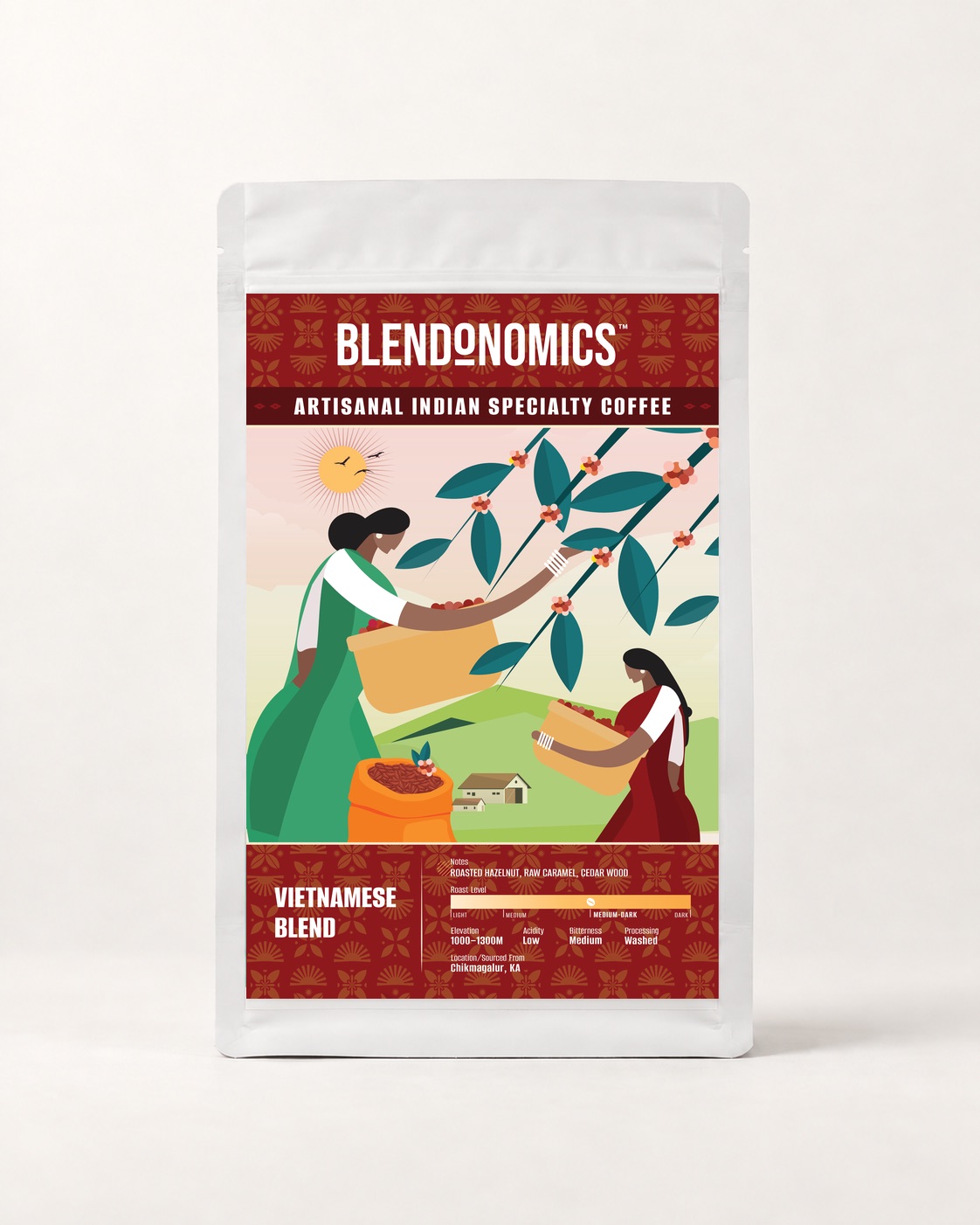 CoffeeVietnamese BlendRobusta-Forward BlendView product →
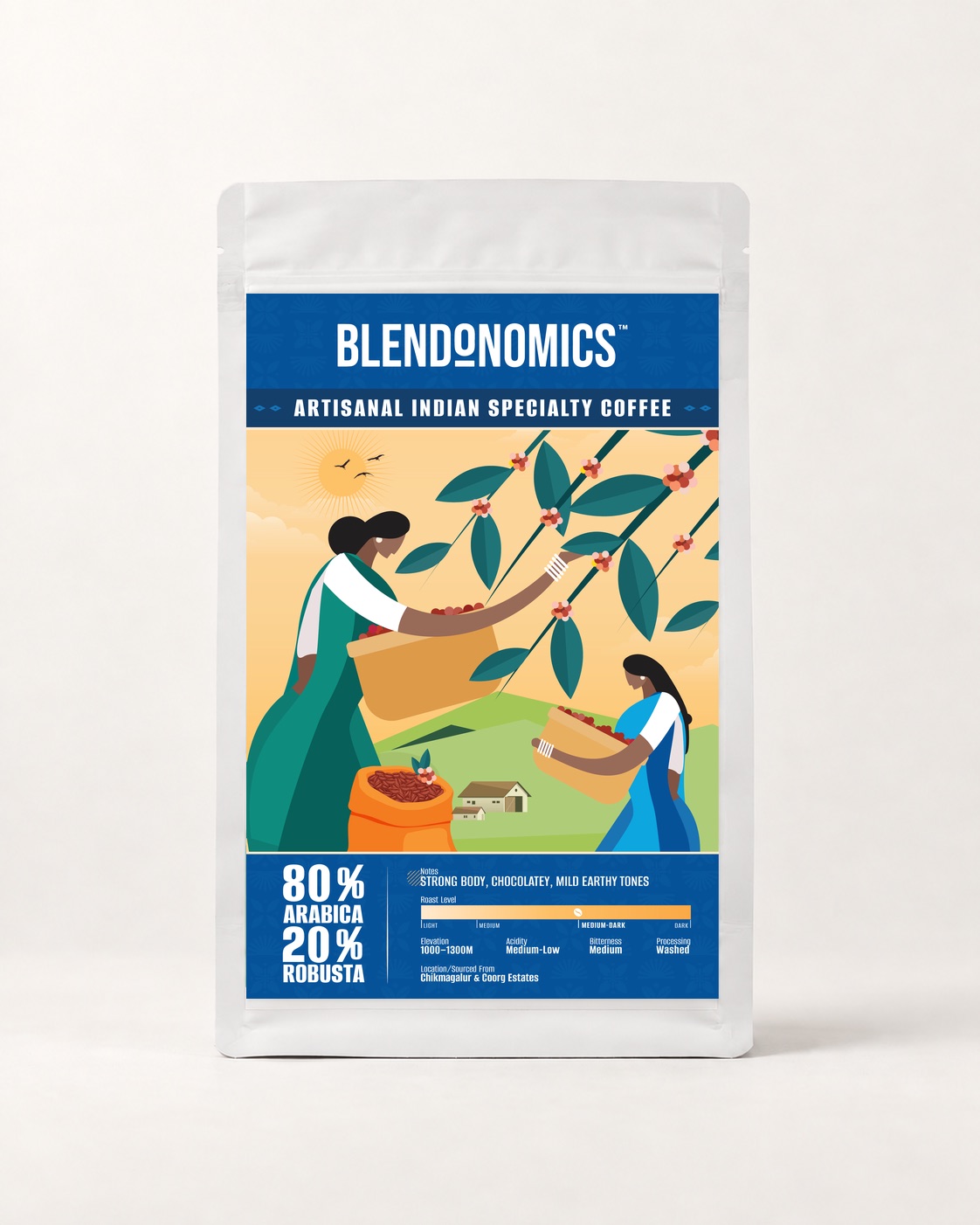 Coffee80/20 Premium Blend80% Arabica / 20% RobustaView product →
 Coffee100% ArabicaWashed · 100% ArabicaView product →Sample kitHouse Blends Sampler80/20 Blend / 70/30 Blend / House Blend / Vietnamese BlendView product →
Supplying a cafe? Request a sample kit →
Keep reading
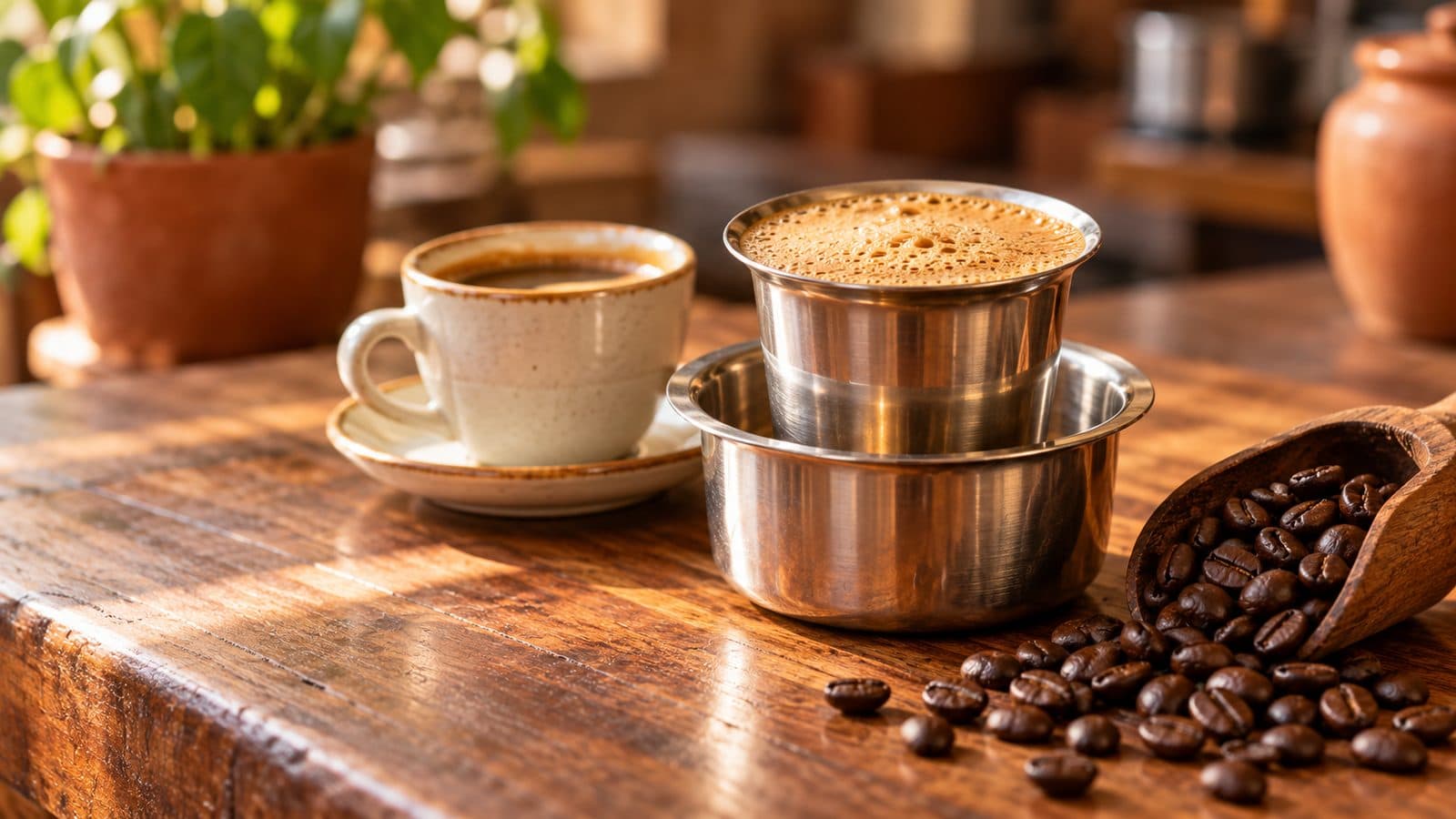
Specialty Coffee Grew Up in Delhi, Not Chennai
The region that drinks the most coffee is the hardest place to sell premium coffee. Part 2 of our weather vs preference series.
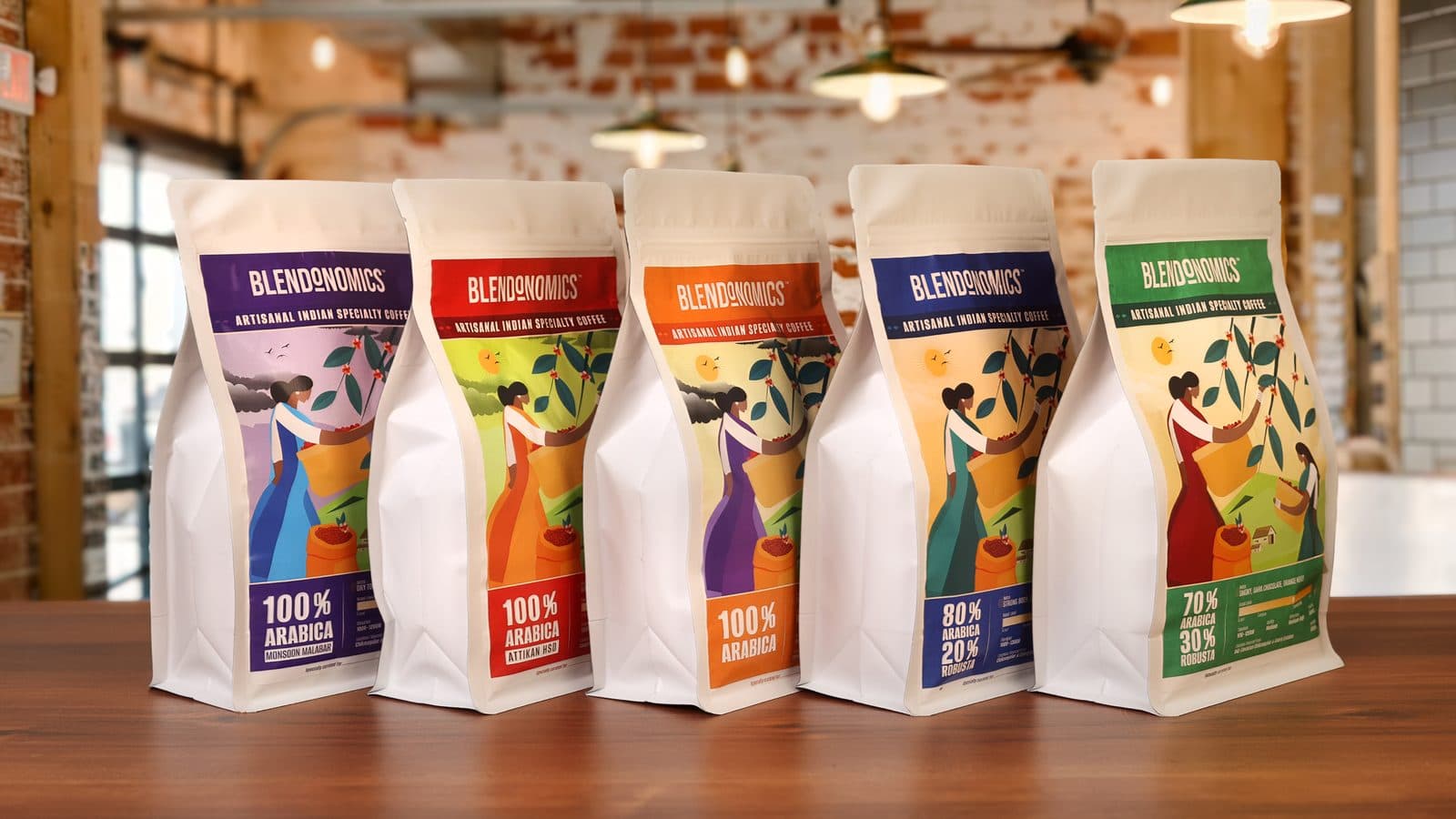
How to Choose Coffee Beans and a Supplier for Your Cafe
A dearer kilo adds about Rs 7 to a cup that sells for Rs 180. Eight questions to ask any coffee supplier, including us, before price.
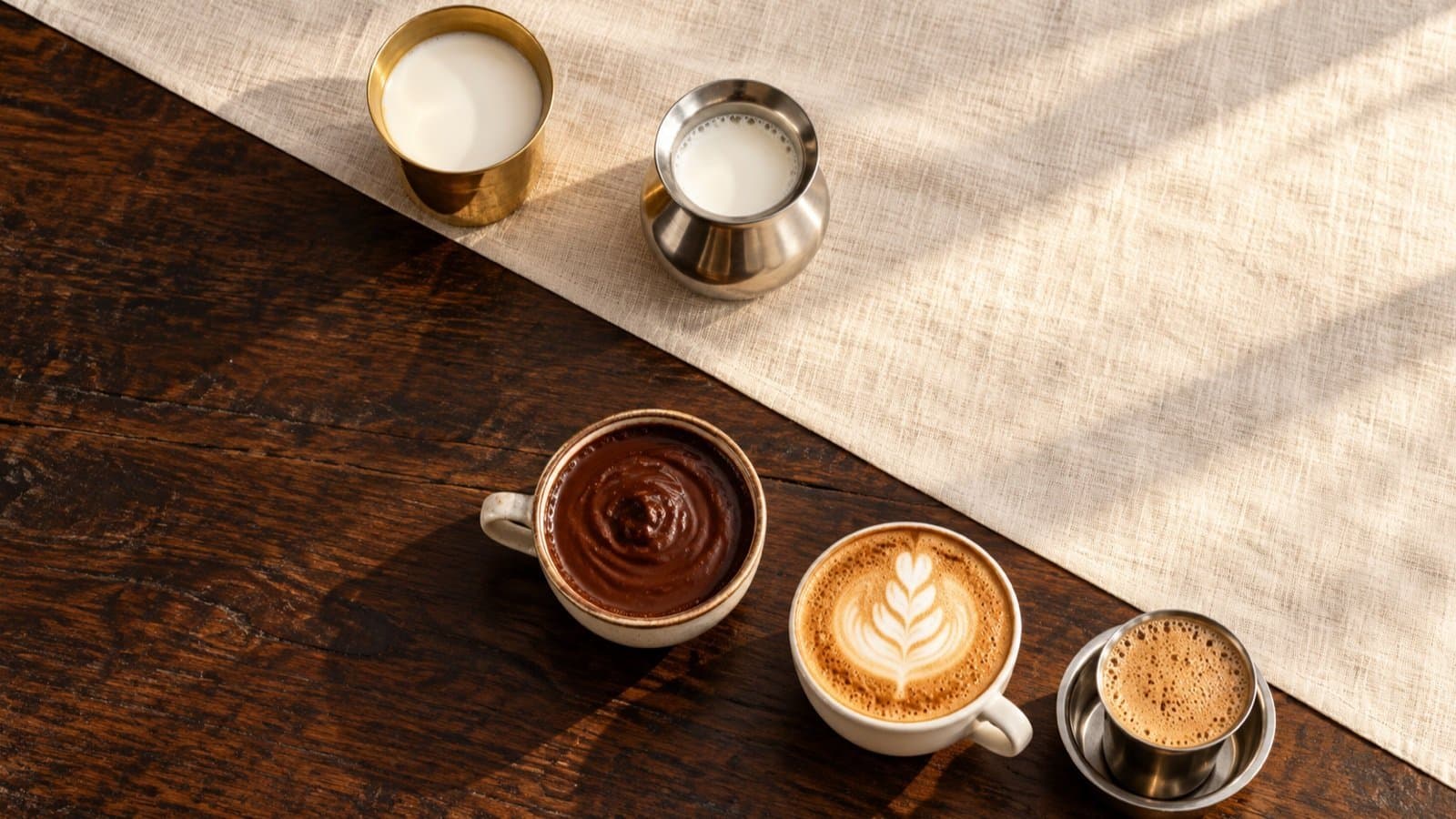
The Milk Line: Which Drinks Sell in Indian Cafes, and Why Habit Beats Weather
Habit decides who buys a drink in India. Weather decides when. The milk line, the model behind it and what 59 cafe accounts say, in one place.