COFFEE
Ask any cafe owner which is stronger, filter coffee or espresso. "Espresso." Per ml, true. Per cup, wrong: a mug of drip holds more caffeine than a shot. So the real question is what you divide by.
This helps a cafe owner choosing what to put on the menu. Below: how each is made, how strong each is, what a cup costs, and which of our blends suits each.
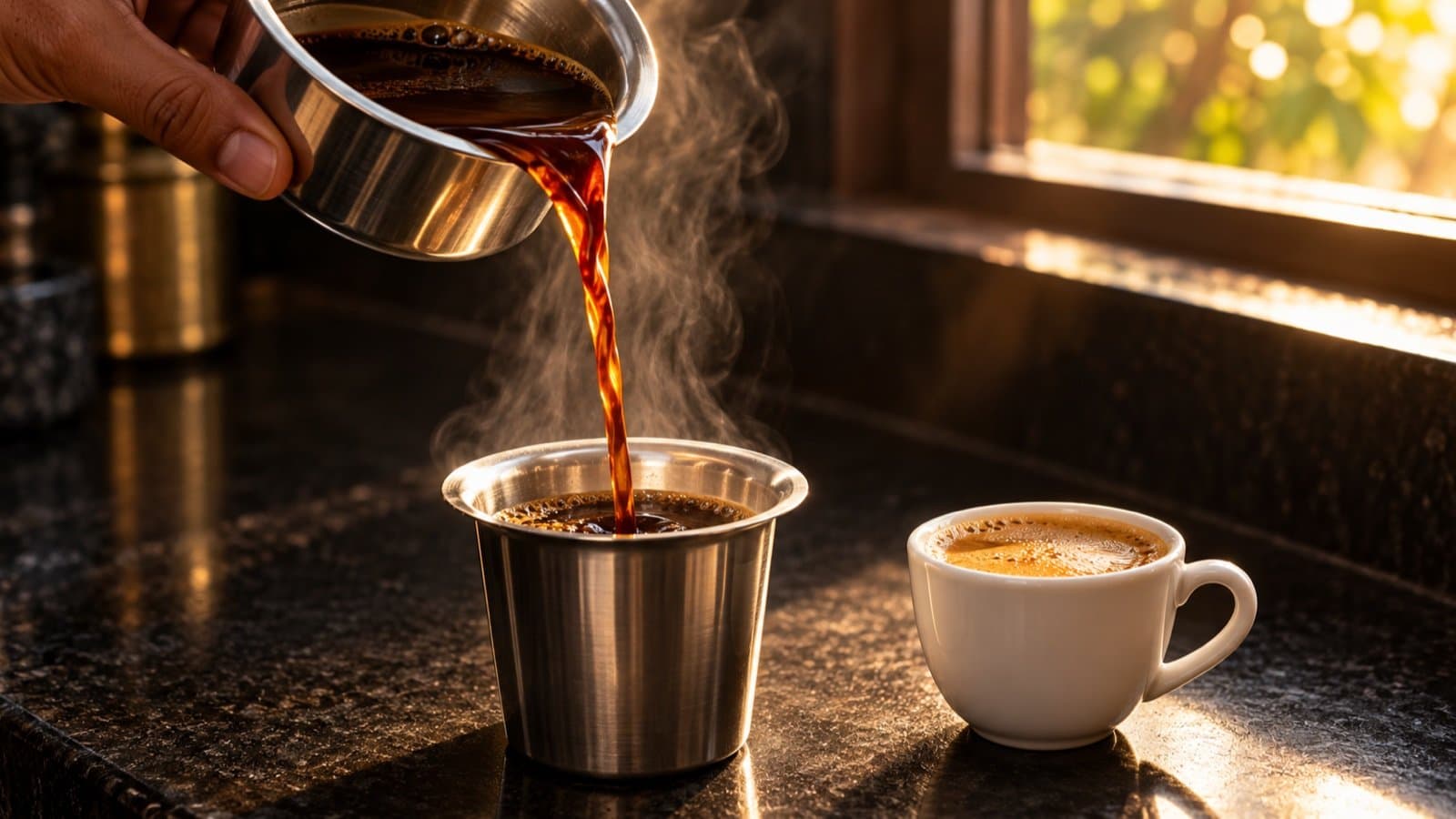
Picture the steel tumbler and the dabarah. Hot water drips through coffee powder in a metal filter and comes out as a thick decoction. A spoonful or two goes in the tumbler, hot milk and sugar go on top, and it is poured back and forth for froth.
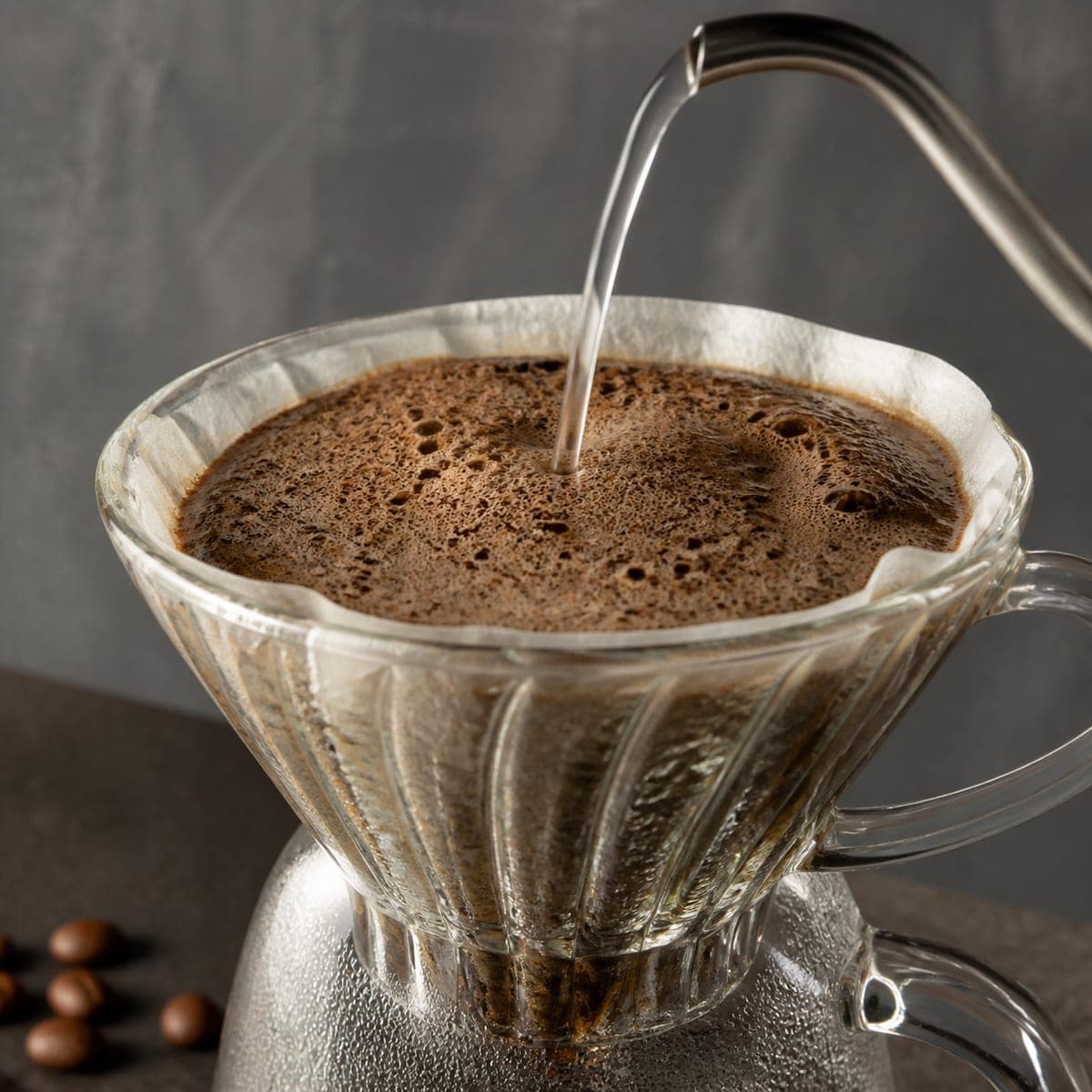
Espresso is the opposite idea. Finely ground coffee, hot water pushed through under pressure, a small shot of about 30 ml in seconds. Filter coffee is slow and gentle. Espresso is quick and hard.
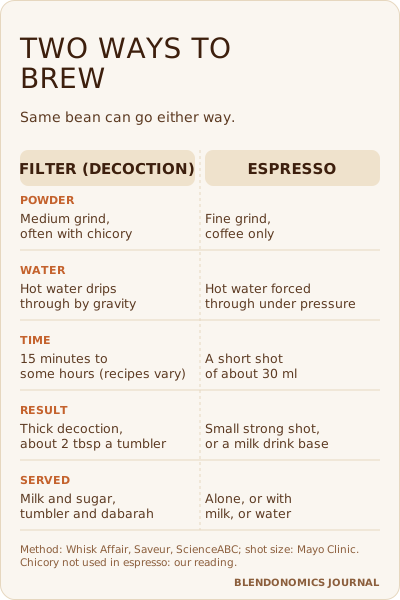
Chicory is the other difference. Many filter coffee powders are mixed with roasted chicory root, and about 70 to 75% of the coffee India drinks is chicory mixed (Coffee Board of India, 2023). Recipes use 10 to 30% of it.
Both, depending on the unit. Here is the honest answer.
Per 100 ml, espresso carries about 148 to 210 mg of caffeine and brewed coffee about 41 mg (our arithmetic from Harvard's 65 mg in a 1.5 oz shot, Mayo Clinic's 63 mg in 30 ml, and Mayo's 96 mg in 237 ml of brewed). That is about three to five times, depending on shot size. Per serving, one shot has 63 to 65 mg and an 8 oz cup of brewed coffee has 96 mg.
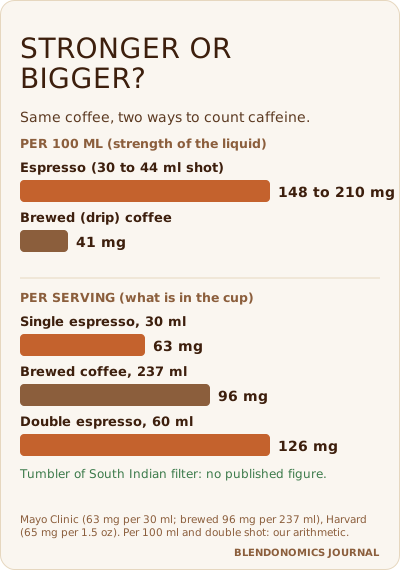
Most people miss this: strength is a ratio, and a ratio depends on what you divide by. Espresso is the strongest liquid, by three to five times. A double espresso, at about 126 mg, is also the strongest single cup. But the 237 ml mug sits between a single and a double.
What about a tumbler of South Indian filter? We found no published figure. It depends on how much decoction goes in, how strong it is, how much milk goes on top and how much chicory is in the powder. Chicory has no caffeine (ScienceABC), so a chicory mix has less per gram than pure coffee.
Real values move a lot. Restaurant espresso has been reported at 47 to 75 mg a shot and brewed coffee at 95 to 200 mg a cup (Mayo Clinic News Network). Robusta has roughly double the caffeine of Arabica, about 2.2 to 2.7% against 1.2 to 1.5%. A Robusta-heavy blend carries more caffeine in either method.
Per ml, no. An americano is espresso with hot water added. Water changes the strength per ml, not the total caffeine.
Our arithmetic: a double shot of 126 mg in a 200 ml americano works out to about 63 mg per 100 ml. That is still about one and a half times a drip coffee at 41 mg per 100 ml. Add milk to a filter coffee and the number falls further.
Customers taste strength too. In the Coffee Board's survey, 60% of Indian coffee drinkers said they prefer strong flavoured coffee. Dark roast, Robusta and chicory read as strong in the mouth, whatever the caffeine number says.
Our read: filter coffee with chicory is thick, dark and bitter-sweet, built for milk and sugar. 80% of Indian coffee drinkers add milk and 64% add sugar (Coffee Board). Espresso is sharper and thinner, with crema on top, and it can go black or carry a whole milk drink.
Neither is better. They answer different habits. One is a morning ritual at home. The other is a cafe menu line.
A cup of filter coffee costs a fraction of an espresso to make. This is the cost of the coffee only, not milk, labour or the cup.
| Cup | Coffee cost | Sells for | Basis |
|---|---|---|---|
| Filter coffee at home | Rs 4 to 11 | not sold | 10 g, Rs 40 to 107 per 100 g |
| Double espresso | Rs 18 to 26 | not listed | 18 g, our blends Rs 990 to 1,450 a kg |
| Cappuccino, one chain | not known | from Rs 167 | listings, October 2026 |
The doses are our assumptions: 10 g of powder a tumbler and 18 g a double shot. Filter powder prices are our check of 29 September 2026. A hotel tumbler sells for a fraction of a chain cappuccino (from Rs 167).
Our read: the margin is in the milk drink, not the decoction. That is why espresso is the cafe's workhorse, and why a filter coffee sells on habit and not on price.
Which one sells depends on where you open, and that is covered in the milk line for coffee.
Only what the pack pages say. This is what our site lists for each method.
Our pack pages list the beans, and nothing about chicory. Add chicory to the decoction yourself if you want the tumbler taste.
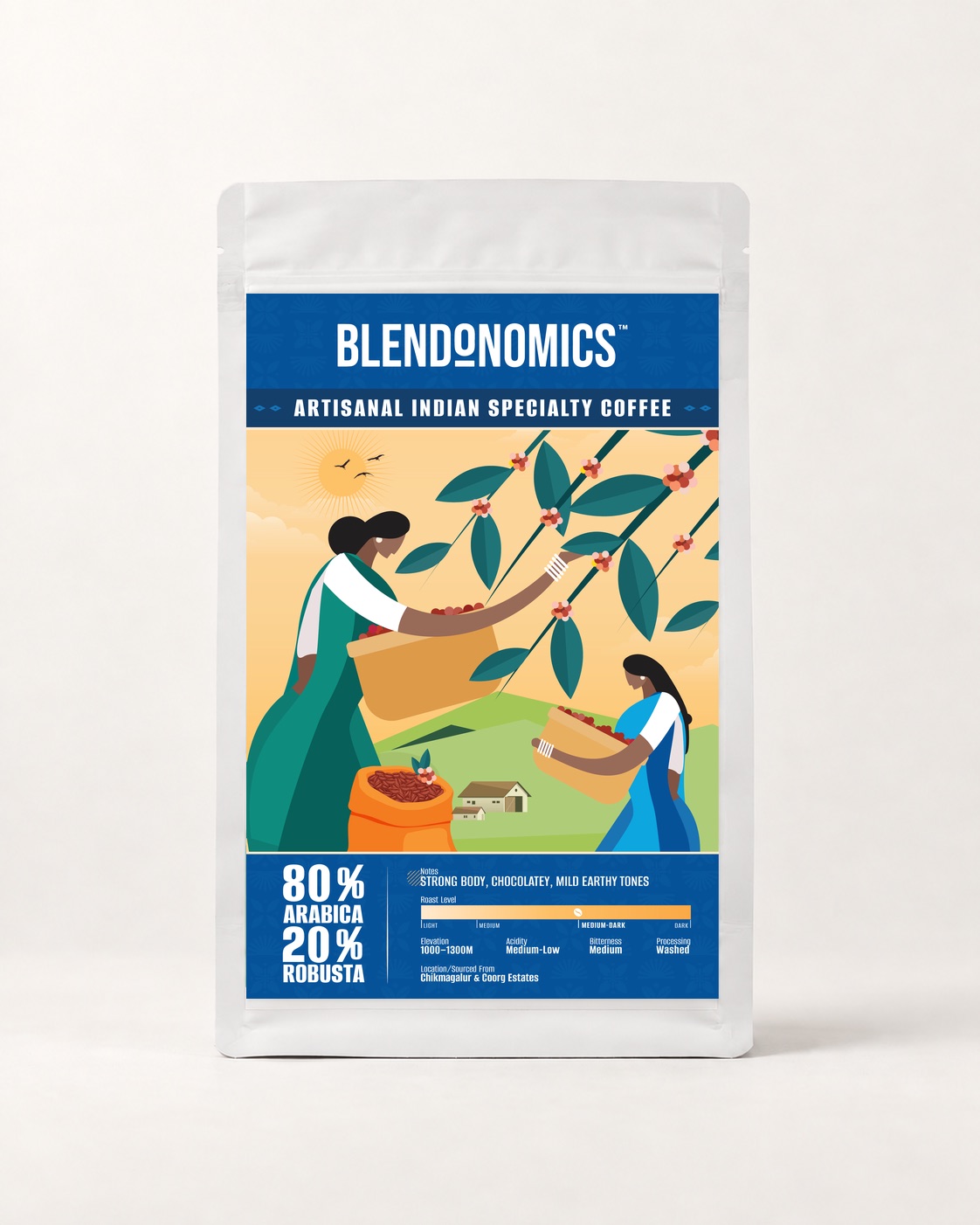
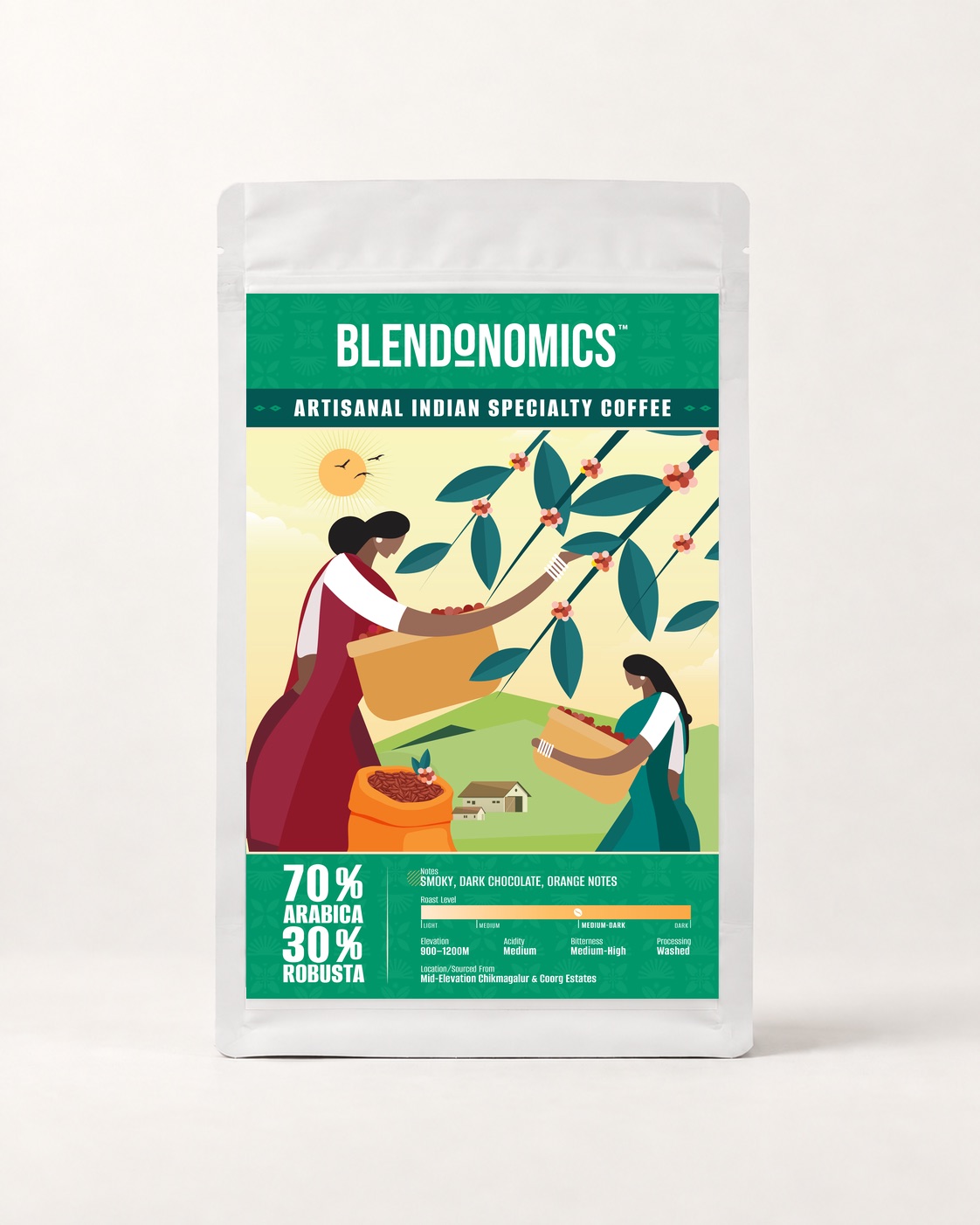
80/20 and 70/30 cover both methods, so one bag can run an espresso line and a filter line. The coffee sampler lets you taste them first.
 Which blend, by locationThe Coffee Mistake New Cafes Make: Pick the Blend by Location5 min read →
 The taste baselineWhy Cafe Coffee Tastes Sour to India's Instant Coffee Generation6 min read →
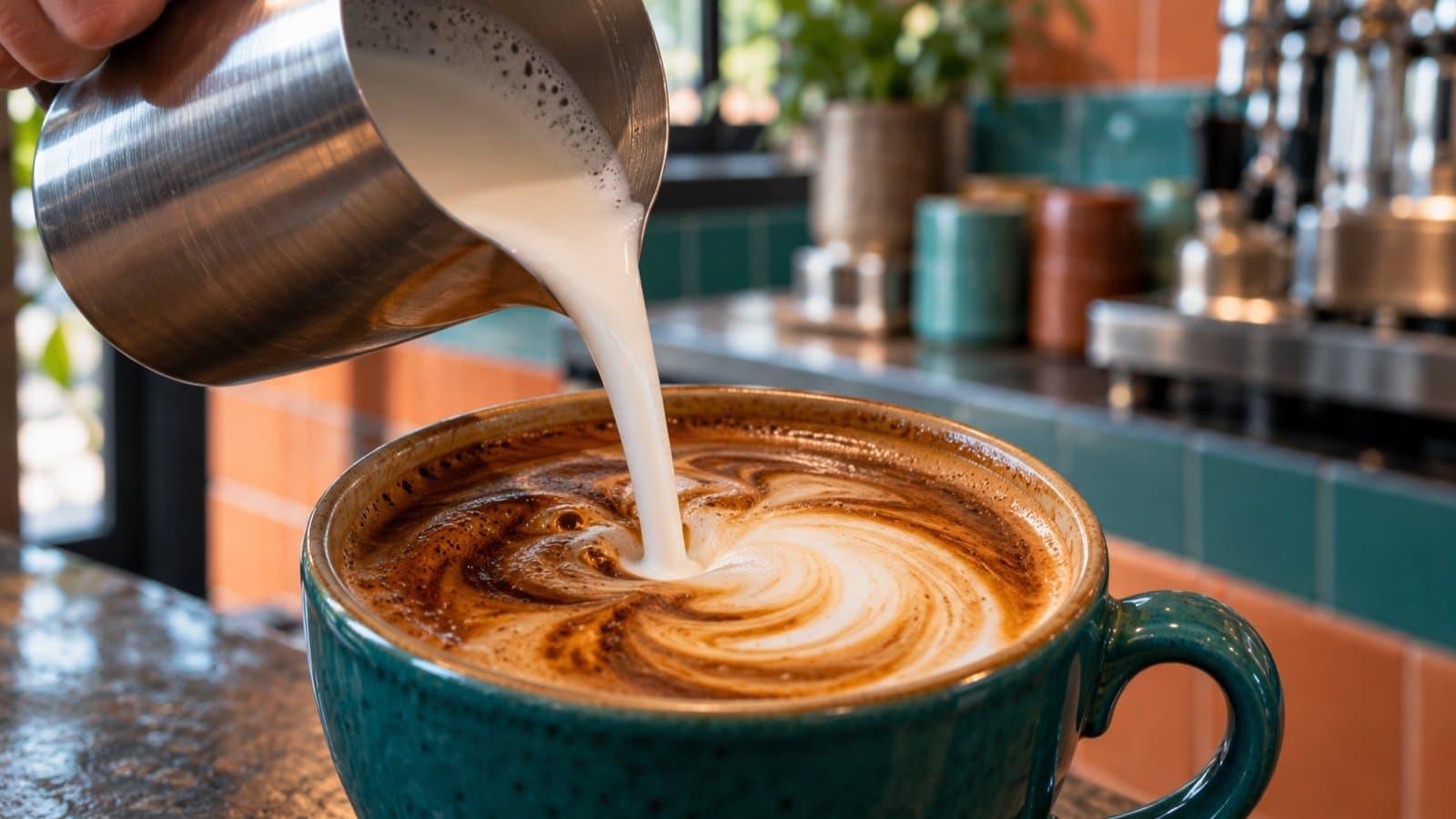
New cafes buy the dearest coffee or a famous brand before they know what customers order. The milk line for coffee shows which blend fits where.
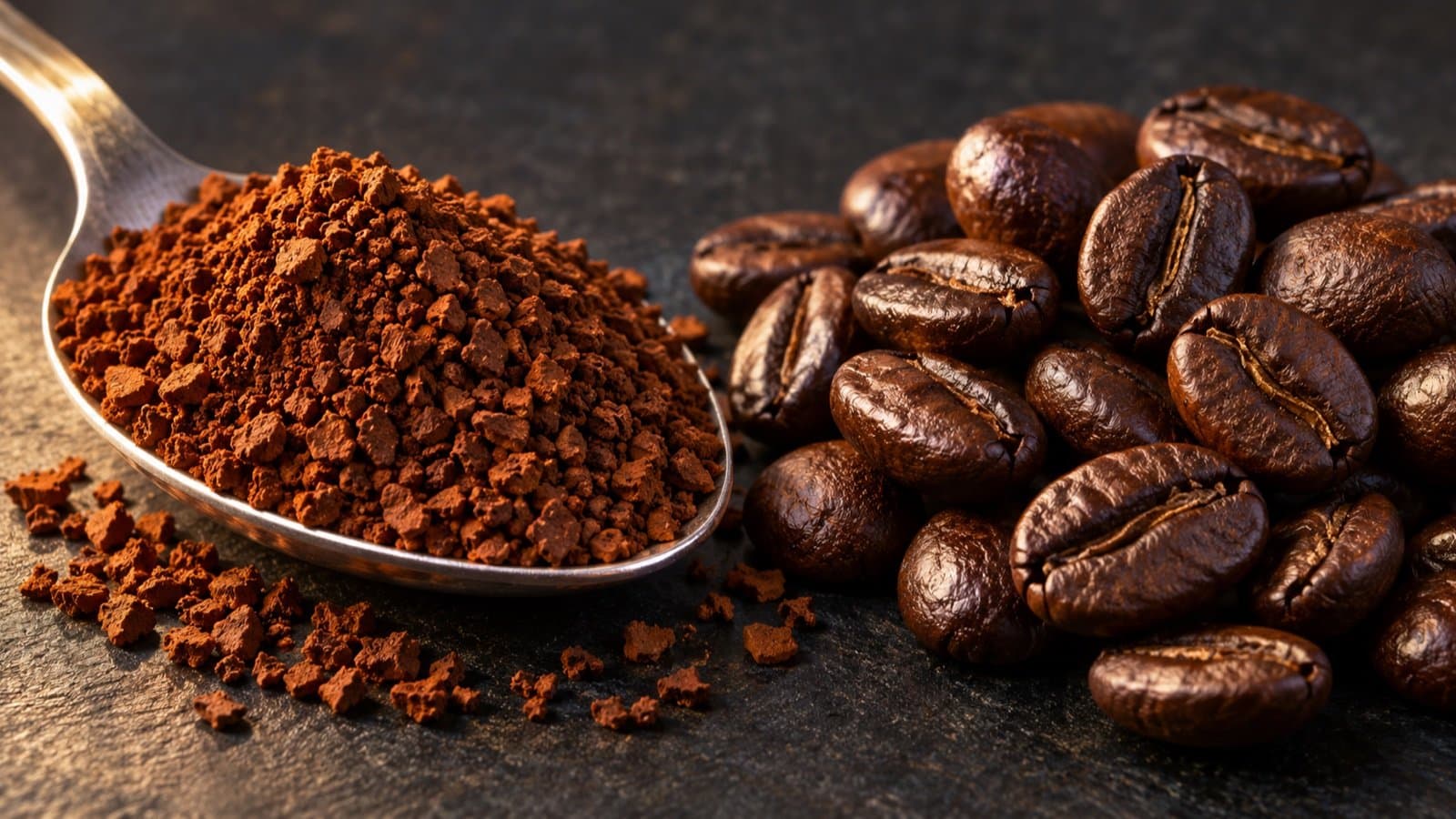
About 65% of India's coffee is instant. That is the taste your customer grew up on. A cafe that serves a light roast first is arguing with a childhood.
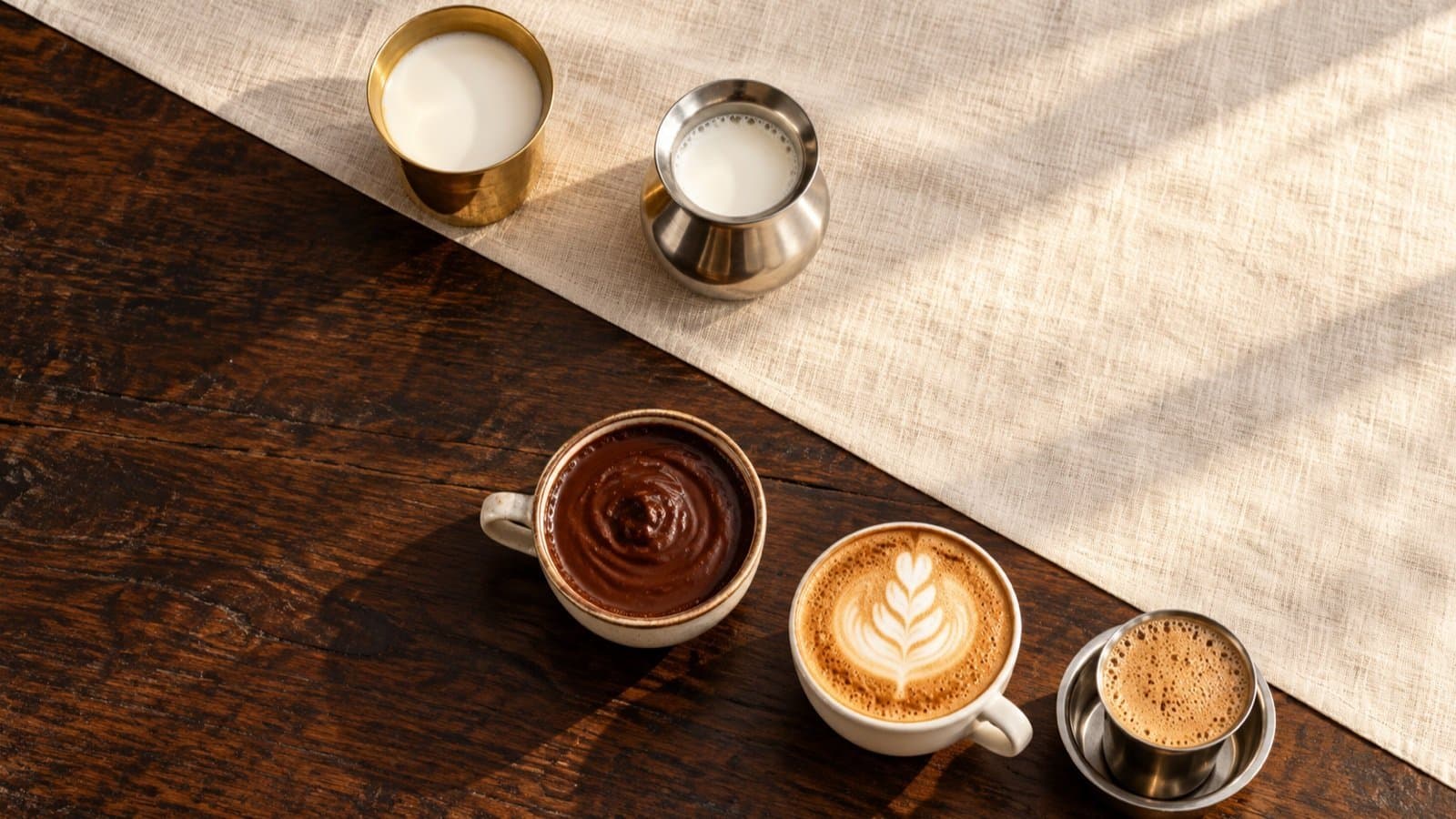
Habit decides who buys a drink in India. Weather decides when. The milk line, the model behind it and what 59 cafe accounts say, in one place.